《上古之歌》附錄詞表整理
《上古之歌(Voices from Early China)》 是英國語言學家散復生(Geoffrey Sampson)所著的一部《詩經》通俗讀本。
這部書的最大特色,就是用極其通俗的語言來翻譯《詩經》。書中逐行列出了《詩經》的上古漢語擬音轉寫(許思萊 OCM 體系),行文中的所有漢語專名也全都用擬音轉寫表示,讀之若有恍惚置身三代之感。
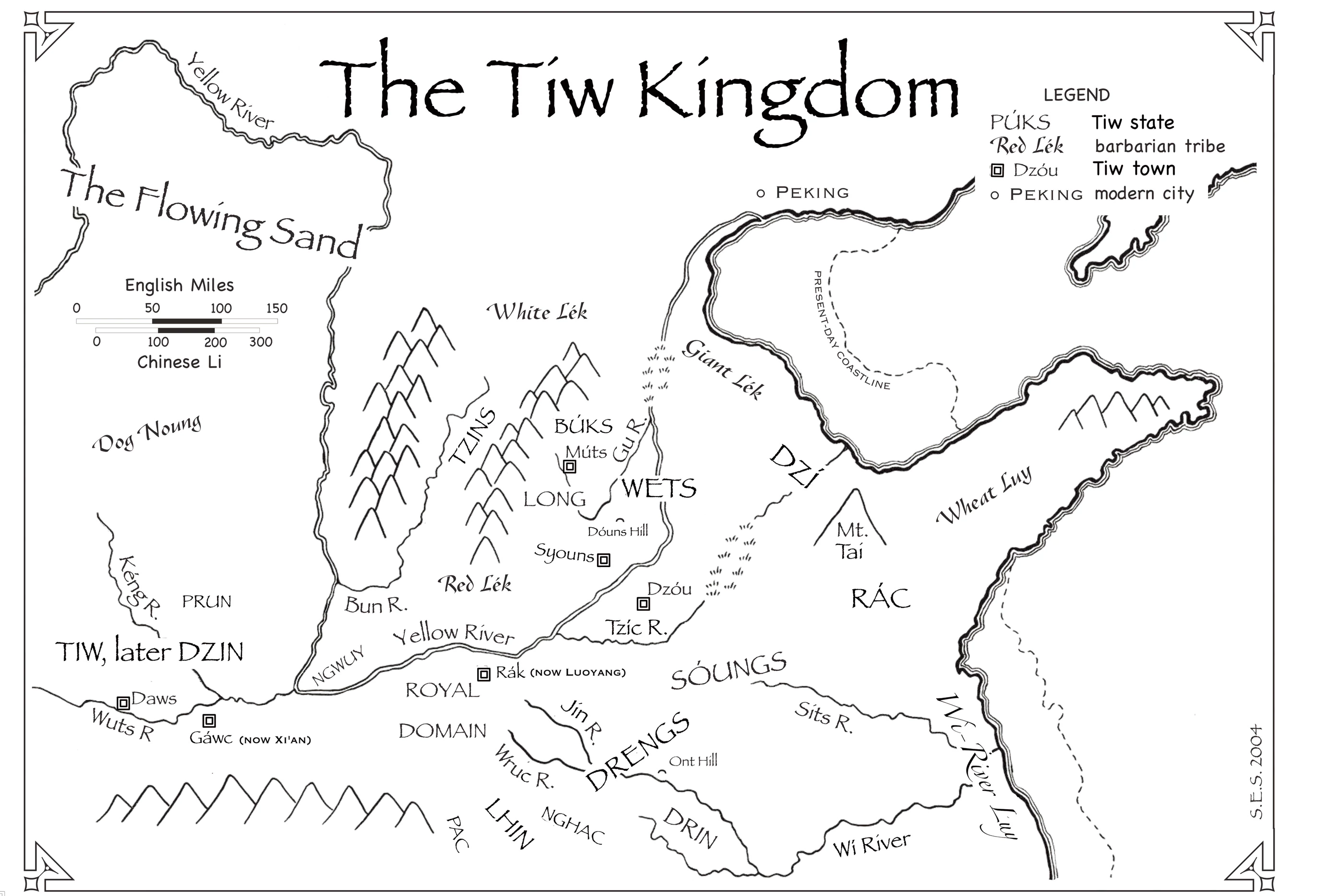
今年年初幫助自稱「老眼昏瞶(almost 80-year-old eyes)」的散復生教授重新校對了一遍此書的附錄詞表,揪出了幾個錯誤。這個表格是當初校對的結果,但不保證我的版本與書中的相契無郤。
散氏的這部著作中所用的擬音系統是許思萊(Axel Schuessler)的「OCM (Minimal Old Chinese)」擬音,但具體細節與許氏著作卻稍有不同,不知道是散氏的修改還是許氏的後續更新。
本書附錄詞表的擬音,我已收入 RIME 上古漢語輸入方案集錄,可用「上古漢語(許思萊)OC_schuesslerOC」進行輸入,散氏著作特有的擬音用「Ⓖ」標記。
總之,表格就在下面。表格中的 OCM 是我自己推算的。
網友「bili67100711242」對我提及散復生的擬音,所以把這個檔案找出來發在這裏,也不是什麼值得藏着掖著的。
表格「.xlsx」文件可到此下載:Google Docs
擬音轉寫歸納
這裏的轉寫是散氏自己做的一套系統,還是比較容易見字求聲的。
| OCM | 轉寫 | OCM | 轉寫 | |
|---|---|---|---|---|
| ◌̂ | ◌̀ | ◌̥ ◌̊ | h | |
| u | ou | ʰ | h | |
| ə | u | -ʔ | -c | |
| j | y | ʔr | rr | |
| ŋ | ng | ʔw | ww | |
| ɦ | gh | ʔj | yy | |
| tsʰ | ts | mʔ | mp | |
| ts | tz | nʔ | nt | |
| sr | sh | ŋʔ | nk | |
| tsʰr | ch | k-h | k’h | |
| tsr | j | |||
| dzr | dj | ʔ(-V) | 不寫 |
表格
| OCM | 轉寫 | 釋義 | 漢字 |
|---|---|---|---|
| ʔa | a | in, at, on, with | 於 |
| ʔâ | à | a crow | 烏 |
| ʔâ, ʔâ-ɦâ | à, à-ghà | oh! | 於, 於乎 |
| ʔâk | àk | bad | 惡 |
| ʔâks | àks | to hate | 惡 |
| ʔamʔ | amp | 1. to cover, spreading over; Amp Suk (Yan Xi), a nobleman of Dzin | 奄; 奄息 |
| 2. thickening, gathering (clouds) | 渰 | ||
| ʔan | an | 1. thereat; X an, when X | 焉 |
| 2. how? | 焉 | ||
| 3. a syllable inserted for rhythm | 焉 | ||
| ʔân | àn | 1. how, where, what? | 安 |
| 2. peace, peaceful, solemn | 安 | ||
| ʔaŋ | ang | 1. middle; end | 央 |
| 2. deep and strongly flowing | 泱 | ||
| ʔaŋʔ-tʰaŋʔ | ank-thank | disconcerted | 怏惝 |
| ʔâns | àns | repress | 按 |
| ʔanʔ | ant | 1. lie down | 偃 |
| 2. silurid catfish | 鰋 | ||
| ʔât | àt | stop, repress | 遏 |
| ʔâts | àts | ample, rich (of clouds); numerous | 藹 |
| ʔaw, ʔaw-dawʔ | aw, aw-dawc | delicately lovely | 夭, 夭紹 |
| ʔawʔ | awc | kill, destroy | 夭 |
| ʔâwk | àwk | 1. moisten, hence glossy; Àwk (Wo), a place-name | 沃 |
| 2. silver-washed | 鋈 | ||
| ʔaj | ay | 1. ah!; ay-tzay, whoopee! | 猗; 猗嗟 |
| 2. igiri tree, Idesia polycarpa | 椅 | ||
| ʔâj | ày | 1. a slope | 阿 |
| 2. pillar, beam; Ày Gràng (A Heng), kingmaker to first Un king | 阿; 阿衡 | ||
| ʔajʔ | ayc | lean on, pull aside | 倚 |
| ʔâjʔ, ʔâjʔ-nâjʔ | àyc, àyc-nàyc | luxuriant | 猗, 猗儺 |
| bâ | bà | rushes, reeds | 蒲 |
| bâ-ba | bà-ba | crawl | 匍匐 |
| ba-sŋâ | ba-sngà | rose mallow | 扶蘇 |
| baʔ | bac | 1. protect, help | 輔 |
| 2. father | 父 | ||
| 3. cooking pot | 釜 | ||
| 4. detachable sides to wagon | 輔 | ||
| bâk | bàk | to press; thin | 薄 |
| bâk, bâk-ŋan | bàk, bàk-ngan | initial particle: well now, … | 薄, 薄言 |
| bam | bam | every | 凡 |
| ban | ban | 1. abundant | 繁 |
| 2. burn, roast | 燔 | ||
| 3. fence, hedge | 樊 | ||
| 4. uncoloured garment | 袢 | ||
| 5. hoary mugwort | 蘩 | ||
| bân | bàn | 1. turn round | 般 |
| 2. joy | 槃 | ||
| baŋ | bang | 1. withstand, be a match for; dyke, embankment | 防 |
| 2. bream | 魴 | ||
| 3. room, esp. side-room | 房 | ||
| bâŋ | bàng | 1. side | 旁 |
| 2. forceful | 彭 | ||
| bâns-wans | bàns-wans | relaxed, undisciplined | 畔援 |
| bas | bas | attach; reach to | 傅 |
| bâs | bàs | a course, career | 歩 |
| bat | bat | 1. to attack, hit; to cut | 伐 |
| 2. a shield | 伐 | ||
| bât | bàt | 1. trudge, trample; bàt-dap, “trudge and wade”: travel across country | 跋; 跋涉 |
| 2. halt in the open | 茇 | ||
| 3. end of an arrow | 拔 | ||
| 4. sacrifice to the Spirits of the Road | 軷 | ||
| bât | Bàt | Bo, the Demon of Drought | 魃 |
| bats | bats | to bark | 吠 |
| bâts | bàts | 1. flutter; a streamer | 旆 |
| 2. thin out | 拔 | ||
| bawʔ | bawc | compact, dense | 苞 |
| bâwks | bàwks | violent; use strength to overcome | 暴 |
| baj | bay | skin | 皮 |
| bâj-sâj | bày-sày | a ritual dance, see Ode 137 | 婆娑 |
| bajs | bays | to cover, be covered; a head-dress | 被 |
| be | be | 1. accumulate | 埤 |
| 2. tripe | 脾 | ||
| bek | bek | 1. a law; lawful | 辟 |
| 2. to open | 闢 | ||
| 3. beat the breast | 擗 | ||
| bêk | bèk | tile | 甓 |
| beks | beks | avoid, move away | 避 |
| ben | ben | glib; insincere words | 諞 |
| bêŋ | bèng | 1. jug | 缾 |
| 2. screen, protecting wall | 屏 | ||
| bêŋʔ | bènk | side by side, together | 並 |
| bês | bès | netsuke; to wear hanging from girdle | 佩 |
| bets | bets | worn-out | 敝 |
| bi | bi | 1. abundant, large; enlarge | 膍 |
| 2. make ample, strengthen; big oneself up | 毗 | ||
| 3. panther | 貔 | ||
| bin | bin | 1. urgent, pressing | 頻 |
| 2. become wife to | 嬪 | ||
| 3. a water plant, probably water clover | 蘋 | ||
| binʔ | bint | female animal | 牝 |
| bis | bis | 1. assemble, unite, combine; be concordant | 比 |
| 2. braid | 紕 | ||
| bit | bit | 1. nonchalant, offhand | 怭 |
| 2. fat and robust (of a horse) | 駜 | ||
| bît | bìt | fragrant | 苾,飶 |
| biw | biw | flow; Biw-dray (Biaochi), a stream in Xi’an | 滮; 滮池 |
| bo | bo | wild duck; Bo (Fu), a mountain in southern Shandong | 鳧 |
| bôk | bòk | driver, servant | 僕 |
| boŋ | bong | 1. meet | 逢 |
| 2. sew | 縫 | ||
| bôŋ | bòng | 1. luxuriant foliage | 蓬 |
| 2. a plant, possibly hairy fleabane | 蓬 | ||
| 3. boom! | 韸 | ||
| 4. disorderly | 蓬 | ||
| boŋs | bongs | seam | 縫 |
| bos | bos | be added to, stick to | 附 |
| bu | bou | 1. strong and numerous | 浮 |
| 2. float | 浮 | ||
| bû | bòu | 1. collect, assemble; come together; all | 裒 |
| 2. a long coat, esp. quilted | 袍 | ||
| 3. a wide-skirted robe; Bòu (Bao), a placename; Bòu Sluc (Bao Si), concubine of king Iw | 褒; 褒姒 | ||
| bu-ju | bou-you | mayfly | 蜉蝣 |
| buʔ | bouc | large and fat; a large mound; abundant; bouc-toung, grasshopper | 阜; 阜螽 |
| bûʔ | bòuc | carry in the arms | 抱 |
| buk | bouk | return, restore | 復 |
| brâk | bràk | white | 白 |
| brâŋ | Bràng | Peng, a place in Drengs | 彭 |
| brans | brans | cap, specifically the cap of manhood | 弁 |
| brânʔ | brànt | slope | 阪 |
| brâts | bràts | be ruined | 敗 |
| bren | bren | punctilious | 采 |
| breŋ | breng | 1. level, to be just; to settle; peaceful; Breng (Ping), name of first Eastern Tiw king (p. 9) | 平 |
| 2. lad’s-love (see Ode 161) | 苹 | ||
| brês | brès | fine grain | 粺 |
| briʔ | bric | be separated | 仳 |
| brû | bròu | 1. bake, roast | 炰 |
| 2. gourd | 匏 | ||
| 3. kitchen, butchery | 庖 | ||
| brû-hû | bròu-hòu | shout and bawl | 咆虓 |
| brəks | bruks | prepare, provide, ready, complete | 備 |
| brən | brun | poor, poverty | 貧 |
| brəŋ | brung | 1. full, solid | 馮 |
| 2. stand on, rely on | 馮 | ||
| 3. wade across a river | 馮 | ||
| brəs | brus | overbearing | 奰 |
| bə̂ | bù | accompany, associate, support | 陪 |
| bə-ləʔ | bu-luc | plantain | 芣苢 |
| bəʔ | buc | 1. lady, wife | 婦 |
| 2. carry on the back | 負 | ||
| bə̂ʔ | bùc | double | 倍 |
| bəʔ-saŋ | buc-sang | carriage-box, carriage | 服箱 |
| bək | buk | 1. serve, service | 服 |
| 2. to wear; clothes | 服 | ||
| 3. lie down | 伏 | ||
| 4. train and use an animal | 服 | ||
| 5. submit, be dominated | 服 | ||
| 6. a quiver | 服 | ||
| 7. inner horses of a team | 服 | ||
| 8. intense thought | 服 | ||
| bə̂ks | bùks | turn the back on, be disloyal, rebel | 背 |
| bə̂ks | Bùks | Bei, a place-name (see p. 66) | 邶 |
| bəm | bum | float about | 汎 |
| bə̂m | bùm | bushy | 芃 |
| bəms-wâŋ | bums-wàng | phoenix | 鳳凰 |
| bən | bun | 1. river bank, embankment | 濆,墳 |
| 2. a type of elm | 枌 | ||
| 3. great | 賁,頒 | ||
| 4. well-set (of fruit) | 蕡 | ||
| 5. burn, destroy | 焚 | ||
| bən | Bun | Fen, a river of Shanxi | 汾 |
| bə̂ŋ | bùng | 1. a match, equal; a friend | 朋 |
| 2. string of cowrie shells | 朋 | ||
| bənʔ | bunt | swell up | 墳 |
| bət | but | 1. great | 佛 |
| 2. oppose, offend | 咈 | ||
| bə̂ts | bùts | disordered, silly | 悖 |
| bəj | buy | 1. follow on foot | 腓 |
| 2. fat | 肥 | ||
| 3. sick | 痱 | ||
| bjawʔ | byawc | to drop | 摽 |
| tsʰra | cha | begin | 初 |
| tsʰraʔ | chac | 1. bushy, luxuriant, rich; numerically complete, ample; Chac (Chu), a southern state | 楚 |
| 2. thorns, thorny tree | 楚 | ||
| tsʰraŋs-hʷaŋs | changs-hwangs | grief, distress | 愴怳 |
| tsʰrâj | chày | choose | 差 |
| tsʰraj-draj | chay-dray | uneven, long and short mixed | 差池 |
| tsʰro | cho | 1. grass used for fodder or fuel | 芻 |
| 2. hurry, run to; cho-tsang, to step in an agile, well-balanced manner, as in sport, ritual, or dance | 趨; 趨蹌 | ||
| tsʰrôŋ | chòng | wagon | 蔥 |
| tsʰrots | chots | robe with figured top and embroidered skirt | 毳 |
| tsʰrək | chuk | 1. sharp | 畟 |
| 2. to measure depth | 測 | ||
| tsʰrəm | chum | gallop | 駸 |
| tsʰrəm-tsʰraj | chum-chay | uneven | 参差 |
| tsʰrəp | chup | flap the ears | 濕 |
| dâ | dà | 1. the common people; foot soldier, follower | 徒 |
| 2. to butcher; Dà (Tu), a place-name | 屠 | ||
| 3. fatigue, suffering; disabled | 瘏 | ||
| 4. consider, plan, calculate | 圖 | ||
| daʔ | dac | 1. altar to Spirit of Soil; sacrifice to that spirit | 社 |
| 2. field hut | 野 | ||
| dâʔ | dàc | 1. roots | 土 |
| 2. Chinese pear-tree, Pyrus pyrifolia; Dàc (Du), a river of Shaanxi | 杜 | ||
| dak | dak | 1. stone, rock | 石 |
| 2. stately, great | 碩 | ||
| dâk | dàk | to measure, calculate, consider | 度 |
| dâks | dàks | a measure, rule | 度 |
| dân | dàn | sandalwood tree | 檀 |
| daŋ | dang | 1. splendid, ample | 裳 |
| 2. garment covering lower part of body | 裳 | ||
| dâŋ | dàng | 1. hall | 堂 |
| 2. pear tree | 棠 | ||
| daŋs | dangs | 1. wish, would that | 尚 |
| 2. add to | 尚 | ||
| 3. still, yet | 尚 | ||
| 4. high; consider high; Dangs (Shang), a Tiw general | 尚 | ||
| dans | dans | cooked food | 膳 |
| dâns | dàns | to fear | 憚 |
| danʔ | dant | 1. good; approve | 善 |
| 2. area of levelled ground for sacrifices | 墠 | ||
| dânʔ-slêk | dànt-slèk | naked torso | 襢裼 |
| dap | dap | wade across a stream | 涉 |
| dât | dàt | come forward, become prominent, prosper; for a plant to break through the soil | 達 |
| dats | dats | 1. reach, get to, go to, go away | 逝 |
| 2. swear, promise | 誓 | ||
| 3. tell the future using yarrow stalks, see Ode 58 | 筮 | ||
| dâts | dàts | big; dàts-bang, large framework supporting a hog-roast; dàts-pa, dignitary, courtier | 大; 大房; 大夫 |
| dawʔ | dawc | continue, transmit | 紹 |
| dâwks | dàwks | sad | 悼 |
| daws | Daws | Shao, a place-name, see p. 56 | 召 |
| dâws | dàws | robber, scoundrel | 盜 |
| dâj | dày | alligator | 鼉 |
| de | de | to flock to the roost | 提 |
| dê | dè | 1. tranquil | 提 |
| 2. lift | 提 | ||
| deʔ | dec | this; be like this, be correct | 是 |
| deŋ | deng | 1. sincere; truly | 誠 |
| 2. to complete, achieve; peacemaking; Deng (Cheng), second Tiw-dynasty king (p.8) | 成 | ||
| 3. put into a receptacle | 盛 | ||
| dêŋs | dèngs | fix, settle | 定 |
| dês | dès | look at | 題 |
| dêts | dèts | a solitary tree | 杕 |
| dî | dì | 1. cormorant | 鵜 |
| 2. a sprout, shoot | 荑 | ||
| dîʔ | dìc | 1. younger brother | 弟 |
| 2. pleased | 弟 | ||
| dîn | dìn | sound of drum | 闐 |
| dins | dins | careful, circumspect | 慎 |
| dîns | dìns | to set out, present offerings | 奠 |
| dîs | dìs | younger sister, secondary wife | 娣 |
| dit | dit | true, really; that is to say; this, that | 寔 |
| dît | dìt | 1. laugh scornfully | 咥 |
| 2. old age | 耋 | ||
| 3. anthill, mound | 垤 | ||
| dîw | dìw | 1. to adjust, to tune | 調 |
| 2. a kind of cicada | 蜩 | ||
| diwk | diwk | lithe, beautiful; good | 淑 |
| dîwk | dìwk | level and easy (road) | 踧 |
| dzraʔ | djac | hoe | 鉏 |
| dzrâm | djàm | 1. crafty | 毚 |
| 2. high and craggy | 漸 | ||
| dzrâms | djàms | slander | 讒 |
| dzraŋ | djang | bed | 牀;床 |
| dzrânʔ | djànt | carriage box made of interwoven laths | 棧 |
| dzras | djas | to help | 助 |
| dzros | djos | running fast (of a horse) | 驟 |
| dzruŋ | djoung | 1. pile up, accumulate; to exalt, honour; high; Djoung (Chong), a state; djoung ngrà, dogtooth decoration for bell stand | 崇; 崇牙 |
| 2. end; all, whole of | 崇 | ||
| dzrə̂ | djù | wolf | 豺 |
| do | do | 1. strongly, very | 殊 |
| 2. a kind of lance; baton | 殳 | ||
| dô | dò | throw to, to present; throw out | 投 |
| doʔ | doc | to plant, establish | 樹 |
| dok | dok | 1. apply; applied to | 屬 |
| 2. caterpillar | 蠋 | ||
| dôk | dòk | alone | 獨 |
| don | don | hasten; rapid | 遄 |
| dôn | dòn | 1. grieved | 慱 |
| 2. rich, plentiful (dew) | 漙 | ||
| 3. numerous | 敦 | ||
| 4. eagle | 鷻 | ||
| dôŋ | dòng | 1. bushy, ample | 童 |
| 2. young person; lamb, calf | 童 | ||
| 3. tung tree | 桐 | ||
| 4. join; sort into categories, match; same, shared; together; a hunt meet | 同 | ||
| doŋʔ | donk | swollen, inflated, conceited | 尰 |
| dôŋʔ | dònk | to move | 動 |
| dos | dos | tree | 樹 |
| dôs | dòs | a ‘dou’ food bowl | 豆 |
| du | dou | 1. reject, be hostile to | 魗 |
| 2. enemy | 讎 | ||
| 3. repay, recompense, answer | 讎 | ||
| 4. to toast someone, take wine with them, return a toast | 酬, 醻 | ||
| dû | dòu | stick with feathers attached | 翿 |
| duʔ | douc | receive | 受 |
| duʔ, duʔ-kʰûʔ | douc, douc-khòuc | long life; Douc (Shou), a personal name | 壽, 壽考 |
| dûk | dòuk | 1. poison | 毒 |
| 2. a kind of creeper | 𦺇 | ||
| dun | doun | 1. great | 純 |
| 2. a quail | 鶉 | ||
| dûn | dòun | tie together | 純 |
| dûns | dòuns | blunted; Dòuns (Dun), a hill | 頓 |
| dus | dous | 1. give, issue | 授 |
| 2. sell, esp. sell slaves | 售 | ||
| duj | douy | who? | 誰 |
| dûj | dòuy | 1. collapse, fall down | 隤 |
| 2. tornado | 頹 | ||
| dûjʔ | dòuyc | cap on butt end of weapon | 錞 |
| doj | doy | hang | 垂 |
| dra | dra | 1. eliminate, remove | 除 |
| 2. collect, store, heap up | 儲 | ||
| draʔ | drac | 1. stand in attendance | 佇 |
| 2. lamb | 羜 | ||
| 3. ramie (see Ode 139) | 紵 | ||
| 4. a shuttle | 杼 | ||
| drak | drak | 1. choose | 擇 |
| 2. marsh, pool | 澤 | ||
| drâk | dràk | residence, to inhabit | 宅 |
| dran | dran | the landholding of one farmer | 廛 |
| draŋ | drang | 1. long, tall; a long time; always | 長 |
| 2. intestines | 腸 | ||
| 3. arena, threshing floor; yard used for growing vegetables in spring and storing them in autumn | 場 | ||
| draŋ-tsʰraʔ | drang-chac | starfruit tree, carambola | 萇楚 |
| dras | dras | pass away | 除 |
| draw | draw | audience; morning reception of visitors; court | 朝 |
| drawʔ | drawc | 1. to initiate, institute; active, nimble; drawc-mawc, active | 肇; 肇敏 |
| 2. a flag showing tortoise and snake | 旐 | ||
| draws | draws | to summon | 召 |
| draj | dray | 1. canter (see Ode 163) | 馳 |
| 2. a pool | 池 | ||
| 3. a leat | 沱 | ||
| drajʔ | drayc | cleave wood along the grain | 杝 |
| drajs | drays | earth, ground | 地 |
| dre | dre | a kind of flute | 篪 |
| dre-dro | dre-dro | walk haltingly | 踟躕 |
| dreŋ | dreng | norm, rule; Dreng (Cheng), a state | 程 |
| dreŋs | Drengs | Zheng, a state | 鄭 |
| dret | dret | clear, limpid | 澈 |
| drets | drets | discard; left over | 滯 |
| dri | dri | 1. whetstone | 砥 |
| 2. islet | 坻 | ||
| 3. tarry, be late; walk slowly; slow, long | 遲 | ||
| driʔ | dric | pheasant | 雉 |
| drin | drin | 1. old, of long standing; for a long time | 填 |
| 2. old grain | 陳 | ||
| 3. display, set out, arrange, diffuse; Drin (Chen), a state | 陳 | ||
| 4. path from gate to Great Hall | 陳 | ||
| dris | dris | 1. young, childish | 穉 |
| 2. sow or plant late | 穉 | ||
| drit | drit | order, regulate, orderly, pure | 秩 |
| driw | driw | 1. dense, thick | 綢 |
| 2. nightdress | 裯 | ||
| driw-miws | driw-miws | to bind round | 綢繆 |
| driwk | driwk | axle; Driwk (Zhou), a place in Drengs | 軸 |
| driws | driws | helmet | 胄 |
| drôk | dròk | muddy, muddled | 濁 |
| droŋ | drong | 1. slow-ripening grain | 重 |
| 2. double; Drong-nuc (Chong-er), heir to the dukedom of Tzins who deposed a pretender in 636, see Ode 134 | 重; 重耳 | ||
| droŋ-gaw | drong-gaw | see gaw | |
| droŋʔ | dronk | heavy | 重 |
| druʔ | drouc | crupper; Drouc (Zhou), last Un king (see p.8) | 紂 |
| druk | drouk | cylinder | 柚 |
| druŋ | droung | 1. metallic sound, tinkle | 沖 |
| 2. insect; a living creature generally | 蟲 | ||
| druŋs | droungs | a second son; Droungs (Zhong), a clan name | 仲 |
| druts | drouts | cause resentment | 懟 |
| drə | dru | 1. grasp, hold | 持 |
| 2. regulate, arrange, work with, manipulate | 治 | ||
| drəʔ | druc | 1. provide, collect | 峙 |
| 2. stand, stand still, stop | 跱 | ||
| drək | druk | straight; right; extensive | 直 |
| drəks | druks | hold upright | 植 |
| drəm | drum | submerged; to sink | 沉 |
| drə̂mʔ | drùmp | soaking (in dew), deep | 湛 |
| drən | drun | dust | 塵 |
| drəŋ | drung | 1. to correct, chastise | 懲 |
| 2. suppress | 懲 | ||
| drəŋʔ | drunk | I, said by king; the “royal we” | 朕 |
| drəp | drup | to cluster like insects | 蟄 |
| drjawk | dryawk | sleek, brilliant, glossy; to wash | 濯 |
| drjawks | dryawks | wash clothes | 濯 |
| də | du | 1. this, a certain | 時 |
| 2. correct, good | 時 | ||
| 3. fowl-hole in wall | 塒 | ||
| də̂ | dù | 1. a tower | 臺 |
| 2. sedge used to make rainwear | 薹 | ||
| dəʔ | duc | 1. time; then, now; season, seasonable; at all times, constantly | 時 |
| 2. rely on, depend on | 恃 | ||
| 3. market | 市 | ||
| dək | duk | 1. namely | 寔 |
| 2. level | 殖 | ||
| 3. limpid | 湜 | ||
| də̂k | dùk | 1. upright, straight | 特 |
| 2. one of a pair, mate; a match for; an only one | 特 | ||
| 3. a three-year-old animal | 特 | ||
| dəm | dum | 1. reliable, trustworthy; to trust, rely on | 忱, 諶 |
| 2. small stove | 煁 | ||
| dəmʔ | dump | mulberry fruit | 葚 |
| də̂mʔ | dùmp | hang down (hair) | 髧 |
| dəms | dums | excessively, very | 甚 |
| dən | dun | 1. time; timely | 辰 |
| 2. doe | 麎 | ||
| dəŋ | dung | 1. lift up, present, honour, celebrate; receive, hence meet in battle | 承 |
| 2. continue | 承 | ||
| də̂nʔ | dùnt | cause to cease; extinguish, ruin, destroy | 殄 |
| djaŋ | dyang | 1. standard, normal, constant; Dyang (Chang), a city in the west of Ràc | 常 |
| 2. to taste; the “tasting”, hence the autumn sacrifice | 嘗 | ||
| 3. bagrid catfish | 鱨 | ||
| djaŋ, djaŋ-lîts | dyang, dyang-lìts | cherry tree | 常, 常棣 |
| djaŋs | dyangs | above, up, on | 上 |
| djaŋʔ | dyank | go up | 上 |
| djaw | dyaw | tablets of even-numbered ancestors in temple | 昭 |
| djâw | dyàw | 1. Chinese trumpet vine, Campsis grandiflora | 苕 |
| 2. a type of pea | 苕 | ||
| djâwʔ | dyàwc | pierce, cut | 趙 |
| djâwk | dyàwk | to condole, pity; grieved | 弔 |
| djawk-jawk | dyawk-yawk | peony | 勺藥 |
| dzâ | dzà | advance, go to, pass; Dzà-rù (Culai), a mountain near Mount Tai | 徂; 徂來 |
| dzaʔ | dzac | stop, prevent | 沮 |
| dzak | dzak | register of field revenues | 籍 |
| dzâk | dzàk | 1. return a toast, reward | 酢 |
| 2. oak | 柞 | ||
| dzâks | dzàks | blessing, prosperity, dignity | 祚 |
| dzân | dzàn | damage, injury; cruel | 殘 |
| dzaŋ | dzang | 1. injure | 戕 |
| 2. wall | 牆 | ||
| dzâŋ | dzàng | to store, hoard, treasure up | 藏 |
| dzans | dzans | gift of food; to give a farewell feast | 餞 |
| dzanʔ | dzant | 1. tread, trample | 踐 |
| 2. shallow; armoured with thin mail | 俴 | ||
| dzânʔ | dzànt | a ladle for pouring a libation | 瓚 |
| dzap | dzap | 1. break off hastily | 寁 |
| 2. victory; nimble | 捷 | ||
| dzaw | dzaw | 1. collect firewood | 樵 |
| 2. worn | 譙 | ||
| dzâwk | dzàwk | to bore, chisel out | 鑿 |
| dzâj | dzày | disease | 瘥 |
| dzem | dzem | to lie at the bottom of water; wade | 潛 |
| dzên | dzèn | before, precede, former | 前 |
| dzeŋ | dzeng | 1. for sky to clear | 星 |
| 2. affection | 情 | ||
| dzeŋʔ | dzenk | quiet, pure; to make tranquil, to be quiet, acquiesce | 靖,靜 |
| dzes | dzes | accumulate; a heap | 柴 |
| dzêt | dzèt | cut, trim, hence restrain, govern | 截 |
| dzi | dzi | 1. thatch; to pile up | 茨 |
| 2. puncture-vine | 茨 | ||
| dzî | dzì | 1. equal, uniform; reverent; Dzì (Qi), a state | 齊 |
| 2. quick-witted | 齊 | ||
| dzîʔ | dzìc | shepherd’s-purse | 薺 |
| dzin | dzin | 1. luxuriant, growing profusely | 蓁 |
| 2. cicada | 螓 | ||
| dzin | Dzin | Qin, a state, later the first imperial dynasty | 秦 |
| dzins | dzins | 1. promoted, prominent | 藎 |
| 2. ashes; burned | 燼 | ||
| dzinʔ | dzint | exhaust, entirely | 盡 |
| dzis | dzis | 1. follow, associate with; from | 自 |
| 2. oneself | 自 | ||
| dzîs | dzìs | 1. angry | 懠 |
| 2. sheaf, bundle | 穧 | ||
| dzit | dzit | sickness, pain, injure; urgent, energetic; dzit-ouy, terrifying | 疾; 疾威 |
| dzît | dzìt | crestlike | 節 |
| dziw | dziw | 1. collect, bring together | 揫 |
| 2. to achieve, to end | 酋 | ||
| dziw-dzî | dziw-dzì | larva of a kind of beetle | 蝤蠐 |
| dzôk | dzòk | clan | 族 |
| dzoŋ | dzong | follow, pursue, attend to business | 從 |
| dzoŋs | dzongs | follower, attendant | 從 |
| dzot | dzot | 1. exceed; extremely | 絕 |
| 2. extinguish | 絕 | ||
| dzû | dzòu | servant, set of servants; Dzòu (Cao), a small state | 曹 |
| dzû | Dzòu | Cao, a city of Wets, briefly its capital | 漕 |
| dzûʔ | dzòuc | 1. make, do; achieve | 造 |
| 2. unripe (grain) | 皁 | ||
| dzûŋ | dzòung | junction of two rivers | 潀 |
| dzûnʔ | dzòunt | cherry salmon | 鱒 |
| dzus | dzous | come to, attain | 就 |
| dzut | dzout | high-pointed | 崒 |
| dzuts | dzouts | 1. collect, assemble | 萃 |
| 2. fatigue, distress | 瘁 | ||
| dzûj | dzòuy | 1. repress | 摧 |
| 2. break; hence, cut fodder | 摧 | ||
| dzûj, dzûj-ŋûj | dzòuy, dzòuy-ngòuy | craggy | 崔, 崔嵬 |
| dzûjʔ | dzòuyc | offence, crime | 罪 |
| dzôjʔ | dzòyc | sit | 坐 |
| dzôjs | dzòys | a seat | 坐 |
| dzə̂ | dzù | well-endowed, able, strong | 才 |
| dzə̂ʔ | dzùc | at; exist, live | 在 |
| dzə̂k | dzùk | injure | 賊 |
| dzə̂m | dzùm | silkworm | 蠶 |
| dzə̂n | dzùn | to dwell at | 存 |
| dzə̂ŋ | dzùng | 1. hate | 憎 |
| 2. marker of perfect tense | 曾 | ||
| dzə̂ŋs | dzùngs | give; a gift | 贈 |
| dzə̂ns | dzùns | repeatedly | 薦 |
| dzəp | dzup | 1. harmonious | 輯 |
| 2. collect, bring together, hold together | 輯 | ||
| 3. come together and settle, as birds; accomplish | 集 | ||
| dzə̂p | dzùp | mixed, variegated | 雜 |
| dzəs | dzus | to breed, nurture, love, fondle | 字 |
| dzə̂s | dzùs | 1. to load | 載 |
| 2. to erect shuttering for building walls | 栽 | ||
| dzʷan | dzwan | a spring | 泉 |
| ʔek | ek | increase | 益 |
| ʔêk | èk | part of a yoke | 厄 |
| ʔem | em | contented, tranquil | 厭 |
| ʔemʔ | emp | a kind of wild mulberry tree | 檿 |
| ʔems | ems | satiate; abundant, fine | 厭 |
| ʔên | Èn | Yan, a state | 燕 |
| ʔêns | èns | take pleasure, be at ease; to feast; a feast | 燕,宴 |
| ʔêns-ʔêns | èns-èns | a swallow (bird) | 燕燕 |
| ʔêns-ʔonʔ | èns-ont | beautiful | 嬿婉 |
| ʔêp | èp | bury | 瘞 |
| ʔep-ʔəp | ep-up | moist | 厭浥 |
| ga | ga | vast, spacious | 渠 |
| gâ | gà | 1. how, why, what? | 胡 |
| 2. dewlap | 胡 | ||
| 3. calabash; a ‘hu’ vase | 壺 | ||
| ga-dra | ga-dra | rough bamboo mat | 籧篨 |
| gaʔ | gac | 1. oppose, resist | 距 |
| 2. black millet | 秬 | ||
| 3. upright posts of drum or bell stand | 虡 | ||
| gâʔ | gàc | 1. rely on, depend on | 怙 |
| 2. blessings | 祜 | ||
| 3. door, house | 戶 | ||
| 4. wooded hill | 岵 | ||
| 5. unknown tree species | 楛 | ||
| 6. must (scarcely-fermented wine, see Ode 165) | 酤 | ||
| gak | gak | tongue | 臄 |
| gâk | gàk | a badger | 貉 |
| gâmʔ | gàmp | rumbling of a carriage | 檻 |
| gan | gan | 1. reverent | 虔 |
| 2. cut, kill | 虔 | ||
| gân | gàn | 1. cold | 寒 |
| 2. prop up, support; wing, to fly | 翰 | ||
| gân | Gàn | Han, a place-name | 韓 |
| gaŋ | gang | strong, violent | 彊 |
| gâŋ | gàng | 1. travel by water | 杭 |
| 2. for a bird to stretch its neck | 頏 | ||
| 3. a row, rank | 行 | ||
| gâŋs | gàngs | strong, vigorous | 行 |
| gaŋʔ | gank | make an effort; compel | 彊 |
| gâns | gàns | guard, protect, ward off | 扞 |
| gânʔ | gànt | dry, drought; Gànt (Han), a mountain | 旱 |
| gat | gat | 1. to exhaust | 竭 |
| 2. surpassing, outstanding; hero; single | 傑 | ||
| ɦâʔ | Ghàc | dynasty, see Ode 304 | 桀 |
| 4. lift on shoulder; high | 揭 | ||
| gât | gàt | 1. what, where, when, how, why? | 曷 |
| 2. rough haircloth | 褐 | ||
| gâts | gàts | to hurt, be hurt; damage, harm | 害 |
| gaw | gaw | high | 喬 |
| gaw, droŋ-gaw | gaw, drong-gaw | a long-tailed species of pheasant | 鷮, 重鷮 |
| gawʔ | gawc | elegant, beautiful | 糾 |
| gâwʔ | Gàwc | Hao, Western Tiw capital (p. 8) | 鎬 |
| gawk | gawk | high-stepping, robust-looking; conceited | 蹻 |
| gâwk | gàwk | a crane | 鶴 |
| gaj | gay | chisel | 錡 |
| gâj | gày | 1. what, how, why? | 何 |
| 2. lotus | 荷 | ||
| gâj | Gày | Yellow River | 河 |
| gajʔ | gayc | cooking pot | 錡 |
| gâjʔ | gàyc | carry | 何 |
| gâjs | gàys | congratulate | 賀 |
| ge | ge | 1. illness; suffer | 疧 |
| 2. wheel hub | 軝 | ||
| ge | Ge | Qishan, a mountain | 岐 |
| gê | gè | why, what, where? Gè Se (Qi Si), brother of a lord of Ràc | 奚; 奚斯 |
| geʔ | gec | a clan; suffix to a name indicating a lady, or the clan leader | 氏 |
| geŋ | geng | city wall, esp. inner wall; city; to fortify | 城 |
| gêŋ | gèng | 1. punish; law | 刑 |
| 2. a model; imitate | 形 | ||
| gêŋ | Gèng | Xing, a state | 邢 |
| gêns | gèns | appear | 見 |
| gênʔ-gʷrânʔ | gènt-gwrànt | beautiful | 睍睆 |
| gêp | gèp | grasp; hold between fingers, pinch; hold on to; embrace | 挾 |
| ɦâ | ghà | a verbal question mark or exclamation mark | 乎 |
| ɦâ | ghà | at; X ghà, at X | 乎 |
| ɦâʔ | ghàc | great; Ghàc (Xia), the first Chinese dynasty, later used for the culturally- Chinese states as opposed to the tribal periphery | 夏 |
| ɦâʔ kjə, ɦâʔ nə̂m | Ghàc Kyu, Ghàc Nùm | Xia Ji, Xia Nam: a mother and son of Drin | 夏姬, 夏南 |
| ɦâw | ghàw | cry out | 號 |
| ɦôʔ | ghòc | after | 後 |
| ɦôs | ghòs | go behind, support | 後 |
| giʔ | gic | regard | 視 |
| gin | gin | slave, servant | 臣 |
| gîn | gìn | wise, worthy | 賢 |
| gip | gip | 1. ten | 十 |
| 2. archer’s armlet | 拾 | ||
| gis | gis | 1. to show | 示 |
| 2. enjoy | 嗜 | ||
| git | git | straight | 佶 |
| gît | gìt | 1. tuck flaps of skirt under girdle to make a carrying-pocket | 襭 |
| 2. for a bird to straighten its neck | 頡 | ||
| giw | giw | long and curved like a horn | 觩 |
| glaŋ | glang | 1. great; Glang (Tang), an antiquarian name for Tzins state; glang-lìts, a type of cherry, probably great white cherry | 唐; 唐棣 |
| 2. dodder (a parasitic weed) | 唐 | ||
| 3. path to temple door | 唐 | ||
| go | go | toil | 劬 |
| gô | gò | 1. a particle, often introductory: “Now,…”, or equivalent to wi, q.v. | 侯 |
| 2. marquis, noble in general; princely | 侯 | ||
| 3. target | 侯 | ||
| 4. throat | 喉 | ||
| 5. dried food, provisions | 餱 | ||
| gôʔ | gòc | thick, ample, generous | 厚 |
| gok | gok | bend the body, curl up | 局 |
| gon | gon | 1. a bend; curved; handsome | 卷 |
| 2. fist; force, strength | 拳 | ||
| gôn | gòn | to build, to complete; Gòn (Wan), son of Jang Kyang, see Ode 26 | 完 |
| gon-la | gon-la | to sprout; beginning of anything | 權輿 |
| goŋ | gong | 1. distressed | 邛 |
| 2. mound | 邛 | ||
| gôŋ | gòng | 1. flood | 洪 |
| 2. disorder, trouble | 訌 | ||
| 3. wild goose | 鴻 | ||
| 4. toad | 鴻 | ||
| goŋs | gongs | together | 共 |
| gos | gos | all, together, complete | 具 |
| gôs | gòs | 1. to escort, wait on | 候 |
| 2. sovereign, lord; Gòs Tzuk (Hou Ji), the Millet Lord, first cereal grower and ultimate ancestor of the Tiw kings, see Ode 245 | 后; 后稷 | ||
| 3. arrow with metal tip | 鍭 | ||
| got | got | stumble, trample | 蹶 |
| gots | gots | 1. agile; alert; Gots (Gui), a personal name | 蹶 |
| 2. small sacrificial table | 嶡 | ||
| gôts | gòts | unite, assemble, collect, encounter; gòts brans, a skullcap (which gathers the hair together) | 會; 會弁 |
| gu | gou | 1. urgent | 絿 |
| 2. long and curved like a horn | 捄 | ||
| 3. seek, beg for | 求 | ||
| 4. meet, assemble | 逑 | ||
| 5. mate, companion; antagonist | 仇 | ||
| 6. a ritual jade object | 球 | ||
| 7. chisel | 銶 | ||
| guʔ | gouc | 1. mother’s brother | 舅 |
| 2. fault, blame, inauspicious | 咎 | ||
| gûʔ | gòuc | 1. bright, splendid; Gòuc Thìn, “Bright Sky”: a name for the supreme god | 昊; 昊天 |
| 2. vast, great | 浩 | ||
| gûk | gòuk | a bird, perhaps crane; Gòuk (Hu), a placename | 鵠 |
| guŋ | goung | poverty, destitution | 窮 |
| gunʔ | gount | distress; embarrassed | 窘 |
| guts | gouts | 1. fail; defective | 匱 |
| 2. food; a gift of food | 饋 | ||
| gûjʔ-dûj | gòuyc-dòuy | exhausted, ill | 瘣隤 |
| gôjʔ | gòyc | calamity; chastise | 禍 |
| grâ | grà | 1. what, how? | 遐 |
| 2. far, far from, far-reaching; pu grà X, X is very probable, there is sure to be X | 遐; 不遐X | ||
| 3. flaw, blemish | 瑕 | ||
| 4. horse of mixed red and white colour | 騢 | ||
| grâʔ | gràc | down, below | 下 |
| grâm | gràm | to carry in the mouth | 銜 |
| grâmʔ | gràmp | jet of water | 檻 |
| grâms | gràms | mirror | 鑒 |
| grân | gràn | 1. large, ample | 閑 |
| 2. to train; well-trained | 閑 | ||
| 3. see grèn | |||
| grâŋ | gràng | 1. walk, a road; act, practise | 行 |
| 2. yoke of carriage, crossbeam | 衡 | ||
| graŋs | grangs | quarrel, quarrelsome | 競 |
| grâŋs | gràngs | go round, inspect | 行 |
| grâŋʔ | grànk | floating-hearts, see Ode 1 | 荇 |
| grâs | gràs | 1. go down, send down | 下 |
| 2. summer | 夏 | ||
| 3. leisure, respite | 暇 | ||
| grât | gràt | hub of axle and linchpin | 舝 |
| grâw | gràw | eat; food | 殽 |
| grâws | gràws | imitate | 傚 |
| gre | gre | run sure-footedly | 伎 |
| grên, grân | grèn, gràn | move leisurely | 閑 |
| grênʔ | grènt | refined | 嫺 |
| grês-grôs | grès-gròs | happy and carefree | 邂逅 |
| gri | gri | 1. old | 耆 |
| 2. great, numerous | 祁 | ||
| grî | grì | cold | 湝 |
| grin | grin | 1. vigorous | 矜 |
| 2. pitiable, to pity | 矜 | ||
| grit | Grit | Ji, a clan name | 姞 |
| groʔ | groc | straitened, in want | 窶 |
| grôŋs | gròngs | alley, lane, street | 巷 |
| grôŋʔ | grònk | neck, to stretch the neck | 項 |
| grôns | gròns | calamity | 患 |
| grôts | gròts | word, speak | 話 |
| gru | grou | road junction, crossroads | 逵 |
| grûk | gròuk | learn | 學 |
| grûŋ | gròung | submit | 降 |
| grûj | gròuy | bosom; to cherish, be anxious about, hope for, long for | 懷 |
| grûjs | gròuys | ruin, ruined | 壞 |
| grə̂k | grùk | 1. kernel; stone fruit | 核 |
| 2. wing | 𦑜 | ||
| grə̂m | grùm | all; complete; to unite | 咸 |
| grəns | gruns | 1. to plaster, bury | 墐 |
| 2. have an audience with a superior | 覲 | ||
| 3. famine | 饉 | ||
| grə̂p | Grùp | a town or river in Nots state | 郃 |
| grə̂p | grùp | assemble; accomplish; to accord with, concordant | 洽 |
| grə̂s | grùs | weapon, tool | 械 |
| gə | gu | 1. his, her, its, their; (occasionally) your, my, our; A gu B, how B A is! | 其 |
| 2. to wish that; auxiliary expressing future or wish | 其 | ||
| 3. dappled grey | 騏, 綦 | ||
| 4. prosperity; fortunate | 祺 | ||
| 5. a fixed time, date | 期 | ||
| gə | Gu | Qi, a river of Henan, see Ode 48 | 淇 |
| gə-rin, rin | gu-rin, rin | unicorn, see Ode 11 | 麒麟, 麟 |
| gək | guk | extreme point; a limit; attain; arrive at extreme | 極 |
| gəm | gum | 1. reeds | 芩 |
| 2. a Chinese lute | 琴 | ||
| gə̂m | gùm | contain | 函 |
| gə̂mʔ-lə̂mʔ | gùmp-lùmp | lotus blossom | 菡萏 |
| gəms | gums | sash | 衿 |
| gən | gun | 1. toil, diligent, devoted | 勤 |
| 2. watercress | 芹 | ||
| gəŋ | gung | strong, terrible | 兢 |
| gə̂ŋ | gùng | constant | 恆 |
| gəns | guns | be near to, keep close to | 近 |
| gənʔ | gunt | near | 近 |
| gəp | gup | come to, attain, go as far as; and, together with | 及 |
| gə̂p | gùp | join, unite; harmony; complete; a mate | 合 |
| gəs | gus | dread; hate; cautious | 忌 |
| gəj | guy | 1. tall | 頎 |
| 2. pray, beg, announce | 祈 | ||
| 3. doorway, threshold | 畿 | ||
| 4. royal domain; guy-pac, minister of war | 畿,圻; 圻父 | ||
| 5. dragon banner | 旂 | ||
| gʷâ | gwà | fox | 狐 |
| gʷâk | gwàk | 1. boil | 濩 |
| 2. reap, cut; Gwàk (Huo), a place-name | 穫 | ||
| gʷaks | gwaks | fear | 懼 |
| gʷân | gwàn | rush, sedge | 萑,莞 |
| gʷaŋ | gwang | mad, foolish | 狂 |
| gʷâŋ | gwàng | 1. yellow; gwàng tìwc, “yellow bird”: black-naped oriole | 黃; 黃鳥 |
| 2. reed organ, or tongue of wind instrument | 簧 | ||
| gʷaŋʔ | gwank | deceive | 迋 |
| gʷânʔ | gwànt | wash | 澣 |
| gʷâs | gwàs | melon, gourd | 瓠 |
| gʷât | gwàt | 1. alive; keep someone alive | 活 |
| 2. join | 佸 | ||
| gʷên | gwèn | suspend | 縣 |
| gʷeŋ | gweng | 1. scared, alone and helpless | 惸,睘,嬛 |
| 2. precious; precious stone | 瓊 | ||
| gʷêŋʔ | gwènk | distant | 泂 |
| gʷênʔ | gwènt | pure (of jade) | 鞙 |
| gʷi | gwi | mallow | 葵 |
| gʷiʔ | gwic | measure, estimate, examine, manage | 揆 |
| gʷîn | gwìn | black | 玄 |
| gʷits | gwits | a shaking movement | 悸 |
| gʷrâŋ | gwràng | to plough crosswise | 衡 |
| gʷrânʔ | gwrànt | brilliant (of stars) | 睆 |
| gʷren | gwren | handsome | 婘 |
| gʷrəj | gwruy | sturdy | 騤 |
| gʷə | gwu | 1. fur garment | 裘 |
| 2. adorned with jewels | 俅 | ||
| 3. triangular blade | 厹 | ||
| 4. remote wilderness | 艽 | ||
| gʷəʔ | gwuc | ancient | 舊 |
| gʷən | gwun | a flock, class; all | 群,羣 |
| gʷə̂ŋ | gwùng | vast, to enlarge | 弘 |
| gʷə̂ts | gwùts | violent, energetic; for a river to break its banks | 潰 |
| gjaw | gyaw | 1. piled up, high, dangerous | 翹 |
| 2. mallow | 荍 | ||
| ha | ha | modest | 虛 |
| hâʔ | hàc | whack! | 許 |
| hâk | hàk | moat | 壑 |
| hamʔ-sôn | Hamp-sòn | Xianyun, a northern tribe, see Ode 167 | 玁狁 |
| haŋ | hang | 1. fragrant, perfume | 香 |
| 2. region, tract | 鄉 | ||
| 3. a feast; enjoy a feast; provide food and drink for a feast or sacrifice | 享,饗 | ||
| haŋs | hangs | 1. turn towards, face towards; facing; south (i.e. facing the sun) | 鄉 |
| 2. north-facing window | 向 | ||
| hâns | Hàns | Han River | 漢 |
| hânʔ | hànt | scorch | 暵 |
| hap | hap | sides of body | 脅 |
| hâs | hàs | call out, shout | 呼 |
| hat-haw | hat-haw | type of dog | 猲獢 |
| hâw | hàw | 1. clamour, noise | 囂 |
| 2. wormwood | 蒿 | ||
| hajs | hays | to joke, sport | 戲 |
| hêŋ | hèng | fragrance | 馨 |
| hênʔ | hènt | bright, illustrious; Hènt (Xian), a personal name | 顯 |
| hi | hi | yarrow | 蓍 |
| hlâʔ | hlàc | tiger; Hlàc (Hu), a personal name; hlàc gin, “tiger officers”: special forces | 虎; 虎臣 |
| hok | hok | urge, stimulate | 勗 |
| hoŋ | hong | 1. unlucky, bad; contrary to natural order | 凶 |
| 2. discord; to litigate | 訩 | ||
| hôŋ | hòng | burn | 烘 |
| hos | hos | warm; heat | 煦 |
| hu | hou | 1. to rest; ease, rest; benefit, blessing, happy; grace | 休 |
| 2. kind of bird—owl? | 梟 | ||
| hû | hòu | 1. to clear away, to weed | 薅 |
| 2. a tiger’s roar | 虓 | ||
| huʔ | houc | to rot, decay | 朽 |
| hûʔ | hòuc | good, beautiful | 好 |
| huk | houk | cherish | 慉 |
| hûs | hòus | to love | 好 |
| hrâk | hràk | 1. majestic | 赫 |
| 2. fire-red | 赫 | ||
| 3. to manifest | 赫 | ||
| hrâks | hràks | scold, rebuke | 嚇 |
| hrâwk | hràwk | rich white colour (of birds) | 翯 |
| hrâws | hràws | filial piety | 孝 |
| hriwk | hriwk | Japanese dock | 蓫 |
| hrə̂mʔ | hrùmp | roaring, enraged (as a tiger) | 闞 |
| hə | hu | brightness, splendour | 熙 |
| hə | Hu | Xi, a marquis of Ràc, see Ode 300 | 僖 |
| həʔ | huc | joy, rejoice | 喜 |
| hək | huk | red | 奭 |
| həm | hum | enjoy; elated | 歆 |
| hən | hun | rejoice; delicious | 欣 |
| həŋ | hung | raise, rise, prosper | 興 |
| həp | hup | 1. united, harmonious; to draw in | 翕 |
| 2. to stretch | 翕 | ||
| 3. roar of rushing water | 㴔 | ||
| hət | hut | come to, reach | 迄 |
| həts | huts | to collect, to rest | 塈 |
| həj | huy | 1. groan | 屎 |
| 2. first light of the sun; to dry | 晞 | ||
| hʷa | hwa | 1. oh!, alas!; pained; hwa-tzay, exclamation of excitement or grief | 吁; 吁嗟 |
| 2. great | 訏 | ||
| hʷaʔ | hwac | 1. cork-oak, see Ode 121 | 栩 |
| 2. a ceremonial cap | 冔 | ||
| hʷâk | hwàk | sprouting leaves of bean plants | 藿 |
| hʷan | hwan | 1. forget | 諼 |
| 2. ocarina | 壎 | ||
| hʷân | hwàn | a badger | 貆 |
| hʷâŋ | hwàng | loud sound of crying or bell | 喤 |
| hʷaŋs | hwangs | 1. give, confer on | 貺 |
| 2. increase | 況 | ||
| hʷaŋʔ | hwank | distressed, disappointed, confused | 怳 |
| hʷâns | hwàns | 1. ample | 渙 |
| 2. cry out, clamour | 嚾 | ||
| hʷanʔ | hwant | brilliant, illustrious, conspicuous | 恒,咺 |
| hʷât | hwàt | sound of splash | 濊 |
| hʷâts | hwàts | 1. ample, deep | 噦 |
| 2. tinkle | 噦 | ||
| 3. sound of wings | 翽 | ||
| hʷe | hwe | marlinspike | 觿 |
| hʷen | hwen | smart, nimble | 儇 |
| hʷêns | hwèns | bluish-black horse | 駽 |
| hʷîn | hwìn | far away | 洵 |
| hʷins | hwins | hibiscus; Hwins (Shun), a legendary emperor | 舜 |
| hʷit | hwit | water channel, moat | 洫 |
| hʷît | hwìt | blood | 血 |
| hʷîts | hwìts | small; to make a shrill sound | 嘒 |
| hʷraŋ | hwrang | elder brother | 兄 |
| hʷə̂ʔ | hwùc | dried, minced, and pickled meat | 醢 |
| hʷək | hwuk | bundle of threads | 緎 |
| hʷəks | hwuks | still, quiet | 侐 |
| hʷən | hwun | 1. befuddled | 醺 |
| 2. to smoke, steam | 熏 | ||
| hʷəns | hwuns | instruct, explain; obey | 訓 |
| hʷəj | hwuy | 1. flame, brightness | 輝 |
| 2. a kind of pheasant | 翬 | ||
| hʷəjʔ | hwuyc | 1. sound of thunder | 虺 |
| 2. the young of snakes, brood of snakes | 虺 | ||
| hʷəjs | hwuys | vegetation | 卉 |
| hjâw | hyàw | alarm call | 嘵 |
| hjawʔ | hyawc | few | 少 |
| hjawk | hyawk | beautiful, fine | 鑠 |
| hjeŋ | hyeng | sound, voice, fame | 聲 |
| hjos | hyos | guard a border | 戍 |
| hju | hyou | receive, harvest; front-to-back dimension of a vehicle | 收 |
| hjuʔ | hyouc | 1. to keep, guard | 守 |
| 2. to hunt | 狩 | ||
| hjus | hyous | an animal; to hunt | 獸 |
| ʔi | i | this; is; a grammar word; equivalent to wi 維, q.v. | 伊 |
| ʔî | ì | 1. a wild duck, perhaps widgeon | 鷖 |
| 2. a syllable inserted for rhythm | 兮 | ||
| ʔi-ʔuj | i-ouy | woodlouse | 伊威 |
| ʔin | in | 1. continue | 因 |
| 2. rely on, trusting, devoted | 因 | ||
| 3. marriage; an in-law | 姻 | ||
| 4. sacrifice | 禋 | ||
| 5. piebald horse | 駰 | ||
| 6. mat | 茵 | ||
| ʔin-tâ | in-tà | double gate in an outer town wall | 闉闍 |
| ʔit | it | one; it X, all X, the whole of X; It Nin, “the One Man”: the king | 一,壹; 一人 |
| ʔît | ìt | choke | 噎 |
| ʔits | its | 1. excellent, beautiful; deep | 懿 |
| 2. repress; repressed, dignified | 懿 | ||
| ʔîts | ìts | 1. overcast, windblown sky | 曀 |
| 2. kill; a fallen dead tree | 殪 | ||
| ʔiw | iw | 1. dark; Iw (You), last king of Western Tiw | 幽 |
| 2. the call of a deer | 呦 | ||
| ʔîwʔ-kiwʔ | ìwc-kiwc | elegant, beautiful | 窈嬌 |
| ʔîwʔ-lîwʔ | ìwc-lìwc | alluring | 窈窕 |
| tsra | ja | to pickle | 菹 |
| tsraʔ | jac | 1. precipitous, dangerous, impenetrable | 阻 |
| 2. small sacrificial table | 俎 | ||
| tsrâk | jàk | clear away trees and bushes | 柞 |
| tsrâmʔ | jàmp | to cut off, cut down | 斬 |
| tsraŋ | Jang | Zhuang, name of various nobles; Jang Kyang (Zhuang Jiang), a noblewoman of Wets, see Ode 26 | 莊; 莊姜 |
| tsraŋs | jangs | strong, robust, great | 壯 |
| tsras | jas | to curse; an oath | 詛 |
| tsrâw | jàw | nest | 巢 |
| tsrek | jek | oblique, slanting | 仄 |
| tsrêk | jèk | mat | 簀 |
| tsrêŋ | jèng | strife, contend with one another; jèng X, fight about X | 爭 |
| tsrêts | jèts | suffer; distress | 瘵 |
| tsrî | jì | purify oneself; purified | 齋 |
| tsrin | jin | 1. numerous, prolific | 溱 |
| 2. arrive, reach | 臻 | ||
| 3. hazel | 榛 | ||
| tsrin | Jin | Zhen, a river of Henan | 溱 |
| tsrit | jit | a comb | 櫛 |
| tsro | jo | a groom | 騶 |
| tsrot | jot | to sprout | 茁 |
| tsru | Jou | Zou, a personal and place name | 棸 |
| tsrûʔ | jòuc | claw | 爪 |
| tsrus | jous | crinkle | 縐 |
| tsrə | ju | 1. black | 緇 |
| 2. newly cultivated field | 菑 | ||
| tsrək | juk | side; turn on its side | 側 |
| tsrəms | jums | to bad-mouth, accuse | 譖 |
| tsrəp | jup | 1. cluster together, swarm | 揖 |
| 2. collect, store; fold up (wings) | 戢 | ||
| 3. crowded together | 濈 | ||
| tsrəs | jus | 1. cleave apart | 菑 |
| 2. minced meat | 胾 | ||
| 3. standing dead tree | 菑 | ||
| ka | ka | 1. grasp | 据 |
| 2. netsuke gem | 琚 | ||
| 3. vehicle | 車 | ||
| 4. a grammar word | 居 | ||
| kâ | kà | 1. now, for the moment | 姑 |
| 2. guilt, crime | 辜 | ||
| 3. father’s sister | 姑 | ||
| kaʔ | kac | 1. in the end | 居 |
| 2. round basket | 筥 | ||
| kaʔ, kas | kac, kas | dwell; sit down, repose; a position; tranquil | 居 |
| kaʔ | Kac | Ju, a place name | 莒 |
| kâʔ | kàc | 1. ancient | 古 |
| 2. blind | 瞽 | ||
| 3. slack, remiss, defective | 盬 | ||
| 4. drum; to play a percussion instrument | 鼓 | ||
| 5. merchant | 賈 | ||
| 6. net | 罟 | ||
| 7. ram (male sheep) | 羖 | ||
| 8. thigh | 股 | ||
| kâk | kàk | 1. each | 各 |
| 2. shelf; kàk-kàk, one above another like shelves | 閣; 閣閣 | ||
| kâks | kàks | strong, firm | 固 |
| kâm | kàm | sweet; kàm dàng, birchleaf pear | 甘; 甘棠 |
| kâmʔ | kàmp | dare | 敢 |
| kân | kàn | 1. seek, get | 干 |
| 2. dry | 乾 | ||
| 3. rod, pole | 竿 | ||
| 4. a shield | 干 | ||
| 5. river bank; stream in a ravine; Kàn (Gan), a place name | 干 | ||
| kaŋ | kang | 1. limit, frontier | 疆 |
| 2. ? fierce, or ? uxorious, see Ode 49 | 彊 | ||
| kâŋ | kàng | 1. hard | 剛 |
| 2. controlling rope of a net; regulator, to regulate | 綱 | ||
| 3. hill, ridge | 岡 | ||
| kans | kans | set up, establish | 建 |
| kâns | kàns | to correct, keep in line | 榦 |
| kas | kas | 1. arrogant | 倨 |
| 2. depend on | 據 | ||
| 3. “walking-stick tree”, see Ode 241 | 椐 | ||
| 4. see kac, kas | |||
| kâs | kàs | 1. old, long acquaintance | 故 |
| 2. turn one’s head and look; look with favour on; Kàs (Gu), a state | 顧 | ||
| 3. cause, reason | 故 | ||
| kat | kat | 1. rising straight and slender, as a lance | 孑 |
| 2. raise; high, tall | 揭 | ||
| 3. whole, integral | 孑 | ||
| kât | kàt | lablab bean and related vines (see Ode 2) | 葛 |
| kâts | kàts | namely; yes indeed; and so; because | 蓋 |
| kaw | kaw | 1. elegant, beautiful | 嬌 |
| 2. high; proud, arrogant | 驕 | ||
| kâw | kàw | 1. high | 高 |
| 2. lamb | 羔 | ||
| kawʔ | kawc | strong, warlike | 蹻 |
| kâwʔ | kàwc | white or undyed silk | 縞 |
| kâws | kàws | grease, ointment; moisten, enrich | 膏 |
| kâj | kày | 1. all right | 哿 |
| 2. sing; song | 歌 | ||
| 3. axe-handle | 柯 | ||
| kajʔ | kayc | pull aside | 掎 |
| ke | ke | 1. only | 祗 |
| 2. branch | 支,枝 | ||
| kê | kè | chicken | 雞 |
| keʔ | kec | a grammar word; may it be so!; verbal exclamation mark | 只 |
| kêk | kèk | beat a drum | 擊 |
| kêm-krâ | kèm-krà | rushes, sedge | 蒹葭 |
| kên | kèn | 1. shoulder | 肩 |
| 2. mature pig | 豜 | ||
| kêŋ | Kèng | Jing, a river of Shaanxi | 涇 |
| kêŋ | kèng | to plan; a norm; kèng-weng, regulate | 經; 經營 |
| kêns | kèns | to see | 見 |
| kes | kes | wicked, malign | 忮 |
| kês | kès | continue, connect | 繼 |
| kêt | kèt | pure | 潔 |
| kets | kets | to tailor clothes | 制 |
| kʰa | kha | 1. strong, robust | 祛 |
| 2. sleeve | 袪 | ||
| 3. mound, ruins, abandoned city | 虛 | ||
| 4. uprights of a musical-instrument stand | 虛 | ||
| kʰaʔ | khac | put away, eliminate | 去 |
| kʰâʔ | khàc | bitter; sowthistle | 苦 |
| kʰak | khak | coarse cloth | 綌 |
| kʰâk | khàk | respect; reverent | 恪 |
| kʰaŋ | Khang | Qiang, a western group of tribes | 羌 |
| kʰâŋ | khàng | prosperous; at ease; joyful; Khàng (Kang), name of the third Tiw-dynasty king, and of a lord of Dzin | 康 |
| kʰâŋs | khàngs | 1. high | 伉 |
| 2. to set up | 抗 | ||
| kʰâns | khàns | rejoice | 衎 |
| kʰas | khas | go away | 去 |
| kʰat | khat | 1. go away | 朅 |
| 2. martial-looking | 朅 | ||
| kʰât | khàt | thirst, thirsty | 渴 |
| kʰats | khats | 1. to rest | 愒, 憩 |
| 2. lift one’s clothes | 揭 | ||
| kʰaw | khaw | vigorous, robust | 驕 |
| kʰâjʔ | khàyc | be able to; khàyc Verb, Verbable, worth Verbing; khàyc luc, can use X to do, (or just) can, be able | 可; 可以 |
| kʰeʔ | khec | stand on tiptoe | 跂 |
| kʰêŋs | khèngs | 1. empty; exhaustively | 罄,罊 |
| 2. musical stone | 磬 | ||
| kʰêŋʔ | khènk | be willing | 肯 |
| kʰens | khens | reprimand | 譴 |
| kʰêns | khèns | be visible, be like | 俔 |
| kʰenʔ | khent | send | 遣 |
| kʰenʔ-kʷʰanʔ | khent-kwhant | cling to; attached closely | 繾綣 |
| kʰes | khes | slanting | 𢺵 |
| kʰêt-kʰôt | khèt-khòt | separated, far apart | 契闊 |
| kʰêts | khèts | 1. to notch a tortoise shell for divination | 契 |
| 2. distressed; Khèts (Qi), ancestor of the Un dynasty, see Ode 303 | 契 | ||
| 3. separated, distanced | 契 | ||
| kʰîʔ | khìc | 1. to open, lead the way | 啟 |
| 2. bow head to ground | 稽 | ||
| 3. kneel; khìc-kac, khìc-k’hlac, to rest, take a break | 啟; 啟居, 啟處 | ||
| kʰîn | khìn | lead a beast | 牽 |
| kʰits | khits | throw away, abandon | 棄 |
| kʰlaʔ | khlac | large; large-mouthed | 哆 |
| k-hlaʔ | k’hlac | stay, dwell; to place, stay still; be tranquil | 處 |
| kʰlak | khlak | red | 赤 |
| k-hlaŋ | k’hlang | splendid, bright; to flourish | 昌 |
| k-hlaŋs | k’hlangs | to lead singing, intone | 倡 |
| kʰlajʔ | khlayc | enlarge | 移 |
| kʰloŋ | khlong | even, just | 傭 |
| k-hlun | k’hloun | stream, river | 川 |
| k-hlut | k’hlout | go out, bring out, send out | 出 |
| k-hluts | k’hlouts | bring out, take out | 出 |
| k-hləŋ | k’hlung | lift up | 稱 |
| k-hləŋs | k’hlungs | estimate, appreciate; equal to, corresponding to | 稱 |
| kʰo | kho | drive forward; trot (see Ode 163) | 驅 |
| kʰôʔ | khòc | mouth | 口 |
| kʰok | khok | a bend; bent; khok-gok, tangled | 曲; 曲局 |
| kʰôŋ | khòng | hollow, empty | 空 |
| kʰôŋs | khòngs | 1. to exhaust | 空 |
| 2. pull up a horse; throw; throw oneself on, hence rush to | 控 | ||
| kʰoŋʔ | khonk | fear | 恐 |
| kʰôŋʔ | khònk | very, greatly | 孔 |
| kʰôs | khòs | robber | 寇 |
| kʰot | khot | 1. gap, defect | 闕 |
| 2. watchtower over gateway | 闕 | ||
| kʰûʔ | khòuc | 1. old; deceased father | 考 |
| 2. achieve, complete (a feast) | 考 | ||
| 3. examine | 考 | ||
| 4. to beat | 考 | ||
| 5. a tree species, perhaps Ailanthus fordii | 栲 | ||
| kʰun | khoun | granary | 囷 |
| kʰuŋ | khoung | house, palace, temple | 宮 |
| kʰut | khout | subdue | 屈 |
| kʰût | khòut | dig out | 掘 |
| kʰôj | khòy | beautiful | 𠏀 |
| kʰrâk | khràk | guest, visitor, stranger | 客 |
| kʰran | khran | to tuck up one’s skirt | 褰 |
| kʰraŋ | khrang | a minister | 卿 |
| kʰraŋs | khrangs | happiness, rejoice | 慶 |
| kʰrôts | khròts | comfortable | 噲 |
| kʰrûs | khròus | artful, skilful | 巧 |
| kʰrəp | khrup | weep silently | 泣 |
| kʰrjan | khryan | err, exceed | 愆 |
| kʰə | khu | like a demon mask | 僛 |
| kʰəʔ | khuc | 1. rise | 起 |
| 2. matrimony-vine or boxthorn | 杞 | ||
| 3. a high-quality white millet | 芑 | ||
| 4. bare hillside | 岂 | ||
| kʰə̂k | khùk | 1. self-controlled | 克 |
| 2. can, be able to | 克 | ||
| 3. crush, dominate | 克 | ||
| kʰəm | khum | 1. intense; solemn | 欽 |
| 2. coverlet | 衾 | ||
| kʰə̂m | khùm | able to bear, equal to | 堪 |
| kʰə̂mʔ | khùmp | thump | 坎 |
| kʰəp | khup | dry, scorched | 㬤 |
| kʰə̂ts | khùts | 1. sad | 嘅 |
| 2. to sigh | 愾 | ||
| kʰə̂j | khùy | to open | 開 |
| kʰəjʔ | khuyc | how? | 豈 |
| kʰə̂jʔ | khùyc | happy, joyous, pleasant | 豈,凱 |
| k-hju | k’hyou | 1. ugly, wicked, ominous | 醜 |
| 2. multitude | 醜 | ||
| k-hjus | k’hyous | strong smell | 臭 |
| k-hjəʔ | k’hyuc | 1. teeth | 齒 |
| 2. cooked millet, or to cook millet, esp. for a sacrifice | 饎,糦 | ||
| ki | ki | fat, grease | 脂 |
| kî | kì | hairpin | 笄 |
| kiʔ | kic | 1. delicious | 旨 |
| 2. to point | 指 | ||
| 3. bring about, settle | 耆 | ||
| kim | kim | needle; Kim Hlàc (Zhen Hu), a nobleman of Dzin | 鍼; 鍼虎 |
| kimʔ | kimp | pillow | 枕 |
| kîn | kìn | hard, strong, solid | 堅 |
| kit | kit | 1. lucky, auspicious; Kit (Ji), a personal name | 吉 |
| 2. grasp | 拮 | ||
| kît | kìt | to tie, a knot | 結 |
| kiw | kiw | down-curving (branch) | 樛 |
| kiwʔ | kiwc | twist | 糾 |
| kîws | kìws | call out, shout | 叫 |
| klaʔ | klac | lift, present offerings | 舉 |
| klôk | klòk | valley | 谷 |
| klôŋ | klòng | duke, prince; palace | 公 |
| ko | ko | colt | 駒 |
| kô | kò | 1. curved | 句 |
| 2. hook | 鉤 | ||
| koʔ | koc | oriental raisin-tree | 枸 |
| kôʔ | kòc | 1. if only; truly | 苟 |
| 2. old; old and wrinkled face | 耇 | ||
| 3. fish trap | 笱 | ||
| 4. filth | 垢 | ||
| 5. doesn’t matter | 苟 | ||
| kôk | kòk | 1. treat well; luck | 穀 |
| 2. grain; salary | 穀 | ||
| 3. paper mulberry, Broussonetia papyrifera | 穀 | ||
| 4. wheel hub | 轂 | ||
| kôn | kòn | 1. cap | 冠 |
| 2. a groom, servant | 倌 | ||
| koŋ | kong | provide, serve | 供 |
| kôŋ | kòng | 1. public, impartial | 公 |
| 2. officiate; officer | 工 | ||
| 3. effort, achievement, merit | 功 | ||
| koŋʔ | konk | 1. strengthen | 鞏 |
| 2. join hands; Konk (Gong), a state | 共 | ||
| koŋʔ, koŋʔ-pek | konk, konk-pek | ritual jade disc (see pek) | 珙, 珙璧 |
| kons | kons | look on with affection | 眷, 睠 |
| kôns | kòns | 1. lodge; lodging-house | 館 |
| 2. pour a sacrificial libation | 祼 | ||
| 3. perforate; fuck; serve | 貫 | ||
| konʔ | kont | to roll; kont-nuc, mouse-ear chickweed | 卷; 卷耳 |
| kônʔ | kònt | tube, flute | 管, 筦 |
| kôs | kòs | 1. come across, meet | 覯 |
| 2. come/bring into conflict with, plot against | 構 | ||
| 3. favour | 媾 | ||
| 4. lattice | 冓 | ||
| 5. pheasant’s call | 雊 | ||
| kot | kot | 1. his, her, its, their | 厥 |
| 2. “turtle-foot” fern, see Ode 14 | 蕨 | ||
| kôt | kòt | Chinese juniper; Kòt (Gui), a state | 檜 |
| kôts | kòts | to mince | 膾 |
| ku | kou | 1. collect | 捄 |
| 2. pearl-necked dove | 鳩 | ||
| kû | kòu | 1. large drum | 鼛 |
| 2. bow-case, quiver; put in bow-case | 櫜 | ||
| 3. lazy, incompetent; Kòu Law (Gao Yao), Minister of Crime for the legendary emperor Hwins | 臯,皋; 皋陶 | ||
| kû mə̂n | kòu mùn | outer gate of citadel | 臯門 |
| kuʔ | kouc | 1. nine | 九 |
| 2. onion, leek, garlic | 韭 | ||
| kûʔ | kòuc | pure, bright | 皓, 杲 |
| kuk | kouk | 1. full, ample | 鞠 |
| 2. entirely | 鞫 | ||
| 3. nourish | 鞠 | ||
| 4. to address, inform | 鞠 | ||
| 5. exhaust, go to extreme; destitute | 鞫 | ||
| 6. handful | 匊 | ||
| 7. outside of river bend | 泦 | ||
| kûk | kòuk | announce, report | 告 |
| kun | koun | fallow deer | 麕 |
| kûn | Kòun | a branch of the Luy tribes | 混 |
| kûn | kòun | elder brother; Kòun-ngà (Kunwu), a state | 昆; 昆吾 |
| kuŋ | koung | 1. body, person | 躬 |
| 2. palace, citadel; temple | 宮 | ||
| kûŋ | kòung | to work at; well-worked, solid | 攻 |
| kûnʔ | kòunt | 1. cord | 緄 |
| 2. royal robe embroidered with dragons | 袞 | ||
| kus | kous | 1. rescue, help | 救 |
| 2. go to extremes; extravagant | 究 | ||
| 3. scrutinize | 究 | ||
| 4. a stable | 廄 | ||
| kûj | kòuy | a kind of gemstone | 瑰 |
| kujs | kouys | ashamed | 愧 |
| kôj | kòy | pass by; Kòy (Guo), a stream | 過 |
| kôjʔ-rôjʔ | kòyc-ròyc | 1. potter wasp, Eumenes pomiformis | 蜾蠃 |
| 2. plant related to cucumber, see Ode 156 | 果臝 | ||
| krâ | krà | 1. house, family; Krà (Jia), a personal name | 家 |
| 2. rush, sedge | 葭 | ||
| krâʔ | kràc | 1. great; abundance, felicity | 嘏,假 |
| 2. go to, esp. go to an ancestor’s temple to worship him | 假 | ||
| 3. borrow; kràc mits, “borrow sleep”: to have a nap without undressing | 假; 假寐 | ||
| 4. a three-legged ‘jia’ wine bowl | 斝 | ||
| krak | krak | a kind of lance or sword | 戟 |
| krâk | kràk | arrive, spread out, extend to | 格 |
| krâm | kràm | look at, inspect | 監 |
| krâms | kràms | mirror | 鑒 |
| krân | kràn | red-grass, see Ode 139 | 菅 |
| kraŋ | krang | mound, hill; great; capital city | 京 |
| krâŋ | kràng | soup | 羹 |
| krâŋ-ŋâʔ | kràng-ngàc | seventh in the 60-day cycle | 庚午 |
| kraŋs | krangs | to the end, entirely | 竟 |
| krâŋs | kràngs | continue | 賡 |
| kraŋʔ | krank | 1. great | 景 |
| 2. shadow; Krank (Jing), a hill in Henan | 景 | ||
| krâŋʔ | krànk | suffering, distress | 梗 |
| krâns | kràns | 1. remonstrate, admonish | 諫 |
| 2. stream in a ravine | 㵎 | ||
| krânʔ lêk | Krànt Lèk | Jian Di, mother of Khèts, q.v. | 簡狄 |
| krâp | kràp | 1. familiar, be familiar with | 狎 |
| 2. shell, leather body-armour | 甲 | ||
| krâs | kràs | 1. grain; to sow | 稼 |
| 2. for a woman to marry | 嫁 | ||
| krâw | kràw | area outside city wall | 郊 |
| krâwʔ | kràwc | 1. artful, crafty | 狡 |
| 2. beautiful | 佼 | ||
| 3. rude | 絞 | ||
| krâwk | kràwk | chariot sidebars, used as elbow-rests | 較 |
| krâws | kràws | teach; instruction | 教 |
| krâj | krày | 1. obtain, hit | 加 |
| 2. excellent, delicious, happy; to approve; krày-nga, barbel | 嘉; 嘉魚 | ||
| 3. a hairpin jewel | 珈 | ||
| krâjs | kràys | a yoke, to yoke | 駕 |
| krên | krèn | 1. orchid | 蕑 |
| 2. intervening space, middle, among, in; insert | 閒 | ||
| kreŋ | kreng | 1. attentive; afraid | 驚 |
| 2. bramble, thorny; Kreng (Jing), a southern tribe later absorbed into China as Chac, q.v. | 荊 | ||
| krêŋ | krèng | to plough | 耕 |
| kreŋs | krengs | respectful, careful | 敬 |
| krêŋʔ | krènk | wide awake | 耿 |
| krêns | krèns | replace | 閒 |
| krênʔ | krènt | 1. loud, great | 簡 |
| 2. nonchalant | 簡 | ||
| 3. bamboo writing-slip | 簡 | ||
| krêp | krèp | be on both sides of | 夾 |
| krês | krès | idle, careless, remiss | 懈 |
| krêts | krèts | 1. increase, enlarge; great | 介 |
| 2. fishscale | 介 | ||
| 3. boundary | 界 | ||
| kri | kri | a fast, hunger | 飢 |
| krî | krì | 1. cold | 喈 |
| 2. in unison | 喈 | ||
| 3. stair, (hence) promoter | 階 | ||
| krî, krîʔ | krì, krìc | all; in accord; together, to coincide; complete; plentiful; krìc ròuc, “grow old together”: (be one’s) spouse | 皆,偕; 偕老 |
| kriʔ | kric | a stool, small table; kric-kric, decorated with studs | 几; 几几 |
| krît | krìt | hold up flaps of skirt to make a carryingpocket | 袺 |
| krîts | krìts | reach to; a limit; to moderate oneself | 屆 |
| krîw | krìw | 1. glue; to fasten together | 膠 |
| 2. sound of cock crow | 膠 | ||
| krôk | kròk | 1. horn, (or by extension) beak | 角 |
| 2. rafter, horizontal branch | 桷 | ||
| krôn | kròn | bar, barrier; also used for kòns, perforate, q.v. | 關 |
| kroŋ | krong | reverent, respectful, sincere | 恭 |
| krôŋ | Kròng | the Yangtze (though see pp. 6–7) | 江 |
| krôns | kròns | 1. custom, usage | 串 |
| 2. child’s hair bunches | 丱 | ||
| kros | kros | sandal, shoe | 屨 |
| kruʔ | krouc | 1. wheel-hub | 軌 |
| 2. a wide ‘gui’ food bowl | 簋 | ||
| krûʔ | kròuc | disturb | 攪 |
| krûk | kròuk | 1. straight | 覺 |
| 2. wake up | 覺 | ||
| krûŋs | kròungs | descend, send down | 降 |
| krôj | kròy | bay horse with black mouth | 騧 |
| krə̂k | krùk | 1. change | 愅 |
| 2. animal hide | 革 | ||
| krə̂mʔ | krùmp | abridge, moderate | 減 |
| krən | krun | headcloth | 巾 |
| krə̂n | krùn | distress, difficulty; difficult | 艱 |
| krə̂s | krùs | 1. guard against, warn; careful; be ready for | 戒 |
| 2. press, harass | 悈 | ||
| krjan | kryan | faulty, fault | 騫 |
| krjâw | kryàw | to cross; across one another | 交 |
| kə | ku | 1. foundation, to found | 基 |
| 2. winnowing-basket | 箕 | ||
| 3. a question particle | 其 | ||
| kəʔ | kuc | leading thread; regulate; rule, norm | 紀 |
| kə̂ʔ | kùc | change | 改 |
| kək | kuk | 1. hurry; urgently; rapid | 亟 |
| 2. harassing | 棘 | ||
| 3. thorns; jujube tree | 棘 | ||
| 4. collar | 襋 | ||
| kəm | kum | 1. now | 今 |
| 2. gold, bronze, metal generally | 金 | ||
| 3. collar | 衿 | ||
| kəmʔ | kump | brocade, patterned silk | 錦 |
| kə̂mʔ | kùmp | touch, budge | 感 |
| kəŋ | kung | cautious, fear | 兢 |
| kə̂ŋs | kùngs | spread out, everywhere | 恆 |
| kəns | kuns | perspicuous | 斤 |
| kənʔ | kunt | 1. cautious | 謹 |
| 2. (probably) violet-cress | 蓳 | ||
| kəp | kup | urgent; Kup (Ji), a personal name | 急 |
| kə̂p | kùp | knee-cover | 韐 |
| kəs | kus | 1. this, that | 其 |
| 2. a closing grammar word | 忌,䢋 | ||
| kəts | kuts | marker of perfect tense; entirely, all; since, when | 既 |
| kə̂ts | kùts | wash, throw water on | 溉 |
| kəj | kuy | 1. near, imminent | 幾 |
| 2. famine | 饑 | ||
| kəjʔ | kuyc | a few; how many? | 幾 |
| kʷâ | kwà | 1. wail | 呱 |
| 2. a net | 罛 | ||
| kʷaʔ | Kwac | Ju, a clan name | 楀 |
| kʷaʔ | kwac | solitary | 踽 |
| kʷaks | kwaks | anxious; flurried | 瞿 |
| kʷân | kwàn | look, look at, see | 觀 |
| kʷâŋ | kwàng | 1. broad, extensive | 光 |
| 2. brightness | 光 | ||
| 3. rushing water; fierce | 洸 | ||
| kʷâŋʔ | kwànk | wide | 廣 |
| kʷâns | kwàns | 1. heron | 鸛 |
| 2. dense growth | 灌 | ||
| kʷânʔ | kwànt | fatigue; exhausted, helpless, lacking anything to rely on | 痯 |
| kʷât | kwàt | 1. bring together, bind | 括 |
| 2. to purl (flowing water) | 活 | ||
| kʷâj | kwày | halberd, see Ode 151 | 戈 |
| kʷajʔ | kwayc | 1. dilapidated | 垝 |
| 2. perverse, wily | 詭 | ||
| kʷê | kwè | jade tablet of rank, see Ode 238 | 圭 |
| kʷên | kwèn | purify; pure | 蠲 |
| kʷêŋ | kwèng | 1. sturdy (horse) | 駉 |
| 2. outlying area far from the capital | 駉 | ||
| kʷêŋʔ | kwènk | light of fire | 熲 |
| kʷêt | kwèt | 1. a buckle | 觼 |
| 2. archer’s thimble, see Ode 60 | 夬 | ||
| kʷʰâk | kwhàk | 1. wide, ample | 廓 |
| 2. leather | 鞹 | ||
| kʷʰân | kwhàn | wide; open-hearted | 寬 |
| kʷʰaŋ | kwhang | 1. succour, assist, regulate | 匡 |
| 2. square basket | 筐 | ||
| kʷʰâŋs | kwhàngs | desolate, waste | 曠 |
| kʷʰât | kwhàt | separated, far apart | 闊 |
| kʷʰaj | kwhay | damage, injure, destroy | 虧 |
| kʷʰeʔ | kwhec | split bands, see Ode 217 | 頍 |
| kʷʰeŋ | kwheng | 1. slanting; kwheng-kwhang, a basket with slanting sides for gathering crops | 頃; 頃筐 |
| 2. turn over, overthrow | 傾 | ||
| kʷʰêŋʔ | kwhènk | an unlined hempen garment | 褧 |
| kʷʰet | kwhet | to break, splinter | 缺 |
| kʷʰînʔ | kwhìnt | a dog | 犬 |
| kʷʰît | kwhìt | to be at rest | 闋 |
| kʷʰrât | kwhràt | big oneself up, boast | 誇 |
| kʷʰə | kwhu | hill | 丘 |
| kʷʰəŋ | kwhung | hole, hollow | 穹 |
| kʷʰə̂ŋ | kwhùng | leather-covered leaning-board of carriage | 鞃 |
| kʷʰə̂nʔ | kwhùnt | alley between buildings in a palace compound | 壼 |
| kʷin | kwin | even, equal, adjusted | 均 |
| kʷits | kwits | 1. young; youngest son; Kwits (Ji), grandfather of king Mac | 季 |
| 2. autumn | 季 | ||
| kʷrâ | kwrà | melon | 瓜 |
| kʷrâʔ | kwràc | solitary, widow; kwràc tsùy, “sole wife”: principal wife, consort | 寡; 寡妻 |
| kʷrâŋ | kwràng | drinking-horn | 觥 |
| kʷraŋʔ | kwrank | far away | 憬 |
| kʷrîn | kwrìn | widow | 矜 |
| kʷrə | kwru | tortoise; Kwru (Gui), a mountain range in southern Shandong | 龜 |
| kʷrəʔ | kwruc | spring gushing from a rock wall | 氿 |
| kʷrə̂k | kwrùk | behead | 馘 |
| kʷrə̂n | kwrùn | widower; “widower-fish”, see Ode 104 | 鰥 |
| kʷəʔ | kwuc | 1. long time | 久 |
| 2. a precious stone, perhaps obsidian | 玖 | ||
| kʷə̂k | kwùk | a country, state | 國 |
| kʷən | kwun | 1. prince; kwun-tzuc, “princely man”, see p. 15 | 君; 君子 |
| 2. army | 軍 | ||
| kʷəŋ | kwung | bow (for shooting) | 弓 |
| kʷə̂ŋ | kwùng | arm, upper arm | 肱 |
| kʷəs | kwus | suffering, distress | 疚 |
| kʷəj | kwuy | go home, go where one belongs; for a bride to go to her new home | 歸 |
| kʷəjʔ | kwuyc | devil, ghost | 鬼 |
| kjaŋ | Kyang | Jiang, a clan name; Kyang Ngwan (Jiang Yuan), mother of the Millet Lord, see Ode 245 | 姜; 姜嫄 |
| kjaw | kyaw | bright, illustrious | 昭 |
| kjawʔ | kyawc | glorious | 昭 |
| kjâwʔ | kyàwc | bright | 皦,皎 |
| kjə | Kyu | Ji, a clan name | 姬 |
| la | la | 1. I, we | 余 |
| 2. rich, abundant | 與 | ||
| 3. upward-curling | 旟 | ||
| 4. surplus, remains | 餘 | ||
| 5. falcon flag | 旟 | ||
| 6. field which was already cultivated in the previous season | 畬 | ||
| 7. a closing grammar-word | 與 | ||
| lâ | là | 1. mud; plaster, to plaster | 塗 |
| 2. bitter; dandelion, sowthistle (see Ode 237) | 荼 | ||
| laʔ | lac | 1. and, with; help, associate with | 與 |
| 2. I, me | 予 | ||
| 3. give | 與,予 | ||
| 4. wild country | 野 | ||
| lâʔ | làc | glutinous rice | 稌 |
| lak | lak | 1. great, ample, amply-growing, abundant | 繹 |
| 2. pleased; pleasant, mild | 懌 | ||
| 3. fed up with; dislike | 射,斁 | ||
| lak | Lak | Yi, a mountain in southern Shandong | 嶧 |
| lâk | làk | underclothes | 襗 |
| lâks | làks | sounding full-bodied (music) | 斁 |
| lam | lam | attract with a bait, provoke | 餤 |
| lâm | làm | 1. aflame | 惔 |
| 2. speak, chat | 談 | ||
| lan | lan | bamboo mat | 筵 |
| laŋ | lang | 1. sunny; elated; the “Yang” of Yin v. Yang; the southerly side of a hill or northerly side of a valley; the tenth moon | 陽 |
| 2. to lift, stir, raise, winnow | 揚 | ||
| 3. poplar | 楊 | ||
| 4. forehead | 揚 | ||
| 5. battle-axe | 揚 | ||
| 6. sparrowhawk | 揚 | ||
| 7. metal frontlet for horse | 鍚 | ||
| lâŋ | làng | a kind of cicada | 螗 |
| lâŋʔ | lànk | 1. immense, grand; smooth | 蕩 |
| 2. carefree, extravagant | 愓 | ||
| lânʔ | lànt | 1. disorderly | 誕 |
| 2. an opening particle | 誕 | ||
| lap | lap | 1. leaf | 葉 |
| 2. generation, epoch | 葉 | ||
| las | las | 1. joy, amusement, recreation; praise, renown | 譽,豫 |
| 2. some black bird, perhaps raven | 鸒 | ||
| lat | lat | toil, fatigue, suffering | 勩 |
| lats | lats | 1. to drag, trail; dragging, slow-moving | 曳,泄 |
| 2. be dispersed; relieved; leisurely, comfortable | 洩,泄 | ||
| 3. babble; garrulous | 詍 | ||
| law | law | pleased with oneself | 陶 |
| lâw | làw | 1. abscond, avoid | 逃 |
| 2. peach tree; làw droung, “peach insect”: wren | 桃; 桃蟲 | ||
| 3. small hand drum | 鞉 | ||
| laj | lay | compliant, conceited, pretentious | 訑 |
| lâj | lày | 1. flow | 沱 |
| 2. tress of several threads | 紽 | ||
| lajʔ | layc | terminates an assertion; A B layc, A is B | 也 |
| lek | lek | 1. lizard | 蜴 |
| 2. raised border dividing fields | 埸 | ||
| lêk | Lèk | Di, tribes of the north, including the Hamp-sòn, q.v. | 狄 |
| leks | leks | easy; well-cultivated | 易 |
| lemʔ | lemp | pointed, sharp | 覃 |
| lêmʔ | lèmp | horse with hairy legs | 驔 |
| leŋ | leng | 1. fill; full | 盈 |
| 2. pillar | 楹 | ||
| lêŋ | lèng | 1. straight, upright | 庭 |
| 2. court; attend court | 庭 | ||
| 3. thunderclap | 霆 | ||
| lêŋs | lèngs | palace courtyard | 廷 |
| lêp | lèp | fear | 疊 |
| lêt | lèt | black horse | 驖 |
| l̥a | lha | 1. relax; at leisure; Lha (Shu), a small tribe near Lujiang, Anhui | 舒 |
| 2. writing, document | 書 | ||
| l̥aʔ | lhac | 1. put aside, let go, let off | 舍 |
| 2. summer heat | 暑 | ||
| l̥ak | lhak | 1. put away | 釋 |
| 2. wash rice | 釋 | ||
| 3. to sting | 螫 | ||
| 4. lay open | 澤 | ||
| l̥âk | lhàk | dead leaves | 蘀 |
| l̥aks | lhaks | all, numerous, abundant; the crowd, the people; probably, possibly, would that …; lhaks-kuy, more or less, possibly, it is to be hoped | 庶; 庶幾 |
| l̥âmʔ | lhàmp | young silvergrass | 菼 |
| l̥aŋ | lhang | 1. flowing abundantly | 湯 |
| 2. to wound, afflict | 傷 | ||
| l̥aŋ | Lhang | original name (Shang) of the Un dynasty | 商 |
| l̥âŋ | lhàng | hot liquid, soup; Lhàng (Tang), the first Un dynasty king | 湯 |
| l̥as | lhas | halt, stay overnight | 舍 |
| l̥âs | lhàs | hare, rabbit; lhàs-tza, net for trapping rabbits | 兔; 兔罝 |
| l̥ats | lhats | generation; from generation to generation | 世 |
| l̥âw | lhàw | restless | 挑 |
| l̥aj | lhay | set a net, spread out | 施 |
| l̥âj | lhày | other | 它,他 |
| l̥âjʔ | lhàyc | lay burden on | 佗 |
| l̥ajs | lhays | bestow, give; spread out, extend | 施 |
| l̥eʔ | lhec | pig | 豕 |
| l̥ek | lhek | proceed to, to suit, to like, to fall in with | 適 |
| l̥êk | lhèk | 1. distant; keep at a distance, remove | 逷,逖 |
| 2. anxious; anxiety | 悐 | ||
| 3. grieved | 惕 | ||
| 4. to cut | 剔 | ||
| l̥êks | lhèks | swaddling clothes, wrapper | 裼 |
| l̥êmʔ | lhèmp | to disgrace | 忝 |
| l̥êŋ | lhèng | 1. slow, slack | 䋼 |
| 2. hear; sound | 聽 | ||
| l̥eŋs | lhengs | wise, a sage | 聖 |
| l̥êŋs | lhèngs | to listen to someone, obey | 聽 |
| l̥ep | lhep | archer’s thimble | 韘 |
| l̥i | lhi | 1. to set something out, preside | 尸 |
| 2. corpse; Lhi, living representative of ancestor receiving a sacrifice | 尸 | ||
| l̥i-ku | lhi-kou | cuckoo | 鳲鳩 |
| l̥iʔ | lhic | 1. to display, marshal, extend, spread out; swear, make a solemn declaration | 矢 |
| 2. arrow | 矢 | ||
| l̥in | lhin | 1. extend; repeat; Lhin (Shen), a state | 申,伸 |
| 2. body; wuc lhin, “have body”: be pregnant | 身; 有身 | ||
| l̥inʔ | lhint | how much more, a fortiori | 矧 |
| l̥it | lhit | 1. lose, fail | 失 |
| 2. room; house | 室 | ||
| l̥îw | lhìw | gather mulberry leaves for silkworms | 條 |
| l̥o | lho | tilt, overturn | 輸 |
| l̥ok | lhok | bind; a bundle | 束 |
| l̥oŋ | lhong | thresh grain with pestle and mortar | 舂 |
| l̥ot | lhot | to speak, to excuse | 說 |
| l̥ôt | lhòt | peel off, take away; escape, disappear | 脫 |
| l̥ots | lhots | halt, make overnight stop | 說 |
| l̥ôts | lhòts | 1. easy, leisurely | 脫 |
| 2. withdraw, flee | 駾 | ||
| l̥û | lhòu | 1. voluminous flow, overflowing; reckless | 滔 |
| 2. go away, pass on | 慆 | ||
| l̥uʔ | lhouc | head; used for counting animals, cf. “three head of cattle” | 首 |
| l̥ujʔ | lhouyc | water; river | 水 |
| l̥ə | lhu | poetry | 詩 |
| l̥ə̂ | lhù | pufferfish | 鮐 |
| l̥əʔ | lhuc | begin | 始 |
| l̥ək | lhuk | 1. know | 識 |
| 2. adorn; ornament | 飾 | ||
| 3. to use; lhuk muy, it’s no use | 式; 式微 | ||
| 4. a model; follow a model | 式 | ||
| 5. equivalent to nu, q.v. | 式 | ||
| l̥ə̂k | lhùk | make a mistake; deceitful | 忒 |
| l̥əks | lhuks | to apply; to test, (hence) to vie with | 試 |
| l̥əŋ | lhung | 1. go up | 升 |
| 2. measure of capacity, about a quart | 升 | ||
| l̥əŋs | lhungs | conquer | 勝 |
| l̥jâw | lhyàw | mean, ungenerous | 恌 |
| l̥jâwk | lhyàwk | jump | 躍,趯 |
| li | li | a plant, perhaps Orontium aquaticum | 桋 |
| lîmʔ | lìmp | bamboo mat | 簟 |
| lîn | lìn | field, cultivated land; to “take the field”, i.e. hunt | 田 |
| lins | lins | 1. trace (linking draught horse to vehicle) | 靷 |
| 2. small “introducer” drum | 朄 | ||
| lîns | lìns | 1. bring into cultivation, put in order | 田,甸 |
| 2. lightning | 電 | ||
| linʔ | lint | to lead, prolong | 引 |
| lit | lit | be at ease | 逸 |
| lît | lìt | 1. alternate | 迭 |
| 2. stem of melon or gourd | 瓞 | ||
| lits | lits | 1. remnant; a remaining branch | 肄 |
| 2. toil | 肄 | ||
| lîts | lìts | cherry tree | 棣 |
| lîw | lìw | 1. long, drawn-out | 條 |
| 2. metal-ornamented | 鞗 | ||
| 3. pale chub, Zacco platypus | 鰷 | ||
| 4. branch | 條 | ||
| 5. rowan | 條 | ||
| lîwk | lìwk | 1. advance; promote | 迪 |
| 2. cleanse; cleansed, denuded, dried up | 滌 | ||
| lo | lo | 1. enjoy; enjoyable | 愉 |
| 2. pass or jump over | 踰 | ||
| 3. change | 渝 | ||
| 4. David elm, Ulmus davidiana | 榆 | ||
| loʔ | loc | 1. to increase | 愈 |
| 2. sickness, suffering | 瘉 | ||
| lok | lok | to wish | 欲 |
| lôk | lòk | recite, read | 讀 |
| loks | loks | liberal, indulgent | 裕 |
| loŋ | long | 1. use; be busy; Long (Yong), a clan name | 庸 |
| 2. contain, hold, admit | 容 | ||
| 3. a wall, to wall | 墉 | ||
| 4. appearance | 容 | ||
| 5. large bell | 鏞 | ||
| 6. ceremonial knife | 容 | ||
| loŋ | Long | Yong, a place-name (see p. 83) | 鄘 |
| loŋs | longs | to use; by means of; X longs, because of X | 用 |
| loŋʔ | lonk | 1. brave | 勇 |
| 2. jump | 踊 | ||
| lot | lot | 1. pleased, glad | 悅 |
| 2. hole, burrow | 閱 | ||
| lôt | lòt | snatch, rob | 奪 |
| lôts | lòts | open a way through | 兌 |
| lu | lou | scoop grain from a mortar | 舀 |
| lû | lòu | 1. rope | 綯 |
| 2. pottery, to mould; a potter; a kiln | 陶 | ||
| luʔ | louc | 1. to lead, entice | 誘 |
| 2. window | 牖 | ||
| lûʔ | lòuc | 1. way, road | 道 |
| 2. rice paddy (the crop before threshing) | 稻 | ||
| luk | louk | to rear, breed, nourish | 育 |
| luŋ | loung | extensive, protracted | 彡 |
| lûŋ | lòung | 1. red | 彤 |
| 2. hot vapour | 烔 | ||
| lûnʔ | lòunt | withdraw, skulk, escape; evasive | 遯,遁 |
| lûs | lòus | 1. mobile, shifting, inconstant | 蹈 |
| 2. show the way, explain, speak | 道 | ||
| 3. gallop | 陶 | ||
| lut | lout | thereupon | 聿 |
| lôjʔ | lòyc | long and narrow mountain | 嶞 |
| lə | lu | 1. give | 詒,貽 |
| 2. sweet rice cakes | 飴 | ||
| lə̂ | Lù | Tai, a small state in Shaanxi | 邰 |
| ləʔ | luc | 1. to use, employ, treat; with, by means of; A luc, with A, thanks to A, because of A; luc A way B, to consider A as B, treat A as B | 以; 以A為B |
| 2. to stop, end | 已 | ||
| 3. a word making the preceding words an assertion; a syllable inserted for rhythm; oh! | 矣 | ||
| lə̂ʔ | lùc | 1. idle, negligent | 怠 |
| 2. come to; when | 迨 | ||
| 3. danger, dangerous; (hence) possibly, perhaps | 殆 | ||
| lək | luk | shoot arrow with string attached; Luk (Yi), a clan name | 弋 |
| ləks | luks | different, strange, rare | 異 |
| lə̂ks | lùks | generation; from generation to generation | 代 |
| ləm | lum | great | 淫 |
| lə̂m | lùm | 1. spread, extend | 覃 |
| 2. speak; Lùm (Tan), a state | 譚 | ||
| ləŋ | lung | a fly | 蠅 |
| lə̂ŋ | lùng | 1. rise | 騰 |
| 2. tie, band | 縢 | ||
| ləns | luns | descendants, posterity | 胤 |
| lə̂p | lùp | babble; garrulity | 沓 |
| lə̂ts | lùts | 1. in the extreme | 棣 |
| 2. come to, come forward | 逮 | ||
| ləj | luy | 1. level, even, peaceful; Luy (Yi), tribes of the east | 夷 |
| 2. custom, institution | 夷 | ||
| 3. rule, law, norm; regular | 彝 | ||
| 4. sister-in-law | 姨 | ||
| ljâw | lyàw | come, go | 佻 |
| ljawk | lyawk | tapering | 籊 |
| ljâwk | lyàwk | pheasant feather | 翟 |
| ljawks | lyawks | gleam, shine; brightness | 燿,曜 |
| ma | ma | 1. there is not, not have, don’t! Ma X, is X not so? | 無 |
| 2. deceive | 無 | ||
| ma X, ma Y | ma X, ma Y | fail to distinguish X from Y | 無X無Y |
| maʔ | mac | 1. military, warlike; Mac (Wu), first Tiw dynasty king; mac-pa, warrior; Mac Tèng (Wu Ding), the last able Un king | 武; 武夫; 武丁 |
| 2. big, important | 膴 | ||
| 3. dance | 舞 | ||
| 4. footprint | 武 | ||
| mâʔ | màc | to plan, counsel | 謨 |
| mâk | màk | 1. not have, there is no-one who … | 莫 |
| 2. to plan, deliberate, settle | 莫 | ||
| 3. suffering, distress | 瘼 | ||
| 4. luxuriant plant growth | 莫 | ||
| mâks | màks | 1. evening, late | 莫 |
| 2. a grave | 墓 | ||
| 3. a plant, probably sorrel | 莫 | ||
| maŋ | mang | 1. disappear, exile, there isn’t; mang X, mang Y, same as ma X, ma Y, q.v. | 亡 |
| 2. forget | 忘 | ||
| 3. look towards, admire | 望 | ||
| mâŋ | màng | extensive | 芒 |
| maŋʔ | mank | 1. be without, lack | 罔 |
| 2. deceive; be deceived, confused | 罔 | ||
| 3. net | 網 | ||
| mans | mans | 1. extended, long | 曼 |
| 2. creeper; creep, spread over | 蔓 | ||
| mâns | màns | 1. ten thousand | 萬 |
| 2. scorpion | 萬 | ||
| mât | màt | feed grain to horses | 秣 |
| maw | maw | 1. wild-cat | 貓 |
| 2. a sprout | 苗 | ||
| 3. a hunt, esp. one held in summer | 苗 | ||
| mâw | màw | 1. eminent, fine | 髦 |
| 2. hair; màw-bròu, pig roasted after hair removed by scalding | 毛; 毛炰 | ||
| 3. long hair, mane; Màw (Mao), a tribe | 髦 | ||
| 4. ox-tail pennon | 旄 | ||
| 5. backward-sloping; Màw, a hill | 旄 | ||
| mâws | màws | 1. very old, senile | 耄 |
| 2. gather | 芼 | ||
| mâj | mày | grind, polish | 磨 |
| majʔ | mayc | 1. not, there is not | 靡 |
| 2. slowly | 靡 | ||
| mdun | mdoun | river bank, esp. overhanging lip | 漘 |
| mdən | mdun | morning; mdun-pum, “morning breeze”: falcon | 晨; 晨風 |
| me | me | 1. complete | 彌 |
| 2. extensively | 冞 | ||
| meʔ | mec | 1. finish, stop, cease | 彌 |
| 2. strong flow in river | 瀰 | ||
| 3. a bow (for shooting) having ends capped with bone | 弭 | ||
| mêk | mèk | cover of elbow-rest at front of carriage | 幭 |
| meŋ | meng | name; fame | 名 |
| mêŋ-lə̂k | mèng-lùk | a caterpillar destructive to crops | 螟螣 |
| mêŋ-rêŋ | mèng-rèng | cotton bollworm, Heliothis armigera | 螟蛉 |
| mêŋʔ | mènk | dark, darkness | 冥 |
| mens | mens | face | 面 |
| menʔ | ment | 1. in a continuous row; long and thin, long drawn-out; tiny, delicate; ment-mròn, delicate | 綿,緜; 綿蠻 |
| 2. flowing heavily | 沔 | ||
| 4. ment X, sink something in X | 湎 | ||
| met | met | extinguish | 滅 |
| mêt | mèt | destroy | 蔑 |
| m̥âŋ | mhàng | cover, extend, enlarge; extensive, regard as extensive; excess; weed-covered, waste | 荒 |
| m̥âws | mhàws | diminish, waste | 耗 |
| m̥aj | mhay | to signal | 麾 |
| m̥ajʔ | mhayc | 1. demolish | 毀 |
| 2. blazing fire; Mhayc (Hui), a ruler | 燬 | ||
| m̥et | mhet | destroy, extinguish | 烕 |
| m̥ûn | mhòun | suffering, distress | 痻 |
| m̥ə̂ʔ | mhùc | 1. obscure; darkness | 晦 |
| 2. sea | 海 | ||
| 3. property, valuables | 賄 | ||
| m̥ə̂k | mhùk | black | 黑 |
| m̥ə̂n | mhùn | 1. disorderly | 惛 |
| 2. dusk; dark (literally or psychologically) | 昏 | ||
| 3. marriage; wife; relative by marriage; mhùn in, marriage | 昏; 昏姻 | ||
| m̥ə̂n-trôk | mhùn-tròk | eunuch | 昏椓 |
| m̥ə̂ŋ | mhùng | numerous | 薨 |
| m̥ə̂s | mhùs | 1. instruct | 誨 |
| 2. regret | 悔 | ||
| m̥ə̂t | mhùt | destroy | 忽 |
| m̥əj | mhuy | good, admirable | 徽 |
| m̥ə̂jʔ | mhùyc | fire | 火 |
| mî | mì | to go astray | 迷 |
| min | min | people | 民 |
| minʔ | mint | to ruin, destroy; troubled, disorderly | 泯 |
| mits | mits | fall asleep | 寐 |
| mla | mla | remiss | 紓 |
| mlak | mlak | hit with arrow | 射 |
| mlaks | mlaks | shoot | 射 |
| mlat | mlat | tongue | 舌 |
| mlaj | mlay | snake | 蛇 |
| mlin | mlin | a spirit | 神 |
| mlit | mlit | 1. fill, stop up; full; solid | 實 |
| 2. fruit | 實 | ||
| mlok | mlok | redeem | 贖 |
| mluns | mlouns | follow, accord with; submissive | 順 |
| mlunʔ | mlount | shield | 盾 |
| mlut | mlout | follow the right path | 述 |
| mlək | mluk | eat | 食 |
| mləŋ | mlung | 1. continue; in a continuing line | 繩 |
| 2. to mount, ride, drive | 乘 | ||
| 3. string, cord | 繩 | ||
| mləŋs | mlungs | chariot; team of four horses | 乘 |
| moʔ | moc | despise, insult | 侮 |
| môʔ | mòc | thumb, big toe | 拇 |
| môk | mòk | 1. wash one’s hair | 沐 |
| 2. tree; mòk gwàs, “tree melon”: Chinese quince, Pseudocydonia sinensis | 木; 木瓜 | ||
| 3. ornamental leather band round carriage pole | 楘 | ||
| môŋ | mòng | 1. full | 饛 |
| 2. darkened, blind | 夢, 朦 | ||
| 3. to cover; Mòng shàn (Meng Shan), a mountain range in southern Shandong | 蒙; 蒙山 | ||
| 4. sky dark with rain | 濛 | ||
| môŋʔ | mònk | dense, luxuriant | 幪 |
| mu | mou | 1. lance | 矛 |
| 2. insects, esp. eelworm | 蟊 | ||
| 3. barley | 麰 | ||
| 4. long tufts of hair worn uncut by children | 𩭾 | ||
| muʔ | mouc | a stallion, or other male quadruped | 牡 |
| muk | mouk | 1. stately, splendid; Mouk (Mu), a personal name | 穆 |
| 2. eye | 目 | ||
| mun | moun | cord; wrap round, envelop | 緡 |
| mus | mous | 1. flourishing, beautiful | 茂 |
| 2. 5th, 15th, 25th etc. in the 60-day cycle | 戊 | ||
| mûs | mòus | 1. make an effort, enforce | 懋 |
| 2. look down on | 冒 | ||
| 3. to trade | 貿 | ||
| mut | mout | object, thing; quality; to sort by quality | 物 |
| mût | mòut | to exhaust | 沒 |
| muj | mouy | 1. margin of river | 湄 |
| 2. eyebrow | 眉 | ||
| muj | Mouy | Mei, a place name | 郿 |
| mujʔ | mouyc | beautiful | 美 |
| mujs | mouys | love; lovable | 媚 |
| mrâʔ | mràc | horse | 馬 |
| mrâk | Mràk | Mo, a northern tribe | 貊 |
| mrâk | mràk | settle, still, silent; calm and respectful | 嗼 |
| mraŋ | mrang | 1. bright; Mrang Sèng, “bright star”: the Morning Star | 明; 明星 |
| 2. covenant, treaty | 盟 | ||
| mrâŋ | mràng | snake’s-head lily | 蝱 |
| mrâŋs | mràngs | firstborn; eldest brother; Mràngs (Meng), a personal name | 孟 |
| mrâns | mràns | slow | 慢 |
| mranʔ | mrant | make an effort; vigorous | 𪟟 |
| mrâs | mràs | sacrifice made in camp to the Spirits of the Soil | 禡 |
| mrâts | mràts | 1. displeased; dislike | 邁 |
| 2. proceed, march | 邁 | ||
| mrâwk | mràwk | distant, far-reaching, extensive | 邈 |
| mraws | mraws | temple for the dawn sacrifice | 廟 |
| mrâj | mrày | hemp | 麻 |
| mrêk-mrôk | mrèk-mròk | drizzle | 霢霂 |
| mreŋ | mreng | 1. to command, a mandate; one’s destiny, one’s life | 命 |
| 2. bird or animal call; mreng-kou, turtledove | 鳴; 鳴鳩 | ||
| mrit | mrit | silent, quiet, secret; dense; Mrit (Mi), a tribe | 密 |
| mrôn | mròn | savage; Mròn (Man), a category of tribal people, see Ode 261 | 蠻 |
| mrôŋ | mròng | 1. great, ample | 厖 |
| 2. shaggy dog; mròng-nong, shaggy | 尨; 尨茸 | ||
| mrû | mròu | cogon grass (see p. 64) | 茅 |
| mrûʔ | Mròuc | the Pleiades | 昴 |
| mrûʔ | mròuc | water-shield (see p. 367) | 茆 |
| mrə̂ | mrù | wind whirling up dust | 霾 |
| mrə̂k | mrùk | wheat | 麥 |
| mrən | mrun | severe, austere | 旻 |
| mrə̂ŋ | mrùng | the population | 氓 |
| mrənʔ | mrunt | pity, pitiable; Mrunt, a ruler of Wets | 閔 |
| mrənʔ-mranʔ | mrunt-mrant | toil heavily | 黽勉 |
| mə | mu | 1. don’t! | 毋 |
| 2. to plan, scheme; to consult | 謀 | ||
| mə̂ | mù | 1. flourishing, abundant, rich | 腜 |
| 2. plum tree | 梅 | ||
| 3. a go-between (to arrange marriages) | 媒 | ||
| 4. type of large dog collar | 鋂 | ||
| məʔ | muc | mother | 母 |
| mə̂ʔ | mùc | 1. each | 每 |
| 2. diligent, active | 敏 | ||
| 3. measure of land, about a seventh of an acre | 畝 | ||
| mək | muk | to herd; a herdsman; pasture; Muk Lac (Muye), Herdsman’s Heath, site of Tiw conquest of Un | 牧; 牧野 |
| mən | mun | 1. hear | 聞 |
| 2. design; ornate, striped; accomplished; civil rather than military; Mun (Wen), father of Mac; Mun Kyang (Wen Jiang), sister of a Dzì ruler, see Ode 104; mun nin, “cultured people”: one’s forebears | 文; 文姜; 文人 | ||
| mə̂n | mùn | 1. lay hand on, hold | 捫 |
| 2. gate, door | 門 | ||
| 3. river gorge | 亹 | ||
| 4. red millet | 穈 | ||
| məŋ | mung | dream | 夢 |
| məns | muns | 1. ask, enquire; ask after, hence care about | 問 |
| 2. be heard; fame | 聞 | ||
| məns | Muns | Wen, a river of Shandong | 汶 |
| mə̂s | mùs | pain, distress | 痗 |
| mət | mut | don’t! | 勿 |
| məts | muts | not yet | 未 |
| mə̂ts | mùts | 1. younger sister | 妹 |
| 2. dyed with madder | 韎 | ||
| 3. dusk, dark | 昧 | ||
| mə̂ts | Mùts | Wei, a town in Henan | 沬 |
| məj | muy | 1. reduced, hidden, eclipsed; muy X, it isn’t that X | 微 |
| 2. royal fern | 薇 | ||
| mə̂j | mùy | branch, twig; a gag; a board | 枚 |
| məjʔ | muyc | 1. cute | 娓 |
| 2. vigorous | 亹 | ||
| 3. tail | 尾 | ||
| mə̂jʔ | mùyc | smooth-flowing | 浼 |
| mjawʔ | myawc | small; regard as small | 藐 |
| na | na | 1. as, like (pu na, “not like”: not as good as); as if; if; X na tu gày, X na gày: what about X? how is X? Na X na Y: like X Y, like the Y of X | 如(不如); X如(之)何; 如X如Y |
| 2. go to, proceed to | 如 | ||
| 3. equivalent to nu or nan, qq.v. | |||
| nâ | nà | wife and children | 孥 |
| na-ra | na-ra | madder plant | 茹藘 |
| naʔ | nac | 1. you | 汝 |
| 2. to swallow, eat | 茹 | ||
| naʔ | Nac | Ru, a river of Henan | 汝 |
| nâʔ | nàc | angry | 怒 |
| nak | nak | agree, be concordant to; like, as; a grammar word | 若 |
| nâk | nàk | agree, say yes | 諾 |
| nan | nan | -ly (suffix forming adverbs); so, thus; approve, affirm | 然 |
| nân | nàn | difficult; difficult to obtain | 難 |
| naŋ | nang | 1. heavy with dew | 瀼 |
| 2. steal | 攘 | ||
| 3. push aside, pull treetrunks away | 攘 | ||
| nâŋ | nàng | a sack | 囊 |
| naŋs | nangs | yield | 讓 |
| naŋʔ | nank | grain growing abundantly | 穰 |
| nâns | nàns | difficulty, calamity | 難 |
| nanʔ | nant | to fear | 戁 |
| nas | nas | calculate, examine | 茹 |
| nâj | này | much, ample; beautiful | 那 |
| nâjʔ | nàyc | rich, fine | 儺 |
| neʔ | nec | 1. you, your | 爾 |
| 2. near; nec ngan, “near words”: shallow words | 邇; 邇言 | ||
| nêʔ | nèc | 1. numerous | 濔 |
| 2. flowering, luxuriant | 薾 | ||
| nêʔ | Nèc | Ni, a place-name | 禰 |
| nêŋ | nèng | 1. why, how? | 寧 |
| 2. would that; rather | 寧 | ||
| 3. peace; tranquil | 寧 | ||
| nêns | nèns | sunlight, heat | 晛 |
| net | net | hot | 熱 |
| ŋa | nga | fish | 魚 |
| ŋâ-dôŋ | ngà-dòng | wutong tree (see p. 310) | 梧桐 |
| ŋaʔ | ngac | 1. speech, speak | 語 |
| 2. border, frontier | 圉 | ||
| 3. opponent; refractory; oppose, withstand | 禦 | ||
| 4. tiger-shaped clapper for music | 敔 | ||
| ŋâʔ | ngàc | five | 五 |
| ŋâk | ngàk | 1. suddenly | 鄂 |
| 2. beat drums, make a loud noise | 咢 | ||
| ŋam | ngam | orderly, well-trained; stern, majestic | 嚴 |
| ŋamʔ | ngamp | dignified | 儼 |
| ŋan | ngan | 1. I, we | 言 |
| 2. high and large; Ngan (Yan), a placename | 言 | ||
| 3. speech, to speak | 言 | ||
| 4. a grammar word, or syllable inserted for rhythm; X ngan, when X | 言 | ||
| ŋâŋ | ngàng | 1. I, we | 卬 |
| 2. high | 卬 | ||
| ŋaŋʔ | ngank | look up to | 卬,仰 |
| ŋans | ngans | adornment; talented | 彥 |
| ŋâns | ngàns | 1. high river-bank | 岸 |
| 2. prison | 犴 | ||
| ŋanʔ | ngant | hilltop | 巘 |
| ŋap | ngap | 1. strong; terrible | 業 |
| 2. crossbeam of musical-instrument stand | 業 | ||
| ŋas | ngas | 1. set forth, present | 御 |
| 2. tell | 語 | ||
| 3. charioteer; officer, attendant; to direct, drive, manage | 御 | ||
| ŋâs | ngàs | 1. wake; awake | 寤 |
| 2. meet; face to face | 晤 | ||
| ŋat | ngat | 1. calamity | 孽 |
| 2. sucker, shoot from base of tree | 櫱 | ||
| 3. a high-piled hairstyle | 孽 | ||
| ŋats | ngats | 1. white-haired | 艾 |
| 2. govern, regulate; hence, make stable | 乂 | ||
| 3. mow, hence cut off, end | 刈 | ||
| ŋâts | ngàts | mugwort, or some other artemisia species | 艾 |
| ŋâw | ngàw | 1. tall; Ngàw (Ao), a hill in Henan | 敖 |
| 2. amuse oneself, stroll about; a pleasureground | 敖 | ||
| 3. distress call of birds; clamouring voices | 嗷,囂 | ||
| ŋawk | ngawk | cruel; oppress, maltreat | 虐 |
| ŋâws | ngàws | proud, arrogant | 傲 |
| ŋaj | ngay | 1. to estimate | 儀 |
| 2. dignity; decorum; a ceremony, rule; right, proper, to approve; to set in order; liable | 宜,儀 | ||
| ŋâj | ngày | 1. high | 宜 |
| 2. slanting | 俄 | ||
| 3. mugwort | 莪 | ||
| ŋajʔ | ngayc | silkworm moth | 蛾 |
| ŋâjʔ | ngàyc | I, me | 我 |
| ŋajs | ngays | 1. righteous | 義 |
| 2. plan for, discuss, criticize | 議 | ||
| ŋe | nge | baby, child | 兒 |
| ŋêk | ngèk | “pheasant plant”, see Ode 142 | 鷊 |
| ŋets | ngets | to sow, to plant | 蓺 |
| ŋ̊aʔ | nghac | approve, allow, admit; Nghac (Xu), name of a city or state | 許 |
| ŋ̊âʔ | nghàc | river bank | 滸 |
| ŋ̊an | nghan | high-rising | 軒 |
| ŋ̊ans | nghans | 1. offer, present, make a gift; show, display | 獻 |
| 2. a model | 憲 | ||
| ŋ̊ânʔ | nghànt | rare | 罕 |
| ŋ̊awk | nghawk | to ridicule, joke | 謔 |
| ŋ̊aj | nghay | a beast used as sacrificial offering, see Ode 300 | 犧 |
| ŋ̊êk | nghèk | wrangle | 鬩 |
| ŋ̊ramʔ | nghramp | precipitous; a precipitous track | 險 |
| ŋo | ngo | 1. ignorant, stupid | 愚 |
| 2. corner | 隅 | ||
| ŋôʔ | ngòc | 1. a pair | 偶 |
| 2. two ploughmen working as a team | 耦 | ||
| ŋok | ngok | 1. jade | 玉 |
| 2. trial at law | 獄 | ||
| ŋon | ngon | principal, eldest; great | 元 |
| ŋoŋ | ngong | great, dignified | 顒 |
| ŋons | ngons | wish, long for | 願 |
| ŋos | ngos | happen to meet | 遇 |
| ŋû-sjaŋ | ngòu-syang | go to and fro | 翱翔 |
| ŋût | ngòut | shake | 扤 |
| ŋôj | ngòy | 1. false | 訛 |
| 2. move, change | 訛,吪 | ||
| ŋrâ | ngrà | tooth | 牙 |
| ŋrâʔ | ngràc | a musical instrument; a ritual dance; correct, proper; see p. 18 | 雅 |
| ŋrak | ngrak | rebellious | 逆 |
| ŋrâm | ngràm | rocky, lofty | 巖 |
| ŋrân | ngràn | face, complexion, colour | 顏 |
| ŋraŋ | ngrang | meet | 迎 |
| ŋraŋs | ngrangs | go to meet, receive | 迎 |
| ŋrans | ngrans | console, condole | 唁 |
| ŋrâns | ngràns | wild goose | 雁,鴈 |
| ŋrâs | ngràs | meet | 御 |
| ŋrâwk | ngràwk | music | 樂 |
| ŋrâwks | ngràwks | joy, rejoice | 樂 |
| ŋrins | ngrins | to be willing | 憗 |
| ŋrôk | ngròk | a mountain, peak, esp. a holy mountain | 嶽 |
| ŋrôjʔ | ngròyc | tile | 瓦 |
| ŋəʔ | nguc | luxuriant growth of grain | 薿 |
| ŋək | nguk | stop, settle, stand still, stand up straight and firm | 疑 |
| ŋəŋ | ngung | freeze, coagulate | 凝 |
| ŋət | ngut | great | 仡 |
| ŋʷa | ngwa | 1. consider, think anxiously about, foresee; Ngwa (Yu), a small state, also another name for Hwins, q.v. | 虞 |
| 2. rejoice | 娛 | ||
| 3. gamekeeper | 虞 | ||
| ŋʷâ | ngwà | shout | 吳 |
| ŋʷaʔ | ngwac | great, tall; numerous, in crowds | 俁,麌,噳 |
| ŋʷan | ngwan | 1. a high plain | 邍 |
| 2. a spring | 原,源 | ||
| 3. red horse with white belly (?) | 騵 | ||
| ŋʷat | ngwat | moon | 月 |
| ŋʷâts | ngwàts | outside | 外 |
| ŋʷajs | ngways | deceitful, false | 僞 |
| ŋʷə | ngwu | cow | 牛 |
| ŋʷəj | ngwuy | high; Ngwuy (Wei), a state | 魏 |
| ŋjaw | ngyaw | plants used for fuel | 蕘 |
| n̥aʔ | nhac | 1. mouse, rat | 鼠 |
| 2. foxtail millet, Setaria italica | 黍 | ||
| 3. suffering, grief | 癙 | ||
| n̥ân | nhàn | sigh | 歎,嘆 |
| n̥aŋʔ | nhank | bring food to workers in field | 饟 |
| n̥ans | nhans | to blaze | 煽 |
| n̥ep | nhep | hand things to, assist, encourage to eat and drink | 攝 |
| n̥et | nhet | establish | 設 |
| n̥imʔ | nhimp | to report, remonstrate | 諗 |
| n̥uʔ | nhouc | hand | 手 |
| n̥uk | nhouk | 1. gather, harvest | 叔 |
| 2. beans, pulses | 菽 | ||
| 3. third son; Nhouk (Shu), a personal name | 叔 | ||
| n̥ôjʔ | nhòyc | tranquil, relaxed | 妥 |
| n̥rəm | nhrum | a precious object | 琛 |
| n̥ə̂k | nhùk | evil, wrong | 慝 |
| n̥əm | nhum | deep | 深 |
| nî | nì | mud | 泥 |
| nîʔ | nìc | wet with dew; luxuriant | 泥 |
| nîms | nìms | think of, remember | 念 |
| nin | nin | 1. good, benevolent | 仁 |
| 2. man, person | 人 | ||
| nîn | nìn | harvest; year | 年 |
| nit | nit | sun, a day | 日 |
| nits | nits | two; nits, nits sùm: double-hearted, changeable, unreliable | 二, 貳;二三 |
| nîwk | nìwk | hungry for; hungrily; dissatisfied | 惄 |
| no | no | moisten; wet, glossy | 濡 |
| noʔ | noc | strong (drink) | 醹 |
| nok | nok | disgrace | 辱 |
| noŋ | nong | great, ample, rich | 襛 |
| nôŋ | nòng | thick, heavy (dew) | 濃 |
| nos | nos | child; mild, gentle | 孺 |
| nots | Nots | Rui, a state | 芮 |
| nots | nots | inside of river bend | 汭 |
| nu | nou | soft, gentle; a pliable shoot | 柔 |
| nû | nòu | monkey | 猱 |
| nuʔ | nouc | tread, trample | 蹂 |
| nun | noun | a large variety of ox | 犉 |
| nuŋ | noung | 1. you, your | 戎 |
| 2. great | 戎 | ||
| 3. help | 戎 | ||
| 4. weapon; war chariot; Noung (Rong), tribes of the west | 戎 | ||
| nûŋ | nòung | agriculture | 農 |
| nus | nous | make pliable, tranquillize | 揉 |
| nûts | nòuts | inside | 內 |
| nuj | nouy | tassel, pennon | 緌 |
| nraʔ | nrac | girl, woman; (hence) smaller | 女 |
| nraʔ-râj | nrac-rày | dodder (a parasitic weed) | 女蘿 |
| nrâw | nràw | 1. disorderly | 怓 |
| 2. clamour | 呶 | ||
| nrâw | Nràw | Nao, a hill in Shandong | 峱 |
| nruʔ | nrouc | 1. practise, repeat | 狃 |
| 2. a tree species, related to cherry | 杻 | ||
| nrək | nruk | near; be familiar with | 暱 |
| nə | nu | 1. subordinates preceding clause to what follows | 而 |
| 2. equivalent to nan, q.v. | 而 | ||
| 3. you | 而 | ||
| nəʔ | nuc | ear | 耳 |
| nə̂ʔ | nùc | 1. you | 乃 |
| 2. then, thereupon; but then | 迺 | ||
| 3. can, be able to; endure | 能 | ||
| 4. treat well | 能 | ||
| nəm | num | 1. great | 壬 |
| 2. to carry, to load; support, sustain, endure; strong; Num (Ren), mother of Mun | 任 | ||
| nə̂m | nùm | 1. male | 男 |
| 2. south | 南 | ||
| 3. a ritual dance | 南 | ||
| nəmʔ | nump | a type of large bean | 荏 |
| nəmʔ-namʔ | nump-namp | soft, flexible | 荏染 |
| nəŋ | nung | 1. in a long row | 陾 |
| 2. repeat; accumulated | 仍 | ||
| nəns | nuns | full | 牣 |
| nənʔ | nunt | endure; cruel | 忍 |
| nəp | nup | to enter | 入 |
| nə̂p | nùp | 1. convey | 納 |
| 2. fixed rein, see Ode 128 | 軜 | ||
| nəs | nus | sinew | 䏪 |
| nə̂s | nùs | large tripod | 鼐 |
| njâwk | nyàwk | to sink | 溺 |
| njot | nyot | to sow, plant | 蓺 |
| ʔô | ò | thorn-elm, Hemiptelea davidii | 樞 |
| ʔôk | òk | house, roof | 屋 |
| ʔon-ʔaŋ | on-ang | mandarin duck | 鴛鴦 |
| ʔoŋ | ong | 1. harmonious | 雝 |
| 2. cooked rice, prepared food | 饔 | ||
| 3. ceremonial hall | 廱 | ||
| 4. city moat | 邕 | ||
| ʔoŋʔ | onk | to cover | 雝 |
| ʔons | ons | resent, resentment | 怨 |
| ʔonʔ | ont | 1. beautiful, gentle | 婉 |
| 2. obliging, polite | 宛 | ||
| 3. small; Ont (Wan), a hill in Drin | 宛 | ||
| 4. elude | 宛 | ||
| ʔos | os | one’s fill of food or drink | 饇 |
| ʔôs | òs | soak | 漚 |
| ʔôts | òts | to screen | 薈 |
| ʔu | ou | 1. grief, grieved | 憂 |
| 2. mild, generous, ample; ou-you, relaxed, indulgent, mild | 優, 優游 | ||
| 3. doe | 麀 | ||
| ʔuʔ-duʔ | ouc-douc | tranquil | 懮受 |
| ʔuk | ouk | 1. warm, genial | 奥,燠 |
| 2. richly growing crop | 彧 | ||
| 3. a cove | 奥 | ||
| 4. Vitis bryoniifolia | 薁 | ||
| ʔûn | òun | warm, gentle | 溫 |
| ʔuns | ouns | hate, anger | 慍 |
| ʔunʔ | ount | accumulate, block up; sultry | 蘊 |
| ʔut | out | 1. pent-up feeling; oppressed | 苑 |
| 2. wither | 苑 | ||
| 3. luxuriant growth | 菀 | ||
| 4. Oriental bush cherry | 鬱 | ||
| ʔuts | outs | 1. to comfort, be quiet | 慰 |
| 2. to screen | 蔚 | ||
| 3. Artemisia japonica | 蔚 | ||
| ʔuj | ouy | terrified, overawed, to terrify; dignity; ouy-ngay, dignity | 威; 威儀 |
| ʔujs | ouys | to fear | 畏 |
| ʔoj | oy | wither | 萎 |
| ʔoj-laj | oy-lay | 1. compliant, complaisant | 委蛇,委佗 |
| 2. serpentine, long and winding | 逶迤 | ||
| pa | pa | man, fellow | 夫 |
| paʔ | pac | 1. great; Pac (Fu), a state | 甫 |
| 2. axe | 斧 | ||
| 3. embroidered with axe motifs | 黼 | ||
| 4. biltong | 脯 | ||
| 5. an honorific suffix: A-pac, Master A | 父,甫 | ||
| pâʔ | pàc | mend | 補 |
| pâk | pàk | 1. wide, ample | 博 |
| 2. hoe | 鎛 | ||
| pan | pan | hedge, fence | 蕃 |
| paŋ | pang | 1. just then, just now; by the side of | 方 |
| 2. take a place, occupy | 方 | ||
| 3. begin | 方 | ||
| 4. square, cardinal direction, region; regular, norm, pattern; Pang (Fang), a personal and place name | 方 | ||
| 5. raft | 方 | ||
| pâŋ | pàng | bang! | 彭,旁 |
| panʔ | pant | to turn, reverse; contrary, on the contrary; pant-juk, fidget | 反; 反側 |
| pas | pas | 1. give, distribute; tax | 賦 |
| 2. assist; pas-ngas, manager, steward | 傅; 傅御 | ||
| pâs | pàs | 1. cloth | 布 |
| 2. a park; vegetable plot | 圃 | ||
| pat | pat | 1. great, greatly | 廢 |
| 2. shoot; to start, to open; go away; set going, implement a practice; rapid, rushing | 發 | ||
| 3. hair of head | 髮 | ||
| pât | pàt | 1. establish order, arrange | 撥 |
| 2. sound of splash | 發 | ||
| pats | pats | fail; cast aside | 廢 |
| pâts | pàts | 1. uprooted | 沛 |
| 2. cowrie shell | 貝 | ||
| paw | paw | 1. ample | 瀌 |
| 2. run | 儦 | ||
| 3. to weed | 穮 | ||
| 4. horse’s bit | 鑣 | ||
| pâwk | pàwk | embroidered coat collar | 襮 |
| paj | pay | 1. river bank | 陂 |
| 2. brown and white bear | 羆 | ||
| pâj | pày | 1. warlike | 番 |
| 2. a wave | 波 | ||
| pajʔ | payc | that, the | 彼 |
| pâjʔ, pâjʔ-laŋ | pàyc, pàyc-lang | winnow | 簸, 簸揚 |
| pâjs | pàys | to sow | 播 |
| pe | pe | low | 卑 |
| peʔ | pec | 1. to cause; so that | 俾 |
| 2. consider | 俾 | ||
| pek | pek | 1. ruler, prince | 辟 |
| 2. jade emblem of rank, disc-shaped with a central hole | 璧 | ||
| pên | pèn | fruit basket | 籩 |
| peŋ | peng | all together | 并 |
| peŋʔ | penk | remove | 屏 |
| pêŋʔ-pôŋʔ | pènk-pònk | scabbard ornament (see Ode 213) | 鞞琫 |
| pêns | pèns | all round, universally | 徧 |
| penʔ | pent | narrow | 褊 |
| pênʔ | pènt | thin and flat | 扁 |
| pet | pet | turtle | 鱉 |
| pets-pəts | pets-puts | shady, luxuriant | 蔽芾 |
| pʰa | pha | extend, spread out; extensively | 敷,鋪 |
| pʰâ | phà | suffering, exhausted, disabled | 痡 |
| pʰâʔ | phàc | 1. great, vast | 溥 |
| 2. river bank | 浦 | ||
| pʰâk | phàk | sound of rapid chariots | 薄 |
| pʰan | phan | 1. to wave, flutter; fickle, frivolous | 幡 |
| 2. spread the wings, fly, fly about | 翻 | ||
| 3. a turn; Phan (Fan), a personal name | 番 | ||
| pʰaŋ | phang | heavy snowfall | 雱 |
| pʰâŋ | phàng | heavy flow | 滂 |
| pʰaŋs | phangs | enquire, scrutinize | 訪 |
| pʰâns | phàns | 1. melt | 泮 |
| 2. shore | 泮 | ||
| 3. semicircular pool | 泮 | ||
| pʰâns-hʷâns | phàns-hwàns | undisciplined, unbridled, relaxed | 伴奐,判渙 |
| pʰats | phats | lung | 肺 |
| pʰâts | phàts | dense | 肺 |
| pʰâjs | phàys | break | 破 |
| pʰek | phek | depraved, perverse | 僻 |
| pʰeks | pheks | compare; example | 譬 |
| pʰen | phen | 1. oblique, inclined to one side | 偏 |
| 2. fly to and fro, flutter | 翩 | ||
| pʰeŋs | phengs | enquire | 聘 |
| pʰit | phit | one of a pair; correspond to; peer | 匹 |
| pʰîts | phìts | in crowds; to float, as a banner or a boat | 淠 |
| pʰoʔ | phoc | to lay the hand on, to comfort | 拊 |
| pʰoŋ | phong | 1. beautiful | 丰 |
| 2. turnip | 葑 | ||
| 3. bee, wasp; a sting | 蜂 | ||
| pʰoŋʔ | phonk | to present, receive | 奉 |
| pʰu | phou | 1. confidence; sincere; trust | 孚 |
| 2. kind of bird-net | 罦 | ||
| pʰuk | phouk | turn over, overthrow; on the contrary | 覆 |
| pʰuks | phouks | to overspread, cover, protect; a cover | 覆 |
| pʰuŋ | phoung | abundant (harvest); Phoung (Feng), a river at Xi’an | 豐 |
| pʰrâŋ | phràng | boil | 烹 |
| pʰrêŋ | phrèng | to cause, make | 荓 |
| pʰrîns | phrìns | black and white of eyes contrasting | 盼 |
| pʰrə | phru | 1. great, overbearing; very; ample | 丕 |
| 2. robust | 伾 | ||
| 3. horse of mixed yellow and white colour | 駓 | ||
| pʰrək | phruk | cleave apart | 副 |
| pʰə | phu | 1. clean and bright (of clothes) | 紑 |
| 2. double-kerneled black millet | 秠 | ||
| pʰək | phuk | turn over, revert | 覆 |
| pʰəks | phuks | a type of headdress | 副 |
| pʰən | phun | 1. ample | 紛 |
| 2. fragrant | 芬 | ||
| 3. decorative plaque attached to horse’s bit | 幩 | ||
| pʰət | phut | 1. brush off, eliminate | 拂 |
| 2. purify, expel noxious fumes; (hence) happy | 祓 | ||
| pʰə̂ts | phùts | counterpart | 配 |
| pʰəj | phuy | 1. for a horse to run without let-up | 騑 |
| 2. heavy fall of snow | 霏 | ||
| pʰəjʔ | phuyc | 1. ornate | 斐 |
| 2. radish | 菲 | ||
| pʰjaw | phyaw | 1. blow down | 飄 |
| 2. make a rushing noise, as a carriage | 嘌 | ||
| pʰjâw | phyàw | strike down, crush | 摽 |
| piʔ | pic | 1. compare | 比 |
| 2. spoon | 匕 | ||
| pin | pin | 1. guest | 賓 |
| 2. river bank, shore | 濱 | ||
| pins | pins | set out, arrange | 儐 |
| pis | pis | deceased mother | 妣 |
| pit | pit | 1. must | 必 |
| 2. all, entirely | 畢 | ||
| 3. sparkling | 珌 | ||
| 4. fork | 畢 | ||
| 5. knee-cover | 韠 | ||
| 6. strong wind; spring welling up; pit-pat, gale; pit-put, gush forth | 觱; 觱發; 觱沸 | ||
| 7. hand-net (for catching birds) | 畢 | ||
| pits | pits | 1. give | 畀 |
| 2. to close | 閟 | ||
| 3. caution; guard against | 毖 | ||
| 4. mystery, secret | 祕 | ||
| 5. bubble up from a spring | 毖,泌 | ||
| pôʔ | pòc | knock down, crush | 掊 |
| pôk | pòk | tell the future, esp. from cracks in shells or bones | 卜 |
| pôk, pôk-sôk | pòk, pòk-sòk | undergrowth, low shrubby trees | 樸, 樸樕 |
| poŋ | pong | fief | 封 |
| pôŋʔ | pònk | numerous (of fruit) | 唪 |
| puʔ | pouc | pottery, a pot | 缶 |
| pûʔ | pòuc | 1. protect; pòuc krèts, assistant | 保; 保介 |
| 2. treasure, precious | 寶 | ||
| 3. a (black and white) bustard; hence, piebald horse | 鴇 | ||
| puk | pouk | belly; embrace | 腹 |
| pûs | pòus | 1. repay | 報 |
| 2. to plait | 報 | ||
| pra | pra | 1. fine, admirable | 膚 |
| 2. skin | 膚 | ||
| prâ | prà | sow, pig | 豝 |
| prâk | pràk | 1. hundred | 百 |
| 2. eldest, eldest brother; lord; Pràk (Bo), a personal name | 伯 | ||
| 3. cypress | 柏 | ||
| pramʔ | pramp | diminish, reduce | 貶 |
| praŋ | prang | weapon | 兵 |
| prâŋ | pràng | side of temple gate | 祊 |
| praŋs | prangs | 1. grieved | 怲 |
| 2. a handle | 柄 | ||
| praŋʔ | prank | grasp | 秉 |
| prânʔ | prànt | 1. great | 昄 |
| 2. plank | 板 | ||
| prâts | pràts | to ruin | 敗 |
| prâwk | pràwk | mixed-colour, roan | 駁 |
| prâwks | pràwks | leopard | 豹 |
| prêt | prèt | eight | 八 |
| prêts | prèts | to bow, bend a branch | 拜 |
| prit | prit | lath tied to unstrung bow to prevent warping | 弜 |
| prôk | pròk | cut, flay, peel, pluck | 剝 |
| prôŋ | pròng | a state | 邦 |
| prû | pròu | 1. bushy, dense, massive | 苞 |
| 2. wrap | 包 | ||
| prûʔ | pròuc | full of food, make full of food | 飽 |
| prəʔ | pruc | bad | 否 |
| prək | pruk | puttee | 幅 |
| prək-grâŋ | pruk-gràng | protective wooden bar on bull’s horns (p. 371) | 楅衡 |
| prən | Prun | Bin, early Tiw homeland, see pp. 7–8 | 豳 |
| prəŋ | prung | 1. ice | 冰 |
| 2. quiver-cover | 掤 | ||
| prəs | prus | reins | 轡 |
| prəj | pruy | grieve; sad | 悲 |
| pə | pu | not | 不 |
| pəʔ | puc | 1. not; or not | 否 |
| 2. soar | 不 | ||
| pək | puk | 1. wide | 幅 |
| 2. good fortune, happiness | 福 | ||
| 3. spoke of wheel | 輻 | ||
| 4. pokeweed | 葍 | ||
| pə̂k | pùk | north | 北 |
| pəks | puks | rich; self-important | 富 |
| pə̂ks | pùks | the back | 背 |
| pəm | pum | wind; a (musical) air | 風 |
| pəms | pums | criticize | 諷 |
| pən | pun | to steam rice | 餴 |
| pə̂n | pùn | 1. ? ardent, brave (or) uxorious (see Ode 49) | 賁 |
| 2. run, elope | 奔 | ||
| pə̂ŋ | pùng | 1. for a mountain to collapse | 崩 |
| 2. epidemic in a herd | 崩 | ||
| pəns | puns | spread one’s wings, fly up, make an effort; energetic | 奮 |
| pə̂nʔ | pùnt | root | 本 |
| pət | put | 1. not, not able to, not willing to | 弗 |
| 2. large | 茀 | ||
| 3. adorned with emblems | 黻 | ||
| 4. gush forth | 沸 | ||
| 5. clear away dense vegetation | 茀 | ||
| 6. knee-cover | 巿 | ||
| 7. rope | 紼 | ||
| 8. gust | 弗 | ||
| 9. hanging at carriage entrance | 笰,茀 | ||
| pəts | puts | to bubble | 沸 |
| pəj | puy | 1. is not; wrong | 非 |
| 2. to fly | 飛 | ||
| pəjʔ | puyc | not; it is not that … | 匪 |
| pjaw | pyaw | whirlwind | 飄 |
| ra | ra | hut; ra-rac, lodging | 廬; 廬旅 |
| râ | rà | a hound | 盧 |
| raʔ | rac | troops, multitude | 旅 |
| râʔ | ràc | captive | 虜 |
| râʔ | Ràc | Lu, a state | 魯 |
| raʔ-rək | rac-ruk | spine and sinews | 膂力 |
| rak | rak | 1. sharp | 略 |
| 2. plunder, rob | 掠 | ||
| râk | ràk | 1. fall; die (said of kings) | 落 |
| 2. white horse with black mane | 駱 | ||
| râk | Ràk | Luo, a river, and Eastern Tiw capital | 洛 |
| râks | ràks | 1. great | 路 |
| 2. contribute, present | 賂 | ||
| 3. road | 路 | ||
| 4. large carriage; charioteer | 輅 | ||
| 5. dew | 露 | ||
| 6. Eastern great egret | 鷺 | ||
| ram | ram | a type of dog | 獫 |
| râm | ràm | indigo | 藍 |
| ramʔ | ramp | Chinese snake gourd, Trichosanthes kirilowii, and related plants | 蘝 |
| rams | rams | gather, accumulate | 歛 |
| râms | ràms | go to excess | 濫 |
| ran | ran | 1. wavy | 漣 |
| 2. connect, in a row, consecutively | 連 | ||
| raŋ | rang | 1. good, excellent | 良 |
| 2. chilly, cold | 涼 | ||
| 3. pole, bridge, dam; Rang (Liang), a placename | 梁 | ||
| 4. millet, sorghum, grain generally, provisions | 粱,糧 | ||
| râŋ | ràng | 1. darnel | 稂 |
| 2. wolf | 狼 | ||
| raŋs | rangs | 1. bright | 亮 |
| 2. sincere; to trust; truly | 諒 | ||
| 3. chariot | 兩 | ||
| râŋs | ràngs | reckless | 浪 |
| raŋʔ | rank | two, a pair | 兩 |
| râŋʔ | rànk | bright | 朗 |
| râns | ràns | brilliant | 爛 |
| ranʔ | rant | two-man handcart | 輦 |
| rap | rap | to hunt | 獵 |
| ras | ras | think of, foresee | 慮 |
| rat | rat | 1. cold | 冽 |
| 2. blaze, blazing; brilliant; broil; famous, meritorious | 烈 | ||
| 3. rank, degree | 列 | ||
| rats | rats | 1. cruel, oppressive, evil; Rats (Li), a 9th century king | 厲 |
| 2. a ford; wet the clothes | 厲 | ||
| 3. dangling ends of a sash | 厲 | ||
| 4. whetstone | 厲 | ||
| râw | ràw | hard work, trouble | 勞 |
| râwʔ | ràwc | puddle, pool | 潦 |
| râws | ràws | encourage, recompense | 勞 |
| raj | ray | 1. leave, be dispersed | 離 |
| 2. traverse, hang down; fall into; fasten, fastened to | 離 | ||
| 3. to drag into; trouble, sorrow | 罹 | ||
| 4. apron | 縭 | ||
| râj | rày | kind of bird-net | 羅 |
| re | re | rope | 纚 |
| rê | rè | black horse | 驪 |
| rên | rèn | lotus fruit | 蓮 |
| reŋ | reng | good | 令 |
| rêŋ | rèng | 1. magic, divine, lucky; Rèng (Ling), a lord of Drin | 靈 |
| 2. bell attached to flag | 鈴 | ||
| reŋ, rin | reng, rin | to command | 令 |
| reŋʔ | renk | neck | 領 |
| res | res | revile, defame | 詈 |
| rês | rès | 1. fasten to, be attached to | 麗 |
| 2. a number | 麗 | ||
| rets | rets | sapling | 栵 |
| r̥an | rhan | long, of a beam | 梴 |
| r̥âts | rhàts | scorpion | 蠆 |
| r̥âwks | rhàwks | shout, bawl, clamour | 謞 |
| r̥eŋ | rheng | 1. dead drunk | 酲 |
| 2. tamarisk | 檉 | ||
| r̥eŋʔ | rhenk | drive fast | 騁 |
| r̥îʔ | rhìc | form, shape; limb | 體 |
| r̥iw | rhiw | 1. pull out, take out | 抽 |
| 2. be cured, recover | 瘳 | ||
| r̥oŋʔ | rhonk | favour, affection | 寵 |
| r̥uk | rhouk | nourish, cherish | 畜 |
| r̥uks | rhouks | collect; a store | 蓄 |
| r̥əʔ | rhuc | shame | 恥 |
| r̥ək | rhuk | 1. arrange | 敕 |
| 2. make ready | 飭 | ||
| r̥ə̂m | rhùm | covet | 貪 |
| r̥ə̂mʔ | rhùmp | numerous | 嗿 |
| rî | rì | numerous, all | 黍 |
| riʔ | ric | 1. tread; a path | 履 |
| 2. dignity | 履 | ||
| rîʔ | rìc | 1. propriety, ritual | 禮 |
| 2. a fish, perhaps blenny | 鱧 | ||
| 3. must, sweet wine | 醴 | ||
| rin | rin | 1. neighbour | 鄰 |
| 2. small bell, or the sound it makes | 令 | ||
| 3. sound of rumbling carriage | 鄰 | ||
| 4. see gu-rin, and reng | |||
| rîn | rìn | 1. fall in drops, drizzle | 零 |
| 2. cocklebur | 苓 | ||
| rins | rins | worn thin, fretted | 磷 |
| ris | ris | profit; profitable, favourable | 利 |
| rit | rit | 1. solid, full; rit-rat, very cold | 栗; 栗烈 |
| 2. fear; tremble | 慄 | ||
| 3. chestnut tree | 栗 | ||
| rît | rìt | transgress; offence | 戾 |
| rîts | rìts | come to; settle | 戾 |
| riw | riw | 1. flow, drift down | 流 |
| 2. catch | 流 | ||
| rîw | rìw | for a while; a little; may it be that …, it will happen that …; a grammar word | 聊 |
| riw-raj | riw-ray | a bird—owl? | 流離 |
| rîwʔ | rìwc | water pepper | 蓼 |
| riwk | riwk | tall-growing, of a plant | 蓼 |
| ro | ro | heap up | 摟 |
| rô | rò | 1. empty, worthless | 婁 |
| 2. unknown tree species | 蔞 | ||
| rok | rok | 1. green | 綠 |
| 2. a food plant, perhaps lentil | 菉 | ||
| rôk | ròk | 1. deer | 鹿 |
| 2. wooded mountain slope | 麓 | ||
| 3. blessing, prosperity, dignity | 祿 | ||
| rôks | ròks | to leak | 漏 |
| rôn | ròn | 1. emaciated | 欒 |
| 2. bell on horse harness | 䜌,鑾 | ||
| roŋ | rong | dragon | 龍 |
| rôŋ | ròng | well fed (horse) | 龐 |
| rôŋs | ròngs | manipulate, play with | 弄 |
| rôns | ròns | 1. to cross; crossing-place | 亂 |
| 2. disorder, rebellion | 亂 | ||
| ronʔ | ront | beautiful | 孌 |
| ros | ros | repeat; frequently | 屢 |
| rôs | ròs | carve, engrave | 縷 |
| rôt | ròt | gather, pluck | 捋 |
| ru | rou | 1. detain; remain | 留 |
| 2. kill, butcher, mutilate; Rou (Liu), a Tiw ruler | 劉 | ||
| 3. pale, black-maned horse | 騮,駵 | ||
| 4. pendant of banner | 旒 | ||
| rû | ròu | pen for animals | 牢 |
| ruʔ | rouc | 1. fine, stately | 懰 |
| 2. deep and clear (water) | 瀏 | ||
| 3. willow | 柳 | ||
| 4. fish trap | 罶 | ||
| rûʔ | ròuc | old | 老 |
| ruk | rouk | 1. six; rouk-pràwk, “six colours”: a tree, perhaps yellow catalpa | 六; 六駮 |
| 2. fast-ripening grain | 穋 | ||
| 3. a level height | 陸 | ||
| run | roun | 1. ripple | 淪 |
| 2. twist a cord | 綸 | ||
| 3. principle | 倫 | ||
| 4. wheel | 輪 | ||
| run, run-sa | roun, roun-sa | all together, indiscriminately | 淪, 淪胥 |
| ruŋ | roung | thunder | 隆 |
| rut | rout | a row, tier | 律 |
| ruts | routs | 1. a class, hence high-class, good in general | 類 |
| 2. (offer) a sacrifice to God | 類 | ||
| ruj | rouy | rope, bonds | 纍 |
| rûj | ròuy | 1. thunder | 靁,雷 |
| 2. large ‘lei’ jar | 罍 | ||
| rujʔ | rouyc | liana, creeper | 藟 |
| ʔrâks | rràks | 1. second, next in sequence | 亞 |
| 2. brother-in-law | 亞 | ||
| ʔraŋ | rrang | 1. brilliant | 央,英 |
| 2. a blossom; a kind of gem; an ornament | 英 | ||
| 3. tinkling bell | 央 | ||
| ʔrâns | rràns | bright, pleasant | 晏 |
| ʔrêks | rrèks | narrow; a defile | 隘 |
| ʔrêŋ | rrèng | 1. contrasting colours in plumage | 鶯 |
| 2. bird call | 嚶 | ||
| ʔrôk | rròk | 1. moisten, smear | 渥 |
| 2. grasp, handful | 握 | ||
| rə | ru | 1. give | 釐 |
| 2. regulate | 釐 | ||
| 3. wildcat | 狸 | ||
| rə̂ | rù | 1. come | 來 |
| 2. a horse more than a certain height | 騋 | ||
| 3. goosefoot | 萊 | ||
| rəʔ | ruc | 1. grieved | 里 |
| 2. mark out fields | 理 | ||
| 3. village; homestead; a li (about a third of a mile) | 里 | ||
| 4. a carp | 鯉 | ||
| 5. plum tree | 李 | ||
| 6. inside; lining | 裏 | ||
| rək | ruk | strong, strength, effort; to force | 力 |
| rə̂k | rùk | reins | 勒 |
| rə̂ks | rùks | give | 賚 |
| rəm | rum | 1. look down at, oversee | 臨 |
| 2. approach; a siege engine | 臨 | ||
| 3. a wood, forest; numerous (like trees of a forest) | 林 | ||
| rəmʔ | rump | granary | 廩 |
| rəŋ | rung | 1. ice | 凌 |
| 2. high mound, hill, height | 陵 | ||
| rəp | rup | 1. to stand, set up | 立 |
| 2. to live on grain | 粒 | ||
| 3. peasant’s hat made of split lengths of bamboo | 笠 | ||
| rə̂s | rùs | stimulate | 勑 |
| rəts | ruts | come | 涖 |
| rjâw | ryàw | body fat | 膋 |
| rjâwʔ | ryàwc | 1. fine, good, lovely | 僚 |
| 2. office | 僚 | ||
| rjâwk | ryàwk | oak tree | 櫟 |
| rjawks | ryawks | cure | 𤻲 |
| rjaws | ryaws | torch; flame; brilliant; to burn; burntoffering | 燎 |
| sa | sa | 1. together, mutually | 胥 |
| 2. linger | 胥 | ||
| saʔ | sac | unburden | 寫 |
| sak | sak | 1. great | 舄 |
| 2. former | 昔 | ||
| 3. slipper, shoe | 舄 | ||
| sâk | sàk | twist rope | 索 |
| sam | sam | thread | 綅 |
| san | san | caper about | 僊 |
| saŋ | sang | 1. mutually | 相 |
| 2. boil | 湘 | ||
| 3. box of carriage | 箱 | ||
| sâŋ | sàng | 1. burial, mourning | 喪 |
| 2. mulberry; sàng-gàc, Japanese grosbeak, Eophona personata | 桑; 桑扈 | ||
| saŋs | sangs | look at, look to, hence assist; appearance, quality; Sangs Thàc (Xiang Tu), grandson of Khèts, q.v. | 相; 相土 |
| sâŋs | sàngs | lose; destroy | 喪 |
| sâns | sàns | scatter; undisciplined | 散 |
| sâs | sàs | white, colourless | 素 |
| saws | saws | laugh | 笑 |
| sâj-sâj | sày-sày | imitating drunken dancing | 傞傞 |
| se | se | 1. this | 斯 |
| 2. a final particle | 斯晳 | ||
| sêk | sèk | 1. white | 析 |
| 2. split, cleave | 鮮 | ||
| sen | sen | fresh, good | 觪 |
| seŋ | seng | 1. for different materials to fit together well | 騂 |
| 2. sacrificial animal, red horse | 星 | ||
| sêŋ | sèng | star | 性 |
| seŋs | sengs | 1. nature, disposition; life | 姓 |
| 2. surname; family | 姓 | ||
| seŋʔ | senk | observe | 省 |
| sêns | sèns | sleet | 霰 |
| senʔ | sent | rare, solitary | 鮮 |
| sêp | sèp | march | 躞 |
| ses | ses | completely | 斯 |
| sra | sha | 1. distant | 疏 |
| 2. coarse grain | 疏 | ||
| sraʔ | shac | 1. mutually | 湑 |
| 2. flourishing, luxuriant, abundant | 湑 | ||
| 3. to strain liquor; heavy dew | 湑 | ||
| 4. the place where; X shac Verb, that which X Verbs | 所 | ||
| srâm | shàm | mow | 芟 |
| srân | shàn | hill, mountain | 山 |
| sraŋ | shang | frost | 霜 |
| sraŋʔ | shank | go astray; defective | 爽 |
| srâns | shàns | wicker fish-trap | 汕 |
| srânʔ | shànt | tears flowing | 潸 |
| srât | shàt | kill | 殺 |
| srâj | shày | 1. sand | 沙 |
| 2. yellowfin goby | 鯊 | ||
| srâj-kê | shày-kè | katydid (Tettigoniidae spp.) | 莎雞 |
| sre | she | to strain wine | 釃 |
| sreŋ | sheng | 1. give birth to, be born, live | 生 |
| 2. child of one’s sister | 甥 | ||
| 3. sacrificial animal | 牲 | ||
| 4. reed organ | 笙 | ||
| sri | shi | 1. master; shi gec, mistress of a household | 師; 師氏 |
| 2. population of a district; multitude; troops, regiment, army | 師 | ||
| srîʔ | shìc | sprinkle | 洒 |
| srin | shin | 1. long, prolonged; Shin, a state and clan name (Shen) | 莘 |
| 2. large crowd, flock | 甡 | ||
| srit-srut | shit-shout | a cricket | 蟋蟀 |
| sroʔ | shoc | to count | 數 |
| srok | shok | first day of a moon; Shok (Shuo), a personal and place name | 朔 |
| srôŋ | shòng | a pair | 雙 |
| sru | shou | numerous | 搜 |
| sruʔ | shouc | moisten, soak | 溲 |
| sruk | shouk | to bind | 縮 |
| srut | shout | 1. all | 率 |
| 2. follow, go along; lead | 率 | ||
| srəʔ | shuc | 1. to cause | 使 |
| 2. to work, serve; service; an office, occupation, business; an officer, gentleman | 士,仕,事 | ||
| 3. wait; move on | 俟 | ||
| 4. scribe, recorder | 史 | ||
| 5. river bank | 涘 | ||
| srək | shuk | 1. reap, harvest; husbandry | 穡 |
| 2. looks, countenance; to show off | 色 | ||
| srəm | Shum | Orion’s Belt | 參 |
| srə̂m | shùm | tender, delicate | 摻 |
| srə̂mʔ | shùmp | grasp | 摻 |
| srən | shun | numerous | 詵,駪 |
| si | si | 1. private | 私 |
| 2. brother in law | 私 | ||
| sî | sì | 1. west | 西 |
| 2. to roost, rest; bird’s nest | 棲 | ||
| siʔ | sic | die; dead | 死 |
| sîʔ | sìc | washed clean | 洒 |
| sin | sin | 1. new; Sin-pac (Xinfu), a mountain near Mount Tai | 新; 新甫 |
| 2. bitter, pungent, painful | 辛 | ||
| 3. firewood | 薪 | ||
| sin-mrûʔ | sin-mròuc | 28th day of the 60-day cycle | 辛卯 |
| sins | sins | 1. believe, trust; true, sincere | 信 |
| 2. interrogate | 訊 | ||
| 3. stay two nights in one place | 信 | ||
| sit | sit | all, completely | 悉 |
| sits | sits | 1. then, thereupon | 肆 |
| 2. lax | 肆 | ||
| 3. unrestrained, violent | 肆 | ||
| 4. kill | 肆 | ||
| 5. spread out, display; extensive | 肆 | ||
| 6. snot, snivel | 泗 | ||
| siw | siw | 1. long | 脩 |
| 2. dry | 脩 | ||
| 3. arrange, repair, cultivate | 修 | ||
| sîw | sìw | 1. cold, chilly | 蕭 |
| 2. lad’s-love (see p. 182) | 蕭 | ||
| 3. pan-pipes | 簫 | ||
| siwk | siwk | 1. solemn, reverent | 肅 |
| 2. quick, eager | 肅 | ||
| 3. shrivel | 肅 | ||
| 4. hit | 㩋 | ||
| siwks | siwks | embroider | 繡 |
| siws | siws | 1. to flower and set seed | 秀 |
| 2. some kind of precious stone | 琇 | ||
| sîws | sìws | 1. wail | 歗 |
| 2. make sound with pursed lips; sing without fixed tune, croon | 嘯 | ||
| sla | sla | slow; Sla (Xu), a state in northern Anhui | 徐 |
| slaʔ | slac | 1. fine-tasting (wine) | 藇 |
| 2. continue, succeed; arrange in order | 序 | ||
| 3. work, achievement | 緒 | ||
| 4. tench | 鱮 | ||
| slak | slak | 1. large, loose-fitting | 蓆 |
| 2. mat | 席 | ||
| slaks | Slaks | Xie, capital of Lhin | 謝 |
| slans | slans | desire; a surplus; affluence | 羨 |
| slat | slat | leak, reduce; Slat Lac (Xie Ye), a minister of Drin | 泄,洩; 泄冶 |
| slek | slek | wig, hairpiece | 鬄 |
| slêk | slèk | 1. give | 錫 |
| 2. tin | 錫 | ||
| slit | slit | pure; consider pure; stoop to | 屑 |
| slits | slits | 1. four; Slits Pang, “the Four Quarters”: the whole world; Slits kwùk: the states of the “Four Quarters” | 四; 四方; 四國 |
| 2. team of four horses | 駟 | ||
| slok | slok | 1. continue | 續 |
| 2. water-plantain | 藚 | ||
| sloŋ | slong | 1. litigate | 訟 |
| 2. pine-tree | 松 | ||
| sloŋs | slongs | 1. admonish; recite; a song | 誦 |
| 2. eulogy | 頌 | ||
| slə | slu | 1. words, speech | 辭 |
| 2. the spring sacrifice | 祠 | ||
| sləʔ | sluc | 1. resemble | 似 |
| 2. sacrifice | 祀 | ||
| 3. plough | 耜 | ||
| 4. sidestream | 汜 | ||
| 5. wife of elder brother; Sluc (Si), a clan name | 姒 | ||
| sləks | sluks | food; feed | 食 |
| sləm | slum | 1. large boiling-pan | 鬵 |
| 2. a measure of length, eight thak, about nine feet | 尋 | ||
| sləp | slup | 1. flap the wings, flutter | 習 |
| 2. wet ground, low ground, riverside (see Ode 38) | 隰 | ||
| sləs | slus | 1. continue, succeed, inherit | 嗣 |
| 2. eunuch | 寺 | ||
| smâŋs | smàngs | destroy | 喪 |
| snaŋ | snang | rise, rear up, remove | 襄 |
| snet | snet | 1. familiar | 暬 |
| 2. garments worn next to body | 褻 | ||
| sŋâks | sngàks | 1. go upward against; adverse | 遡 |
| 2. inform; complain | 愬 | ||
| sno | sno | wait; Sno (Xu), a place-name | 須 |
| snuŋ | Snoung | Song, a royal concubine in the 21st c. B.C. | 娀 |
| snunʔ | snount | a bird of prey | 隼 |
| snuj | snouy | 1. walk slowly and cautiously; solemn | 夊 |
| 2. to comfort, give rest | 綏 | ||
| sôʔ | sòc | 1. blind | 瞍 |
| 2. marshland full of game | 藪 | ||
| sok | sok | grain | 粟 |
| sôk | sòk | 1. rapid; urge on; invite | 速 |
| 2. worthless, mean | 蔌 | ||
| 3. vegetables | 蔌 | ||
| sôŋs | sòngs | to escort, esp. on first part of a journey; follow | 送 |
| soŋʔ | sonk | fear | 悚 |
| sonʔ | sont | choose; find the faults | 選 |
| sônʔ | sònt | to count, measure, keep in time with music | 選 |
| sot | sot | snow | 雪 |
| su | sou | scratch | 搔 |
| sû | sòu | move, disturb, set in motion | 騷 |
| sûʔ | sòuc | anxious | 慅 |
| suk | souk | 1. stay overnight | 宿 |
| 2. early morning; early | 夙 | ||
| sûn | sòun | 1. grandson; Sòun Tzuc-droungs (Sun Zizhong), a military commander of Wets | 孫; 孫子仲 |
| 2. cooked grain | 飧 | ||
| suŋ | soung | high | 崧 |
| sûŋs | Sòungs | Song, a state | 宋 |
| sûs | sòus | sweep | 掃,埽 |
| suts | souts | reprimand | 誶 |
| sûts | sòuts | break | 碎 |
| sôj | sòy | peasant’s raincoat made of straw, rushes, etc. | 蓑 |
| sôjʔ | sòyc | small, a fragment | 瑣 |
| sprit | sprit | 1. pure, fresh-looking, bright | 瑟 |
| 2. an ancient zither-like instrument | 瑟 | ||
| sə | su | 1. think | 思 |
| 2. regulate; su-dà, Master of Labour; su-khòng, Master of Works | 司; 司徒; 司空 | ||
| 3. silk | 絲 | ||
| 4. a grammar word | 思 | ||
| sə̂ | sù | bearded | 思 |
| sək | suk | to repose | 息 |
| sə̂k | sùk | 1. sincere | 㥶 |
| 2. to block, stop up | 塞 | ||
| səm | sum | heart | 心 |
| sə̂m | sùm | three | 三 |
| sə̂n | sùn | before; past | 先 |
| sə̂ns | sùns | go in front, lead | 先 |
| sə̂nʔ | sùnt | wash | 洗 |
| səs | sus | think about, brood | 思 |
| sʷan | swan | 1. boastful | 宣 |
| 2. proclaim | 宣 | ||
| 3. to spread; all-embracing; Swan (Xuan), a personal name, in particular name of a Tiw king; Swan Kyang (Xuan Jiang), concubine of a lord of Wets | 宣; 宣姜 | ||
| 4. unit of length, on the order of a yard | 宣 | ||
| sʷats | swats | harvest; year | 歲 |
| sʷaj | sway | conform to; obsequious | 隨 |
| sʷen | swen | turn round; agile; promptly | 還,旋 |
| sʷi, sʷi-tsə̂k | swi, swi-tzùk | although | 雖, 雖則 |
| sʷin | swin | 1. truly, really | 恂 |
| 2. everywhere, all round, equally distributed, equal | 旬 | ||
| 3. to plan, consult | 詢 | ||
| sʷin | Swin | Xun, a state | 郇 |
| sʷinʔ | swint | bamboo shoots | 筍 |
| sʷit | swit | care about; solicitude, anxiety, sorrow | 恤 |
| sʷits | swits | 1. then, thereupon | 遂 |
| 2. progress, achieve | 遂 | ||
| 3. ear of grain | 穗, 穟 | ||
| sja | sya | oblique, perverse | 邪 |
| sjak | syak | evening | 夕 |
| sjaŋ | syang | 1. auspicious, good omen, lucky day | 祥 |
| 2. examine fully, explain details | 詳 | ||
| sjaŋʔ | syank | elephant, ivory; hence carved, patterned | 象 |
| sjaw | syaw | 1. melt, dissolve, annihilate; Syaw (Xiao), a place in Drengs | 消 |
| 2. evening, night; syaw-gràng, “nightgoer”: firefly | 宵; 宵行 | ||
| sjaw-jaw | syaw-yaw | be at ease, saunter | 逍遙 |
| sjawʔ | syawc | small; syawc sum, “small heart”: care, cautious | 小; 小心 |
| sjawk | syawk | scrape, cut; destroy | 削 |
| sju | syou | prisoner | 囚 |
| sjû-srjâw | syòu-shyàw | spider | 蠨蛸 |
| sjuns | syouns | 1. deep | 濬,浚 |
| 2. lofty | 崚 | ||
| sjuns | Syouns | Xun, a town in Wets | 浚 |
| sjus | syous | sleeve | 褏 |
| sjuts | syouts | 1. a tree, perhaps birchleaf pear | 檖 |
| 2. a jade insignium carried at the belt | 璲 | ||
| sjəjʔ | syuyc | wild water-buffalo | 兕 |
| ta | ta | a grammar word; ta A, the As, all the As | 諸 |
| tâ | tà | 1. elegant | 都 |
| 2. outer city wall; capital city | 都 | ||
| taʔ | tac | 1. X tac: X-er, he/she/they who X; as for X, … | 者 |
| 2. islet | 渚 | ||
| 3. red paint | 赭 | ||
| tâʔ | tàc | a set length of wall, perhaps about 80 feet | 堵 |
| tak | tak | roast, broil | 炙 |
| taks | taks | kind of mulberry tree | 柘 |
| tâks | tàks | destroy, destruction | 殬 |
| tam | tam | see, look at | 瞻 |
| tan | tan | him, her, it | 旃 |
| tân | tàn | 1. ample, generous | 單 |
| 2. unit | 單 | ||
| 3. vermilion | 丹 | ||
| taŋ | tang | 1. a pattern, ornament, décor, emblem; rule, statute; refined | 章 |
| 2. a jade emblem, see Ode 238 | 璋 | ||
| tans | tans | fear | 戰 |
| tâns, tât | tàns, tàt | 1. painful, grieved, earnest | 怛 |
| 2. dawn | 旦 | ||
| tânʔ | tànt | 1. ample | 僤 |
| 2. sincere, truly; Tànt, grandfather of Mun (pp. 7–8) | 亶 | ||
| 3. disease, suffering, distress | 癉 | ||
| tât | tàt | see tàns | |
| tats | tats | bright | 晣,晢 |
| tâts | tàts | girdle, sash | 帶 |
| taw | taw | beckon | 招 |
| tâw | tàw | 1. grieved | 㣼 |
| 2. knife | 刀 | ||
| 3. canoe (“knife boat”) | 舠 | ||
| tawʔ | tawc | pool, pond | 沼 |
| tâwʔ | tàwc | overturn | 倒 |
| tâws | tàws | arrive | 到 |
| tâj | tày | many | 多 |
| tâjs | tàys | exhausted | 憚 |
| têk | tèk | 1. son of principal wife | 嫡 |
| 2. hoof | 蹢 | ||
| tem | tem | tell the future | 占 |
| têmʔ | tèmp | flaw in a gemstone | 玷 |
| tên | tèn | bluish-black horse with white spots | 驒 |
| teŋ | teng | 1. go on a military expedition against, attack, punish; go | 征 |
| 2. first; centre of target | 正 | ||
| 3. a kind of bell | 鉦 | ||
| têŋ | tèng | 1. hammering sound | 丁 |
| 2. forehead; Tèng (Ding), a constellation (see Ode 50) | 定 | ||
| teŋs | tengs | 1. to regulate, to correct; correct; a ruler | 正 |
| 2. govern | 政 | ||
| teŋʔ | tenk | arrange, dispose | 整 |
| têŋʔ | tènk | 1. hit, sound of hitting | 打 |
| 2. cauldron | 鼎 | ||
| tep | tep | fear; be scared stiff | 慹 |
| tês | tès | God, emperor | 帝 |
| tet | tet | break | 折 |
| tets | tets | to place, set aside | 寘 |
| têts-tôŋ | tèts-tòng | rainbow | 蝃蝀 |
| tʰâʔ | thàc | 1. spit out | 吐 |
| 2. earth, ground; thàc-wac, territory | 土; 土宇 | ||
| tʰak | thak | a measure of length, about fourteen inches | 尺 |
| tʰâk | thàk | 1. bag | 橐 |
| 2. thumping sound | 橐 | ||
| tʰam | tham | apron | 襜 |
| tʰân | thàn | 1. numerous | 嘽 |
| 2. exhausted | 嘽 | ||
| tʰâŋ | thàng | sound of drum | 鏜 |
| tʰanʔ | thant | slow, easy-going, long-drawn-out | 嘽 |
| tʰât | thàt | 1. rapid, brisk | 撻 |
| 2. go to and fro | 達 | ||
| 3. door, room | 闥 | ||
| tʰâts | thàts | great, greatly; too; Thàts Pràk, uncle of Mun; Thàts shàn, Mount Tai; thàts shi, commander-in-chief of army; Thàts Wang, alternative name for Tànt, q.v. | 太,泰; 泰伯; 泰山; 太師; 泰王 |
| tʰaw | thaw | an unbent bow | 弨 |
| tʰâwk | thàwk | indulgent, gentle | 綽 |
| tʰênʔ | thènt | face | 靦 |
| tʰênʔ-tʰônʔ | thènt-thònt | trampled ground | 町畽 |
| tʰês | thès | comb-pin | 揥 |
| tʰi | thi | owl; thi-waw, tu-whoo | 鴟; 鴟鴞 |
| tʰîʔ | thìc | weep; tears | 涕 |
| tʰîn | thìn | sky; Thìn, Sky, the supreme god; thìn gràc, “below the sky”: the whole world; Thìn Tzuc, “Sky’s Son”: the king, later the emperor | 天; 天下; 天子 |
| tʰîns | thìns | jade ear-stopper, see p. 26 | 瑱 |
| tʰîs | thìs | take away, discontinue, dismiss | 替 |
| tʰiwk | thiwk | begin | 俶 |
| t-hliw | t’hliw | agitated, anxious | 妯 |
| tʰo | tho | lovely, fine; agreeable, compliant | 姝 |
| tʰon | thon | bore through | 穿 |
| tʰoŋ | thong | 1. to rush, knock; a battering-ram | 衝 |
| 2. kind of bird-net | 罿 | ||
| tʰôŋ | thòng | pained, grieved | 恫 |
| tʰots | thots | pant | 喙 |
| tʰuk | thouk | a rattle | 柷 |
| tʰun | thoun | spring (season) | 春 |
| tʰûn | thòun | 1. ample, complete | 焞 |
| 2. groan | 啍 | ||
| tʰuŋ | thoung | full; to fill; thoung-nuc, ear-stopper, see p. 26 | 充; 充耳 |
| tʰunʔ | thount | wriggle | 蠢 |
| tʰût | thòut | burst forth | 突 |
| tʰûts | thòuts | withdraw | 退 |
| tʰuj | thouy | push, push away | 推 |
| tʰûj | thòuy | motherwort | 蓷 |
| tʰoj | thoy | to blow | 吹 |
| tʰojs | thoys | musical concert | 吹 |
| tʰra | thra | Tree of Heaven | 樗 |
| tʰrâk | thràk | split, be torn | 坼 |
| tʰraŋs | thrangs | 1. long | 暢 |
| 2. aromatic spirits | 鬯 | ||
| 3. bow-case, put bow in case | 韔 | ||
| tʰreŋ | threng | red | 赬 |
| tʰret | thret | 1. remove | 撤 |
| 2. penetrate, understand | 徹 | ||
| 3. to tax arable land by acreage | 徹 | ||
| tʰrits | thrits | chagrined, angry | 懥,懫 |
| tʰruŋ | throung | agitated, grieved | 忡 |
| tʰrəʔ | thruc | happiness, prosperity | 祉 |
| tʰrəns | thruns | suffer, fever | 疹,疢 |
| tʰrəj | thruy | fine cloth | 絺 |
| tʰə | thu | jesting, jolly; thu-thu, a jokester | 蚩; 蚩蚩 |
| tʰəks | thuks | blaze, to heat; glorious | 熾 |
| tʰə̂mʔ | thùmp | minced meat pickled in brine | 醓 |
| tʰə̂nʔ | thùnt | good | 腆 |
| tî | tì | 1. illness; suffer | 疷 |
| 2. a ram (male sheep) | 羝 | ||
| tî | Tì | Di, a western group of tribes | 氐 |
| tiʔ | tic | 1. come to | 底 |
| 2. settle, determine | 厎 | ||
| tîʔ | tìc | foundation, base | 氐 |
| tin | tin | TRUE | 眞 |
| tîn | tìn | 1. top of head, forehead; fall headlong, be overthrown | 顛 |
| 2. top of a mountain | 巔 | ||
| 3. illness, suffering | 瘨 | ||
| tinʔ | tint | black hair | 鬒 |
| tît | tìt | stop up | 窒 |
| tits | tits | come to, arrive; highest point | 至 |
| tiw | tiw | 1. give; succour | 賙 |
| 2. circle, bend; everywhere; surround; Tiw (Zhou), the Odes dynasty | 周 | ||
| tîwʔ | tìwc | bird | 鳥 |
| tîws | tìws | mistletoe | 蔦 |
| to | to | red | 朱 |
| toʔ | toc | 1. master, lord, host | 主 |
| 2. ladle | 斗 | ||
| tok | tok | joined, attached to | 屬 |
| tôks | tòks | beak | 咮 |
| toŋ | tong | bell | 鍾,鐘 |
| tôŋ | tòng | east | 東 |
| toŋs | tongs | to sow | 種 |
| toŋʔ | tonk | seed | 種 |
| tôns | tòns | a hammer | 鍛 |
| tônʔ | tònt | cut off | 斷 |
| tos | tos | a kind of horse, see Ode 128 | 馵 |
| tôt | tòt | pick, gather | 掇 |
| tots | tots | unite; together | 贅 |
| tôts | tòts | a baton | 祋 |
| tu | tou | 1. boat | 舟 |
| 2. islet | 洲 | ||
| tu-hʷa | Tou-hwa | Zhou Xu, would-be usurper of the rulership of Wets, see Ode 26 | 州吁 |
| tûʔ | tòuc | pray | 禱 |
| tuk | touk | 1. pray, prayer | 祝 |
| 2. bind | 祝 | ||
| tûk | tòuk | firm, solid, to make solid | 篤 |
| tuks | touks | to curse | 祝 |
| tun | toun | inculcate, repeat | 諄 |
| tûn | tòun | thick; make thick, assemble | 敦 |
| tuŋ | toung | 1. end; everlasting; in the last analysis; definitely; toung A tsac B, there has occurred both A and B | 終; 終A且B |
| 2. locust, grasshopper | 螽 | ||
| tûŋ | tòung | winter | 冬 |
| tuŋs | toungs | multitude, numerous, all | 眾 |
| tûts | tòuts | respond to, correspond to; counterpart | 對 |
| tuj | touy | 1. wood-pigeon | 鵻 |
| 2. horse of mixed grey and white colour | 騅 | ||
| tûj | tòuy | carve, engrave | 追 |
| tojs | toys | anxious | 惴 |
| traks | traks | area between gateway and screening wall | 著 |
| tran | tran | Sakhalin sturgeon | 鱣 |
| traŋ | trang | 1. to stretch; broad; Trang (Zhang), a personal name | 張 |
| 2. provisions | 粻 | ||
| traŋʔ | trank | grow; senior; to preside | 長 |
| trans | trans | ritual robe | 展 |
| tranʔ | trant | truly | 展 |
| trat | trat | wise, perspicacious | 哲 |
| traw | traw | morning | 朝 |
| trâwk | tràwk | splendid, great | 倬 |
| trâwks | tràwks | basket for catching fish, see Ode 171 | 罩 |
| tre | tre | know; someone you know well, intimate friend | 知 |
| trêk | trèk | blame, punish | 謫 |
| trem | trem | moisten, soak through | 霑 |
| treŋ | treng | 1. auspicious | 禎 |
| 2. verticals of scaffolding used in making earth walls; supports | 楨 | ||
| trenʔ-tronʔ | trent-tront | toss and turn | 輾轉 |
| trit | trit | 1. to beat; a stroke | 挃 |
| 2. sickle | 銍 | ||
| trits | trits | 1. weighed down heavily | 輊 |
| 2. bring forward, convey | 致 | ||
| 3. to slip, trip | 疐 | ||
| 4. secure | 疐 | ||
| tro | tro | tree-stump; Tro Rum (Zhu Lin), “Stump Wood”, seat of the Ghàc family | 株; 株林 |
| trôk | tròk | 1. hew, carve | 斲, 琢 |
| 2. peck up | 啄 | ||
| 3. strike | 椓 | ||
| tron | tron | turn round, remove | 轉 |
| troŋʔ | tronk | mound, peak; great | 冢 |
| tronʔ | tront | turn | 轉 |
| tros | tros | flow to; make flow to; apply | 注 |
| trot | trot | 1. grieved | 惙 |
| 2. gulp | 啜 | ||
| trots | trots | sew, stitch, badge | 綴 |
| tru | trou | 1. cheat, impose on | 侜 |
| 2. carriage pole | 輈 | ||
| trûʔ | tròuc | pain in guts | 疛 |
| truk | trouk | 1. pound earth, build | 築 |
| 2. bamboo | 竹 | ||
| truŋ | troung | middle, inside; troung-kwun, army commander | 中; 中軍 |
| trus | trous | daybreak, daytime | 晝 |
| truj | trouy | pursue; Trouy (Zhui), a northern tribe | 追 |
| trək | truk | 1. ascend | 陟 |
| 2. sow or plant early | 稙 | ||
| trəks | truks | to place, arrange | 置 |
| trəp | trup | to hobble a quadruped | 縶 |
| tsʰa | tsa | 1. straw | 苴 |
| 2. rocky hill | 砠 | ||
| 3. shrike, butcher bird | 鵙 | ||
| tsʰa-ku | tsa-kou | fish-hawk (see p. 29) | 雎鳩 |
| tsʰaʔ | tsac | and, moreover, again; temporarily | 且 |
| tsʰak | tsak | 1. reverent demeanour | 踖 |
| 2. magpie | 鵲 | ||
| tsʰâk | tsàk | ornamented; crossing each other; whetstone | 錯 |
| tsʰan | tsan | transfer, remove | 遷 |
| tsʰân | tsàn | eat; food | 餐 |
| tsʰaŋ | tsang | 1. beg, request | 將 |
| 2. move in a stately way | 蹌 | ||
| 3. ? a saw (see Ode 154) | 斨 | ||
| 4. tinkling sound | 鏘,瑲,鶬 | ||
| tsʰâŋ | tsàng | 1. blue or green; tsàng lung, bluebottle | 蒼; 蒼蠅 |
| 2. granary | 倉 | ||
| tsʰâŋ-krâŋ | tsàng-kràng | oriole, Oriolus chinensis | 倉庚 |
| tsʰâns | tsàns | bright, splendid; fine food; a set of three beautiful things or women | 粲 |
| tsʰâwʔ | tsàwc | grief, grieved | 懆 |
| tsʰâj | tsày | to file, polish stone | 磋 |
| tsʰâjʔ | tsàyc | shining white | 瑳 |
| tsʰe | tse | female bird | 雌 |
| tsʰeʔ | tsec | 1. this, the | 此 |
| 2. petty | 佌 | ||
| tsʰêʔ | tsèc | bright, lustrous | 玼,泚 |
| tsʰek | tsek | prod, stab | 刺 |
| tsʰeks | tseks | criticize, reprove | 刺 |
| tsʰeŋ | tseng | clear, pure; Tseng (Qing), a city in Drengs state | 清 |
| tsʰêŋ | tsèng | blue or green | 青 |
| tsʰenʔ | tsent | shallow | 淺 |
| tsʰî | tsì | 1. chilly, cold | 淒 |
| 2. dense; luxuriant foliage | 萋 | ||
| tsʰin | tsin | oneself | 親 |
| tsʰîn | tsìn | thousand | 千 |
| tsʰîns | tsìns | pink | 綪 |
| tsʰis | tsis | 1. arrange in order; next in order | 次 |
| 2. assist, back up | 佽 | ||
| tsʰit | tsit | 1. seven | 七 |
| 2. lacquer tree, Toxicodendron vernicifluum | 漆 | ||
| tsʰit | Tsit | Qi, a river of Shaanxi | 漆 |
| tsʰît | tsìt | cut | 切 |
| tsʰiw | tsiw | 1. autumn | 秋 |
| 2. stork | 鶖 | ||
| tsʰîwk | tsìwk | 1. intense feelings, affection; grieved; loved ones, relatives | 戚 |
| 2. hatchet | 戚 | ||
| tsʰîwk-l̥aj | tsìwk-lhay | toad | 戚施 |
| tsʰoʔ | tsoc | take | 取 |
| tsʰôʔ | tsòc | a groom; tsòc mràc, Master of Horse | 趣; 趣馬 |
| tsʰoŋ | tsong | sawtooth ornamentation | 樅 |
| tsʰôŋ | tsòng | hear well; intelligent | 聰 |
| tsʰôns | tsòns | furnace; to heat, cook | 爨 |
| tsʰos | tsos | 1. hasten to | 趣 |
| 2. take a wife | 娶 | ||
| tsʰôt | tsòt | small cap | 撮 |
| tsʰots | tsots | kerchief | 帨 |
| tsʰûʔ | tsòuc | 1. rough, coarse; troubled | 草 |
| 2. grass, small plants | 草 | ||
| tsʰun | tsoun | make a dance move | 蹲 |
| tsʰûnʔ | tsòunt | measure, consider | 忖 |
| tsʰûs | tsòus | go to, send out | 造 |
| tsʰujʔ | tsouyc | run about | 趡 |
| tsʰûjʔ | tsòuyc | deep | 漼 |
| tsʰə̂ | tsù | forceful, strong | 偲 |
| tsʰə̂ʔ | tsùc | 1. colour, colourful | 綵 |
| 2. pluck, gather | 采 | ||
| tsʰəm | tsum | invade, encroach | 侵 |
| tsʰə̂m | tsùm | the outside horses in a team | 驂 |
| tsʰəmʔ | tsump | 1. lie down to sleep | 寢 |
| 2. part of an ancestral temple | 寢 | ||
| tsʰə̂mʔ | tsùmp | 1. grieved, afflicted | 慘,憯 |
| 2. marker of perfect tense | 憯 | ||
| tsʰəp | tsup | 1. babble; gossip | 咠 |
| 2. to hem; a connected row; continuous | 緝 | ||
| tsʰə̂s | tsùs | vegetable, edible plant | 菜 |
| tsʰə̂j | tsùy | wife | 妻 |
| tsʰjawʔ | tsyawc | anxious, grieved | 悄 |
| tə | tu | 1. this | 之 |
| 2. go to | 之 | ||
| 3. genitive particle: A tu B, A’s B, the B of A | 之 | ||
| 4. all-purpose object pronoun: him, her, it, them; occasionally me, us, you | 之 | ||
| təʔ | tuc | 1. stop, settle; tuc ku, settlement | 止; 止基 |
| 2. deportment, behaviour, dignity; courteous | 止 | ||
| 3. heel | 趾 | ||
| 4. islet | 沚 | ||
| 5. a final particle | 止 | ||
| tək | tuk | 1. simply, only, merely; tuk-hwangs, but what’s more … | 職; 職況 |
| 2. weave | 織 | ||
| tə̂k | tùk | 1. get | 得 |
| 2. character, “virtue” (see pp. 19–20) | 德 | ||
| təks | tuks | 1. remember | 識 |
| 2. coloured silk fabric | 織 | ||
| tə̂m | tùm | soak; soaked in (esp. pleasure); indulge oneself, rejoice | 湛,耽 |
| tən | tun | majestic; numerous | 振 |
| təŋ | tung | 1. numerous | 烝 |
| 2. splendid | 烝 | ||
| 3. offer gifts; the winter sacrifice | 烝 | ||
| 4. to advance | 烝 | ||
| 5. kindling wood | 蒸 | ||
| tə̂ŋ | tùng | 1. go up | 登 |
| 2. a ‘deng’ vessel | 登 | ||
| təns | tuns | 1. protect | 殿 |
| 2. sigh | 殿 | ||
| 3. shake, vibrate; marshal troops; fear | 振 | ||
| 4. thunderclap; majestic | 震 | ||
| 5. from | 振 | ||
| tənʔ | tunt | raised path between fields | 畛 |
| tə̂nʔ | tùnt | statute, law code | 典 |
| təp | tup | seize, grasp | 執 |
| tə̂p | tùp | respond, reply | 答 |
| tə̂s kʷaj | Tùs Kway | Dai Gui, a lady of Wets | 戴嬀 |
| tət | tut | substance, natural qualities; natural, simple, honest; good faith; give pledge | 質 |
| təts | Tuts | Zhi, a place in the Un royal domain | 摯 |
| təts | tuts | pledge of good faith; hostage | 質 |
| tjaw | tyaw | 1. bright | 昭 |
| 2. shine, shine on, enlighten | 照 | ||
| tjawʔ | tyawc | glorious | 昭 |
| tjawk | tyawk | 1. brilliant | 灼 |
| 2. pour wine into cup | 酌 | ||
| tjâwk | tyàwk | 1. to pity, condole | 弔 |
| 2. bullseye in a target | 的 | ||
| tjâwks | tyàwks | to fish | 釣 |
| tsa | tza | 1. plenty, many | 且 |
| 2. dull, slow, unskilful | 伹 | ||
| 3. a closing particle, verbal exclamation mark | 且 | ||
| tsâ | tzà | straw bedding, packing | 蒩 |
| tsâʔ | tzàc | 1. ancestor | 祖 |
| 2. roadside sacrifice before a journey | 祖 | ||
| 3. cord | 組 | ||
| tsâk | tzàk | 1. rise | 作 |
| 2. work, exercise one’s function, make; active | 作 | ||
| tsaks | tzaks | borrow, claim | 借 |
| tsam | tzam | 1. moisten | 漸 |
| 2. destroy | 殲 | ||
| tsaŋ | tzang | 1. great; enlarge | 將 |
| 2. take, undertake, attend to, bring, advance, (hence) course of a river; future marker | 將 | ||
| 3. to nurse, support | 將 | ||
| 4. congee | 漿 | ||
| tsâŋ | tzàng | 1. good | 臧 |
| 2. luxuriant (foliage) | 牂 | ||
| 3. ewe | 牂 | ||
| tsanʔ | tzant | hoe | 錢 |
| tsap | tzap | oar | 楫 |
| tsas | Tzas | Ju, a river of Shaanxi | 沮 |
| tsas-nas | tzas-nas | marshy ground | 沮洳 |
| tsats | tzats | sacrifice | 祭 |
| tsaw | tzaw | roast; Tzaw (Jiao), a place-name | 焦 |
| tsâwʔ | tzàwc | “ditch grass” (see Ode 15); algae | 藻 |
| tsâwk | tzàwk | fine, brilliant | 鑿 |
| tsaj | tzay | alas!; now then! | 嗟 |
| tsâjʔ | tzàyc | left (hand); tzàyc-wuc, assistant | 左; 左右 |
| tsâjs | tzàys | assist; tzàys-wus, to “left and right” someone, serve as their assistant | 佐; 佐佑 |
| tseʔ | tzec | defame, slander | 訿 |
| tsek | tzek | 1. collect, accumulate | 積 |
| 2. footprint; follow the track; go the right way; walk with small steps | 蹟 | ||
| 3. spine | 脊 | ||
| tsêk | tzèk | 1. twist, spin | 績 |
| 2. achieve merit; meritorious deed | 績 | ||
| tsek-reŋ, tsek-rêŋ | tzek-reng, tzek-rèng | a bird, perhaps pied wagtail | 脊令,鶺鴒 |
| tseks | tzeks | to stack or store | 積 |
| tsêms | tzèms | err, error; falsehood; disorder | 僭 |
| tseŋ | tzeng | pennon, banner, feather flag | 旌 |
| tsêŋ | tzèng | luxuriant, bushy | 菁 |
| tsenʔ | tzent | to clip | 翦 |
| tsi | tzi | 1. alas! | 咨 |
| 2. consult | 咨 | ||
| 3. resources, supplies | 資 | ||
| 4. sacrificial grain | 齍 | ||
| tsî | tzì | 1. ascend; steep | 躋 |
| 2. rainbow; rising vapour | 隮 | ||
| tsiʔ | tzic | 1. million | 秭 |
| 2. elder sister | 姊 | ||
| tsîʔ | tzìc | 1. numerous | 濟 |
| 2. fine-looking, dignified | 濟 | ||
| tsîʔ | Tzìc | Ji, one of the four former great rivers of China | 濟 |
| tsins | Tzins | Jin, a state | 晉 |
| tsins | tzins | approach, enter, send forward | 進 |
| tsinʔ | tzint | cut off | 戩 |
| tsîs | tzìs | ford; cross a stream | 濟 |
| tsit | tzit | go to | 即 |
| tsît | tzìt | joint in bamboo and other plants | 節 |
| tsiw | tziw | fragrant; tziw, tziw-rìw, pepper plant | 椒; 椒聊 |
| tsiwʔ | tziwc | wine, or other alcoholic drink | 酒 |
| tsiwk | tziwk | to press, harass; reduced to extremes | 蹙 |
| tso | tzo | enquire, consult | 諏 |
| tsôʔ | tzòc | run, hurry | 走 |
| tsok | tzok | 1. enough | 足 |
| 2. foot | 足 | ||
| tsoŋ | tzong | longways | 從 |
| tsôŋ | tzòng | 1. come, come forward, arrive | 㣭 |
| 2. piglet | 豵 | ||
| tsoŋs | tzongs | let loose, indulge; admittedly | 縱 |
| tsôŋʔ | tzònk | bind together | 總 |
| tsônʔ | tzònt | continue, succeed to | 纘 |
| tsôs | tzòs | perform; display, press forward | 奏 |
| tsû | tzòu | meet with | 遭 |
| tsûʔ | tzòuc | 1. early in the day | 蚤 |
| 2. jujube | 棗 | ||
| tsun | tzoun | follow a route | 遵 |
| tsûn | tzòun | a vase-like ‘zun’ wine vessel | 尊 |
| tsûŋ | tzòung | clan, ancestral temple; to honour ancestors, as in the temple | 宗 |
| tsûnʔ | tzòunt | chat | 噂 |
| tsut | tzout | finish; utterly | 卒 |
| tsuts | tzouts | drunk | 醉 |
| tsə | tzu | 1. this | 茲 |
| 2. diligent | 孜 | ||
| 3. burden | 仔 | ||
| 4. small tripod | 鼒 | ||
| tsə̂ | tzù | 1. begin | 哉 |
| 2. disaster | 災,烖 | ||
| 3. verbal exclamation mark | 哉 | ||
| tsəʔ | tzuc | 1. son, young man; young lady; a polite “you”; (occasionally) I, me; N tzuc, Sir N; Tzuc, Tzuc-ka, clan names (Zi, Ziche) | 子; 子車 |
| 2. hoe earth round plants | 耔 | ||
| 3. Chinese catalpa | 梓 | ||
| tsə̂ʔ | tzùc | attendant, steward, minister | 宰 |
| tsək | tzuk | broomcorn millet, Panicum miliaceum | 稷 |
| tsə̂k | tzùk | 1. A tzùk B: if/when A then B | 則 |
| 2. a rule, pattern; follow a pattern | 則 | ||
| tsəms | tzums | overflow | 浸 |
| tsə̂ŋ | tzùng | 1. increase, numerous | 增 |
| 2. add; late, remote; tzùng sòun, “remote grandson”: descendant | 曾; 曾孫 | ||
| 3. hate | 憎 | ||
| 4. a grammar word introducing a clause or equivalent to tzùk, q.v. | 曾 | ||
| tsə̂ns | tzùns | set forth, present | 薦 |
| tsəp | tzup | growing plants | 蓺 |
| tsə̂s | tzùs | 1. to start; after this; consequently | 載 |
| 2. carry; convey or be conveyed on wheels; fill; achieve | 載 | ||
| 3. an item; tzùs A, tzùs B, on one hand A, on the other B | 載 | ||
| tsjawk | tzyawk | 1. nobility, dignity, rank | 爵 |
| 2. a three-legged ‘jue’ goblet | 爵 | ||
| 3. sparrow | 雀 | ||
| tsjuns | tzyouns | 1. eminent, talented, great; make great; prolong | 俊 |
| 2. quickly | 駿 | ||
| 3. overseer, inspector of fields; to rule | 畯 | ||
| ʔə-hə | u-hu | shout of joy or fear | 噫嘻 |
| ʔək | uk | 1. oh!; an opening particle; but | 抑 |
| 2. full, overflowing | 溢 | ||
| 3. increase | 益 | ||
| 4. repress; careful, attentive | 抑 | ||
| 5. 100,000; a very large number | 億 | ||
| ʔəks | uks | think; idea | 意 |
| ʔəm | um | 1. drink | 飲 |
| 2. sound, music, message, reputation | 音 | ||
| 3. shady; the Yin of Yin v. Yang | 陰 | ||
| ʔəms | ums | 1. to shelter | 陰 |
| 2. give to drink | 飲 | ||
| ʔən | un | 1. grieved | 慇 |
| 2. great, many; Un, the dynasty which preceded Tiw | 殷 | ||
| ʔə̂n | ùn | kindness, favour, love | 恩 |
| ʔəŋ | ung | 1. receive | 膺 |
| 2. breast; breastplate; “to breast”, i.e. withstand | 膺 | ||
| 3. eagle | 鷹 | ||
| ʔəŋs | ungs | answer, respond; small “answering” drum; Ungs (Ying), a state; ungs mùn, inner gate to palace | 應; 應門 |
| ʔənʔ | unt | 1. conceal | 隱 |
| 2. thunder | 殷 | ||
| ʔəp | up | 1. ladle out | 挹 |
| 2. to bow, salute | 揖 | ||
| 3. city, town | 邑 | ||
| ʔə̂ts | ùts | to love; to grudge | 愛 |
| ʔəj | uy | 1. luxuriant, ample; to make ample | 依 |
| 2. lean on, accord with; firmly settled | 依 | ||
| 3. garment; uy-buk, uy-dang, clothes | 衣; 衣服, 衣裳 | ||
| ʔə̂j | ùy | lament; ùy, ùy-tzù, woe! | 哀; 哀哉 |
| ʔəjs | uys | wear | 衣 |
| wa | wa | at; go to | 于 |
| wâ | wà | flower | 華 |
| waʔ | wac | 1. rain | 雨 |
| 2. feathers, wing | 羽 | ||
| 3. eaves, or area below eaves; hence cover, protect; territory | 宇 | ||
| waʔ | Wac | Yu, mythical founder of the first Chinese dynasty | 禹 |
| wâk | wàk | succeed, catch, hit the mark | 獲 |
| wam | wam | blaze, blazing | 炎 |
| wan | wan | 1. there, then; go there; a grammar word | 爰 |
| 2. dragging slowly | 爰 | ||
| 3. raise; ladder | 援 | ||
| 4. wall | 垣 | ||
| 5. garden | 園 | ||
| wân | wàn | pillar; warlike in appearance | 桓 |
| wân-rân | wàn-ràn | rough-potato plant (see Ode 60) | 芄蘭 |
| waŋ | wang | king; to have audience with the king | 王 |
| wâŋ | wàng | 1. almighty, splendid; regard as splendid, revere; later used for “emperor”; Wàng, a stream; Wàng-pac (Huang-fu), a chief minister | 皇; 皇父 |
| 2. brilliant | 煌 | ||
| 3. to correct, regulate | 皇 | ||
| 4. skewbald | 皇 | ||
| 5. leisure | 遑 | ||
| waŋʔ | wank | go towards | 往 |
| wans | wans | keep far from, leave | 遠 |
| wanʔ | want | far | 遠 |
| wap | wap | 1. shine, gleam | 爗 |
| 2. carry food out to workers | 饁 | ||
| was | was | to rain | 雨 |
| wat | wat | 1. verbal “open inverted commas” | 曰 |
| 2. because; what about? | 曰 | ||
| 3. transgress, deviate; take beyond; proclaim | 越 | ||
| 4. type of axe | 鉞 | ||
| wat, wat-ləʔ | wat, wat-luc | and; a grammar word | 越, 越以 |
| waw | waw | a small bird, possibly owl | 鴞 |
| waj | way | do, make, act as, be; there is, there are | 為 |
| wâj | wày | 1. harmony, harmonious, peaceful; blend, make proportions correct | 和 |
| 2. bell attached to carriage | 和 | ||
| 3. growing grain | 禾 | ||
| wajs | ways | on behalf of, for | 為 |
| wâjs | wàys | respond in singing, attune | 和 |
| wê | wè | take by the hand | 攜 |
| wek | wek | work, serve; military service | 役 |
| wen | wen | round, a circle | 員, 圓 |
| wên | wèn | 1. turn round, return | 還 |
| 2. a ring | 環 | ||
| weŋ | weng | 1. to plan, demarcate | 營 |
| 2. buzz about | 營 | ||
| weŋʔ | wenk | point of ear of grain | 穎 |
| wens | wens | 1. a belle | 媛 |
| 2. courtyard wall; Wens (Yuan), a state | 阮 | ||
| wenʔ | went | to crawl, as an insect | 蜎 |
| wets | wets | to guard; Wets (Wei), a state | 衛 |
| wi | wi | 1. is | 維 |
| 2. only, is only | 唯,維 | ||
| 3. think | 惟 | ||
| 4. reject, leave behind, leave over, remain | 遺 | ||
| 5. tie, bind together | 維 | ||
| wî | Wì | Huai, a river of eastern China | 淮 |
| win | win | clear land for cultivation | 畇 |
| winʔ | wint | straight, true, regular; Wint (Yin), a clan name | 尹 |
| wit | wit | 1. then, thereupon; a grammar word | 遹 |
| 2. black horse with white legs (?) | 驈 | ||
| 3. rapid flight | 鴥 | ||
| wît | wìt | hole, pit | 穴 |
| wîts | wìts | kindly; obedient | 惠 |
| wraŋs | wrangs | 1. wade | 泳 |
| 2. long-drawn-out chant | 咏 | ||
| wraŋʔ | wrank | eternal | 永 |
| wreŋ | wreng | a kind of gemstone | 瑩 |
| wri | wri | curtain | 帷 |
| wrəʔ | Wruc | Wei, a river of Henan | 洧 |
| wrəʔ | wruc | switchtail | 鮪 |
| wrənʔ | wrunt | fall down, drop, throw down | 隕 |
| wrəts | wruts | place of honour | 位 |
| wə | wu | fault, blame, excess | 尤,訧 |
| wəʔ | wuc | 1. have, there is/are; rich; wuc X, very X; Wuc N, the Domain of N, Lord of N, House of N; wuc na X, (I swear) by X! | 有; 有如X |
| 2. right (hand) | 右 | ||
| 3. friend | 友 | ||
| wəʔ-wiʔ | wuc-wic | call of hen pheasant | 有鷕 |
| wək | wuk | 1. boundary; graveyard | 域 |
| 2. fishing net | 罭 | ||
| 3. water-demon | 蜮 | ||
| 4. oak | 棫 | ||
| wə̂k | wùk | someone, something, perhaps | 或 |
| wəks | wuks | park, garden | 囿 |
| wəm | wum | black bear | 熊 |
| wən | wun | 1. numerous, much | 云 |
| 2. say; oracle | 云 | ||
| 3. to weed | 耘 | ||
| 4. cloud; Wun Hàns, “Han River in the clouds”: the Milky Way | 雲; 雲漢 | ||
| 5. a grammar word | 云, 員 | ||
| wəŋ | wung | male animal or (particularly) bird | 雄 |
| wəns | wuns | 1. rich, ample (of flowers) | 芸 |
| 2. brightness | 輝 | ||
| wənʔ | wunt | richly ornamented | 苑 |
| wəp | wup | gleaming | 熠 |
| wəs | wus | 1. also; repeat | 又 |
| 2. large-minded | 宥 | ||
| wəs | wus | X to “right-hand” X: to help X, esteem X, encourage X to drink | 右,佑,侑 |
| wəts | wuts | 1. numerous | 彙 |
| 2. say | 謂 | ||
| wəts | Wuts | the river Wei, which meets the Yellow River at its eastward bend | 渭 |
| wəj | wuy | 1. go away, go against, deviate from | 違 |
| 2. go opposite ways; Wuy (Wei), a state | 韋 | ||
| 3. encircle, a circuit | 圍 | ||
| wə̂j | wùy | 1. revolve, deviate; wùy-wit, awry, perverse | 回; 回遹 |
| 2. go against the current | 洄 | ||
| wəjʔ | wuyc | 1. blaze; bright | 煒 |
| 2. brilliant, of flowers | 韡 | ||
| 3. reed | 葦 | ||
| ʔwâ | wwà | dirty; untidy; to soak | 汙,污 |
| ʔwen | wwen | dissatisfied, grieved | 悁 |
| ʔweŋ | wweng | to wind, twine round | 縈 |
| ʔwîn | wwìn | 1. abyss, deep; deep note | 淵 |
| 2. drumbeat | 咽 | ||
| ja | ya | awry, deflected, depraved | 邪 |
| jak | yak | 1. also; and yet; but; a grammar word | 亦 |
| 2. great | 奕 | ||
| jams | yams | lovely | 豔 |
| jaŋ | yang | 1. vast, voluminous flow of water | 洋 |
| 2. sheep, goat | 羊 | ||
| 3. disease | 痒 | ||
| jaŋs | yangs | 1. long | 羕 |
| 2. suffering; grieved | 恙 | ||
| jaŋs | Yangs | Yang, a place name | 向 |
| jaŋʔ | yank | nourish, rear | 養 |
| janʔ | yant | overflow; abundant; go to excess, be extravagant | 衍 |
| jas | yas | night | 夜 |
| jaw | yaw | 1. meet; a rendezvous | 要 |
| 2. sing | 謠 | ||
| 3. shake, be shaken, agitated | 搖 | ||
| 4. a precious stone, perhaps jasper | 瑤 | ||
| jawk | yawk | 1. medicine; to cure | 藥 |
| 2. the summer sacrifice | 禴 | ||
| 3. flute, pan-pipes | 蘥 | ||
| joʔ | yoc | 1. a catalpa species, perhaps Manchurian catalpa | 楰 |
| 2. open-air stack of grain | 庾 | ||
| jon | yon | black kite | 鳶 |
| ju | you | 1. as, like; still, yet | 猶 |
| 2. light (in weight); a light carriage | 輶 | ||
| 3. proceed from; follow; from | 由 | ||
| 4. to long for; long-brooding; longtrailing; far away | 悠 | ||
| 5. flow | 滺 | ||
| 6. float, swim; wander about, ramble; an amusement, leisure; you rong, “floating dragon”: Persicaria amphibia | 游,遊; 游龍 | ||
| 7. plan | 猶,猷 | ||
| 8. a place; the place where; passive marker: you Verb, that which is Verbed | 攸 | ||
| juʔ | youc | 1. a ‘you’ wine pot | 卣 |
| 2. weeds, useless, damaging | 莠 | ||
| junʔ | yount | to trust, sincere, truly; Yount (Yun), a personal name | 允 |
| jus | yous | 1. tall (of cereal plants) | 褎 |
| 2. to store firewood | 槱 | ||
| 3. full dress, with long sleeves | 褏 | ||
| jək | yuk | 1. respectful, reverent; orderly, welltrained | 翼 |
| 2. wing, hence shelter; to assist | 翼 | ||
| ʔjaw | yyaw | 1. waist, waistband | 要 |
| 2. milkwort | 葽 | ||
| 3. sound made by insects | 喓 | ||
| ʔjawk | yyawk | bind | 約 |
《上古之歌》附錄詞表整理